

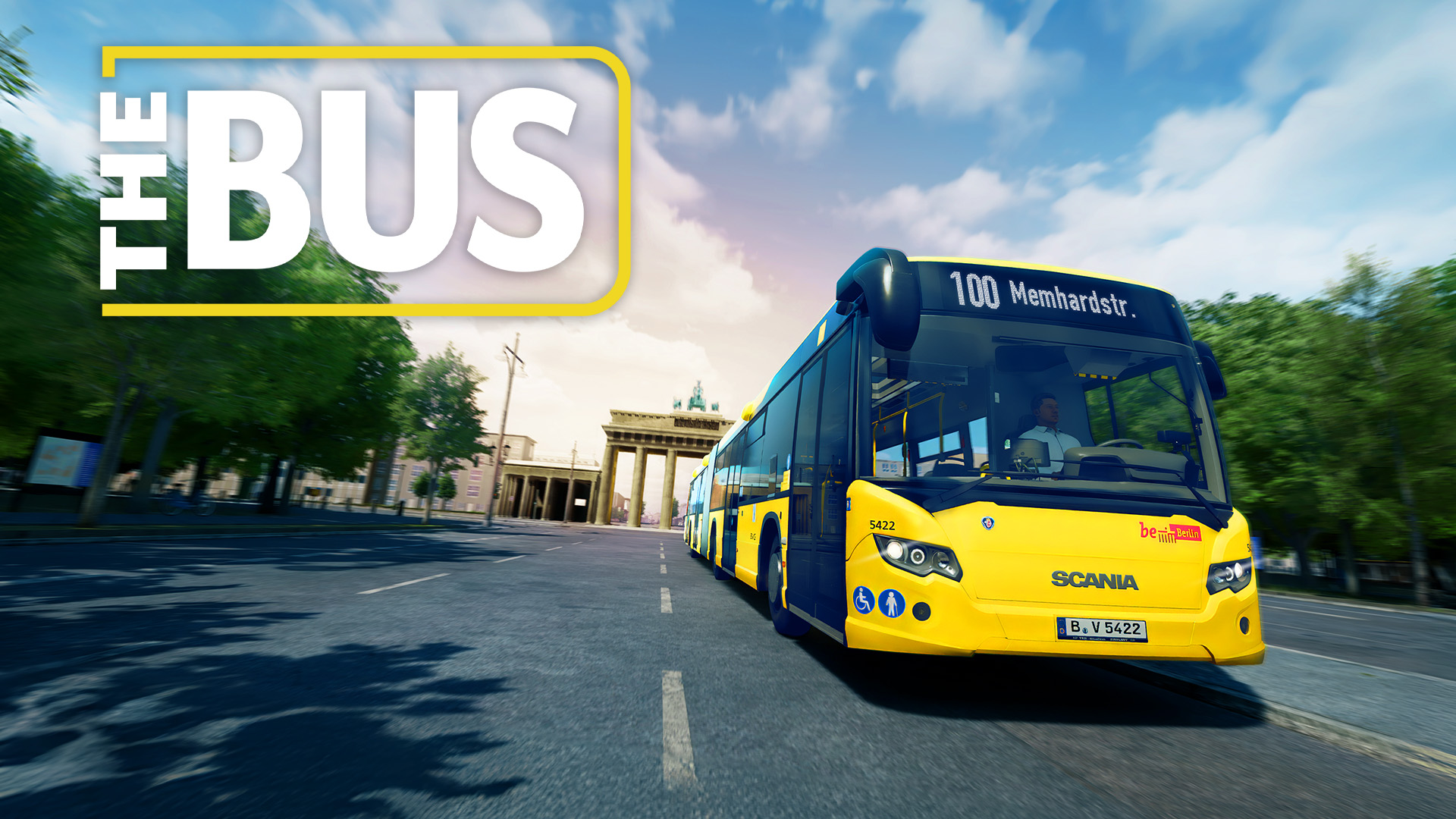
After spending a considerable amount of time with The Bus on Xbox Series X—particularly following the most recent console update—it becomes clear that this is a game with a very focused vision. It doesn’t chase excitement in the traditional sense, nor does it try to reshape the genre into something more accessible or fast-paced.
Instead, it leans fully into what it sets out to be. Because The Bus is, at its core, a realistic bus simulator—and one that is committed to delivering that experience as authentically as possible.
From the moment you pull away from your first stop, there’s an immediate sense of weight behind everything you do. Acceleration is gradual, braking requires thought, and even positioning the bus correctly demands a level of care that isn’t often expected in driving games. It doesn’t feel restrictive, but it does feel deliberate.
That’s where the experience starts to take shape. This is not a game that adapts to you—it expects you to adapt to it.
A City That Feels True to Life
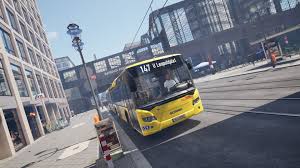
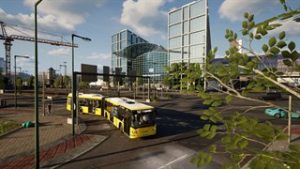
One of the most striking elements of The Bus is its recreation of Berlin, and it quickly becomes one of the game’s defining features. Built at a full 1:1 scale, the city isn’t just large—it’s carefully and accurately realised in a way that genuinely enhances the experience.
There’s a clear attention to detail in how everything is laid out. Roads connect in ways that feel logical, intersections carry a sense of purpose, and routes follow a structure that mirrors how a real transport network would operate. It never feels like you’re navigating a map designed purely for gameplay. Instead, it feels like you’re working within an actual city.
That accuracy adds a surprising amount to the overall immersion. As you spend more time with the game, you begin to develop a familiarity with the layout. Certain turns become second nature, traffic-heavy areas start to stand out, and routes begin to feel less like fixed paths and more like part of a wider, living system.
It’s not just impressive from a technical standpoint—it actively changes how the game feels to play.
The consistency of the environment, combined with that true-to-scale design, gives Berlin a sense of authenticity that’s hard to overlook. You’re not simply driving through a representation—you’re navigating something that feels grounded, deliberate, and convincingly real.
And in a game that places such a strong emphasis on realism, that level of accuracy makes all the difference.
Finding Your Rhythm Behind the Wheel
Of course, none of that would matter if the driving itself didn’t hold up—and thankfully, it does.
There’s a convincing sense of weight to each vehicle, and it’s something you feel immediately. You can’t rush acceleration, braking requires planning, and tight turns demand careful control. It forces you to think ahead, to read the road, and to approach each journey with a level of focus that suits the simulation.
At first, that can feel a little demanding. But over time, something shifts.
Movements become smoother, decisions feel more instinctive, and the overall experience settles into a rhythm that’s surprisingly satisfying. You begin to anticipate stops, judge distances more naturally, and handle the bus with a growing sense of confidence.
That’s where The Bus really comes into its own. It’s not about mastering complex systems—it’s about finding a flow, and once you do, the experience becomes quietly engaging.
More Than Just Driving
While the core loop centres around following routes and picking up passengers, there’s more depth here than it might initially suggest.
Each journey carries its own small variables. Traffic can build unexpectedly, stops can become busier than anticipated, and maintaining your schedule requires constant awareness of what’s happening around you. It’s not overwhelming, but it’s enough to keep each run feeling slightly different from the last.
You’re not just driving—you’re managing a service.
The most recent console update also helps bring everything together more cohesively. Systems feel more stable, and the overall experience benefits from that added level of refinement. It doesn’t dramatically change the structure of the game, but it does make it feel more complete.
A Commitment to Realism
What becomes increasingly clear the longer you spend with The Bus is just how committed it is to its core idea. Every element—from the vehicle handling to the structure of the routes—feeds into a consistent sense of realism.
The buses themselves feel appropriately heavy and grounded, interiors are detailed without being overdesigned, and the pacing reflects the nature of the role you’re stepping into. There’s no attempt to exaggerate or simplify things for the sake of accessibility.
Instead, the game trusts its concept.
It asks you to take your time, to pay attention, and to engage with the experience on its own terms. That approach won’t appeal to everyone, but it gives the game a strong sense of identity.
The Satisfaction of Getting It Right
For a game built around routine, The Bus does a good job of making that routine feel rewarding.
There’s a genuine sense of satisfaction in a smooth, uninterrupted run. Pulling into a stop cleanly, staying on schedule, and navigating traffic without issue all contribute to a feeling of progress that builds gradually over time.
These aren’t big, dramatic moments—but they don’t need to be.
The enjoyment comes from consistency, from improvement, and from the small victories that come with doing things properly. It’s a different kind of engagement, but one that feels earned rather than handed to you.
Where It Falls Short
Even with the improvements introduced in the latest console update, there are still a few areas where the experience doesn’t feel entirely polished.
The most noticeable issue is the occasional drop in frame rate. It’s not constant, but it does tend to appear in busier areas where there’s more happening on screen. When it does, it briefly interrupts the otherwise smooth flow of driving.
There are also some inconsistencies with passenger animations.
While the system itself works as expected, the way characters move can sometimes feel unnatural. Certain animations lack fluidity, and it can stand out in a game that otherwise places such a strong emphasis on realism.
These issues don’t significantly impact gameplay, but they are noticeable enough to pull you out of the experience at times.
A Very Specific Experience
It’s also worth recognising that The Bus is not designed for everyone.
This is a slower, more deliberate experience that rewards patience and attention to detail. It doesn’t offer quick bursts of action or constant excitement. Instead, it asks you to engage with its systems, learn its pace, and settle into its rhythm over time.
For those willing to do that, there’s something genuinely absorbing here.
For others, it may feel too methodical.
Final Thoughts
After extended time with The Bus on Xbox Series X, particularly in its current updated state, it’s clear that the developers have achieved what they set out to do. This is a realistic bus simulator that remains focused on authenticity from start to finish.
It doesn’t try to be anything more than that—and it doesn’t need to.
While there are still some technical issues, including occasional frame rate drops and slightly awkward passenger animations, they don’t overshadow the core experience.
At its best, The Bus offers something quietly unique. A grounded, methodical experience that finds satisfaction not in speed or spectacle, but in precision and consistency.
It’s not about how fast you go. It’s about how well you get there.
Overall
-
CX Score - 80%80%
Summary
Pros
- Impressively accurate 1:1 recreation of Berlin that enhances immersion
- Strong focus on realism, with weighty and satisfying vehicle handling
- Rewarding gameplay loop once you settle into its rhythm
- Consistent world design that feels believable and lived-in
- Recent console update improves overall stability and cohesion
Cons
- Occasional frame rate drops, particularly in busier areas
- Passenger animations can feel unnatural and break immersion at times
- Slow pace may not appeal to players looking for more immediate action
- Limited appeal outside of simulation enthusiasts