

Rapid Fire Overview
Pragmata is out now and you can find a full in-depth review by the fabulous Jordan Campbell at the end of this artcle.
So, this Rapid Fire Overview is going to just be my thoughts on this new game and IP from the developers over at Capcom. This ‘Snapshot’ will contain an overview of my time with the game, and only briefly touch on the story segment.
I admit, Pragmata wasn’t initially on my radar til just before release. But when I caught a trailer for it, my interest was piqued. An action-adventure game from Capcom, who let’s be honest here, are masters of this kind of genre with past hits like ‘Devil May Cry’, ‘Dino Crisis’ and the mighty ‘Resident Evil’ series. New Ips in gaming seem to be a rarity more and more these days as a lot of developers and publish continue to play it safe and keep on with an almost endless succession of sequels to established franchises. So, when a review copy for the game was offered to me I decided, as a big fan of not only Capcom’s back library of hits, bit also of this genre in general, that I’d give it a try and go in open minded. Suffice to say the game did not disappoint in my, humble, opinion.
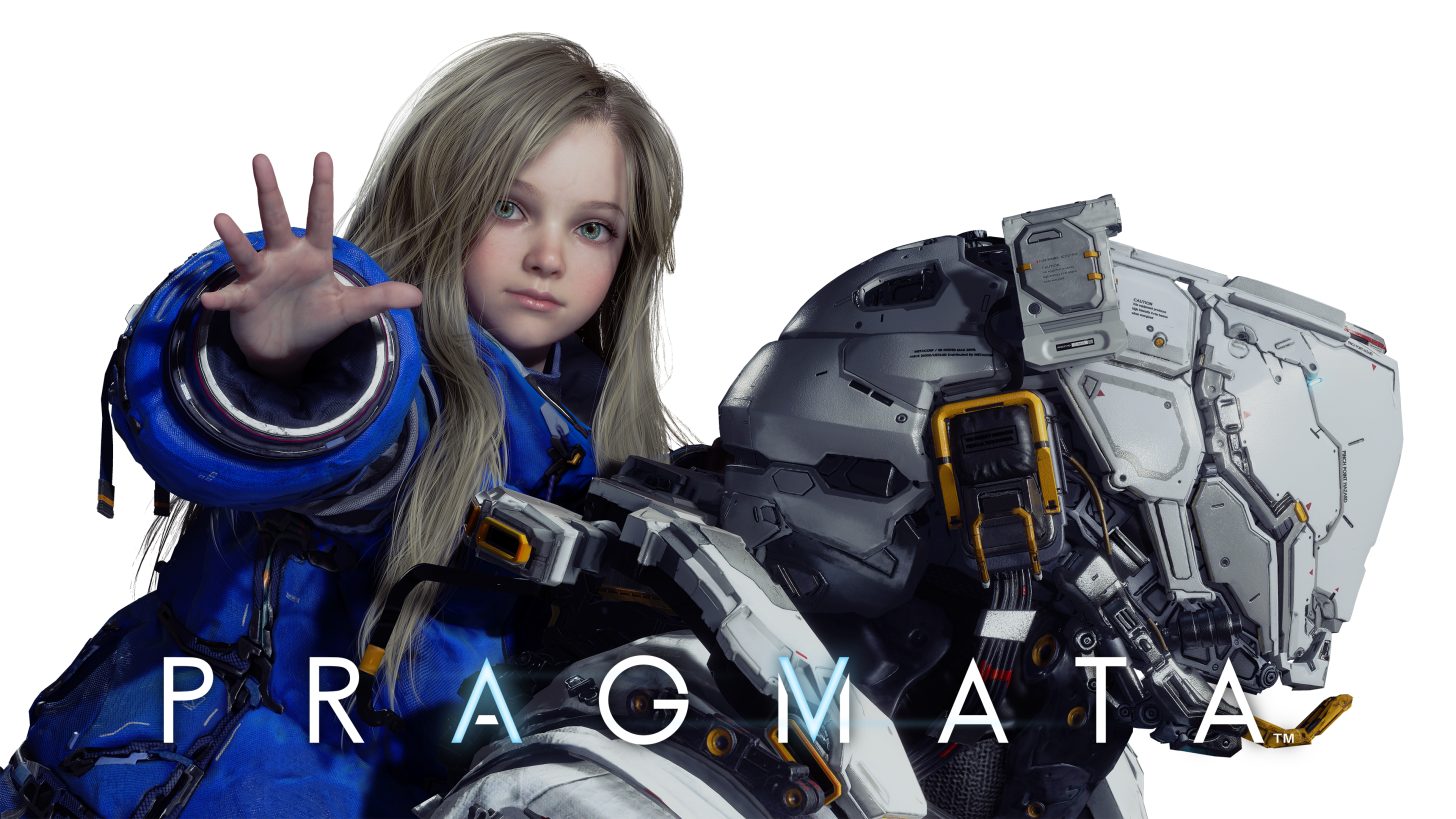
In the game, you play as engineer Hugh whose part of an investigation team sent to a lunar colony research facility that has discovered a new ore, that can be used to create almost anything via 3D printing. Naturally, the facility does off grid and Hugh and his team are there to find out what’s happened with communications. Here, disaster strike and he soon meets Diana, a humanoid girl android whose innocent view of the world is quaintly infectious. Together, they have to not only solve the mystery surrounding what happened to all the humans, but also navigate the failing lunar colony and ultimately deal with the renegade AI called IDUS, who has gone hostile and now controls it. Then somehow find a way back to Earth.

Initially, the game has you controlling Hugh as he struggles against IDUS and her robot hordes. During combat as most of them have shields or armour, Hugh’s weapons are often ineffective. Once you find Diana and you get into the game proper, however, then the real gameplay loop begins and this is where the game earns its fan given title of ‘Dad Space’. Hugh moves, shoots and plays very similarly to a fellow engineer Issac from another certain sci-fi game series, with him able to run, jump, sprint, boost and hover for a short amount of time.
Diana brings in a puzzle element to the game tho, as she being an android can ‘hack’ enemy shields and armour to create weak points to allow Hugh to do meaningful damage to them. This is achieved via a simple mini game you ‘play’ in real-time as you explore and fight. You’d think doing a mini game whilst trying to keep both Hugh and Diana safe from the various types of enemies and pitfalls the game throws at them would be tricky right? Dividing your time between movement, gunplay and hacking.
However, Capcom has rather smartly made the hack system not only simple, but rather intuitive. As you move Hugh around, dodging, boosting and shooting, you use the A, B, Y, X buttons to navigate around a grid to hit control points and a green segment that temporarily disables an enemy’s defences. Tougher enemies later on, require more segments to navigate to perform a successful hack, often with obstacles in the way making it more tricky or bonus tiles to activate additional combat perks such as better weapon damage. But the system is implemented beautifully and soon combat becomes a ‘dance’ of movement, gunfights and manic mini game puzzling just to survive and move on to the next encounter.
Hugh’s movement is nice and responsive, despite him wearing a clunky spacesuit, he’s surprisingly agile albeit heavy footed. the gunplay is solid with a good selection of weaponry you can switch between smoothly on the fly. Defeated enemies drop a material called ‘lunafilament’ that Hugh can use to craft new and better gear, equipment and weapons.

The highlight of the whole game however in my opinion, is the relationship that develops between Hugh and Diana. As the story progresses, you genuinely see the bond that forms between them. Hugh shows a father’s type love to the little girl, and although Diana isn’t a flesh and blood girl, she has enough charm, curiosity and wide-eyed innocence of wanting to learn about Earth, life and everything makes her more ‘human’ and much more than a simple sidekick on this adventure. The principles and thoughts of ‘what makes us human’ are explored and handled beautifully in this game and as a father to a little girl myself, the dynamic is crafted and handled perfectly, with some really stand out and caring moments between the two in cutscenes. During gameplay as you progress through the levels, you can find what’s known as ‘REM’ data, which will enable Hugh to give Diana special gifts to help educate her young mind and strengthen the bond they have back at their safe area.

To summarise, if you’re a fan of the genre (as I am) and into strong, single player, narrative driven adventure shooters, then Pragmata is definitely one for you. It’s blend of unique co-op sci-fi adventure grabs you from the start and never lets go. If you go into it with an open mind and expectations, you’ll find a deeply thought-provoking, caring story wrapped around the sci-fi action and exploration. If this is the start of a new franchise (and with the success of the title, that’s very likely), then even though I haven’t seen this game through to the end yet, I’m excited to see what Capcom does with it next entry as this masterpiece of storytelling.
A very highly recommended futuristic ‘Dad simulator’, at a very reasonable price. Whatever platform you game on, you owe it to yourself to try Pragmata.