


Resident Evil Requiem arrives at an unusual moment for Capcom’s flagship horror series. After a decade of reinvention — from the gothic surrealism of Village to the prestige remakes of RE2 and RE4 — the franchise has been in a state of constant metamorphosis. Each entry has tried to redefine what Resident Evil is. Requiem takes a different path. It isn’t a revolution, nor does it pretend to be. Instead, it’s a consolidation: a confident, deliberate refinement of everything the modern era of Resident Evil has learned. And in that restraint, it finds its strength.
This is a game that knows exactly what it wants to be — and executes on that vision with clarity, craft, and surprising emotional weight.
Two Campaigns, One Cohesive Identity
Requiem splits its narrative between two protagonists: the familiar and the new. Leon S. Kennedy returns in a campaign that feels like a spiritual successor to the RE4 remake — kinetic, punchy, and steeped in action‑horror swagger. Meanwhile, newcomer Grace Ashcroft anchors the game’s slower, more atmospheric half, delivering a tone that leans into dread, puzzle‑solving, and psychological tension.
The dual‑campaign structure isn’t new to the series, but Requiem uses it with more intentionality than most. Leon’s sections are the adrenaline spikes: tight corridors, escalating combat, and set‑pieces that feel engineered to keep your pulse elevated. Grace’s sections, by contrast, are the oxygen — quiet, methodical, and deeply rooted in environmental storytelling. The interplay between the two creates a rhythm that keeps the game from ever feeling monotonous.
What’s impressive is how seamlessly these tones coexist. Requiem never feels like two games stitched together. Instead, it feels like a single experience with two complementary expressions of horror.
Leon’s Campaign — A Victory Lap for Modern Action Horror
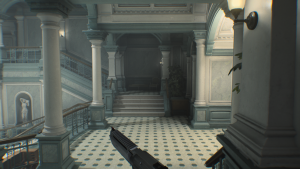
Leon’s half of Requiem is pure Capcom confidence. The perfect counterpoint to the slower, more tense gameplay of Grace.
The pacing is brisk, the encounters are varied, and the combat feels like a culmination of the studio’s recent work. The gunplay has weight and snap, enemies react with satisfying physicality, and the arenas are designed with just enough verticality and destructibility to keep fights dynamic.
There’s a sense of familiarity here — the over‑the‑shoulder camera, the dodge windows, the resource‑tight encounters — but it’s executed with such polish that it never feels derivative. Leon’s campaign is a celebration of the modern Resident Evil formula, not a retread of it.
The standout moment is the return of Mr. X, reimagined not as a constant pursuer but as a carefully choreographed set‑piece encounter. It’s a clever subversion: familiar enough to trigger nostalgia, but fresh enough to avoid predictability. Requiem understands the power of legacy, but it refuses to coast on it.
`
Grace’s Campaign — The Beating Heart of Requiem
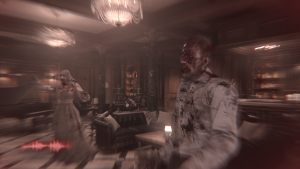
If Leon is the spectacle, Grace is the still-beating heart. Her campaign is where Requiem reveals its thematic ambition. Set largely within the Rhodes Hill Care Centre, her sections lean heavily into environmental puzzles, narrative breadcrumbs, and a creeping sense of vulnerability. Grace is not a super‑agent or a hardened survivor. At the beginning of her campaign, she is an emotional wreck being thrust into a nightmare, and the game treats her as such.
The Organless Corpse puzzle in the Medical Centre is emblematic of her campaign’s strengths. It’s grisly without being gratuitous, clever without being obtuse, and rooted in the game’s narrative logic. Retrieving the relevant parts to complete this puzzle rewards you with the Level II wristband, classic Resident Evil design — a loop of exploration, backtracking, and mechanical payoff. It’s the kind of puzzle that reminds you why this series endures.
Grace’s story also carries emotional weight. Her connection to Alyssa Ashcroft — a deep‑cut character from Resident Evil Outbreak — gives her arc a sense of lineage and tragedy that enriches the broader lore without alienating newcomers. Requiem’s writing is understated but effective, and Grace’s vulnerability makes her victories feel earned.
Pacing, Structure, and the Art of Restraint
Requiem’s pacing is one of its quiet triumphs. The early hours move with purpose, establishing tone and stakes without drowning the player in exposition. The mid‑game slows slightly — a familiar Resident Evil wobble — but never collapses under its own weight. And the finale lands with surprising clarity, tying together the dual campaigns in a way that feels both inevitable and satisfying.
What stands out is the game’s restraint. Requiem doesn’t chase shock value or spectacle for its own sake. It trusts its environments, its characters, and its mechanics to carry the experience. In an era where horror games often feel compelled to escalate endlessly, Requiem’s confidence and restraint is refreshing.

Combat, Inventory, and the Tension of Scarcity
Mechanically, Requiem sits comfortably within the modern RE template. Combat is tight and responsive, with a satisfying balance between precision and panic. Enemy variety is strong, with each new creature introducing a twist that forces adaptation rather than brute force.
Inventory management remains a core pillar, and while it occasionally veers into friction, it’s largely a source of tension rather than frustration. The game wants you to make hard choices — to commit to a loadout, to risk pushing deeper with limited supplies, to feel the pressure of scarcity. It’s a design philosophy that has defined the series since 1996, and Requiem embraces it wholeheartedly.

Lore, Cameos, and Fan Service Done Right
Requiem is peppered with returning characters, but it never feels like a parade of nostalgia. Cameos like HUNK, Sherry Birkin, and Alyssa Ashcroft are woven into the narrative with intention rather than novelty. Even the more playful inclusion — the ever‑iconic Tofu — is handled with a wink rather than a shove.
This is fan service with discipline. It rewards long‑time players without compromising the story’s integrity.
A Few Rough Edges
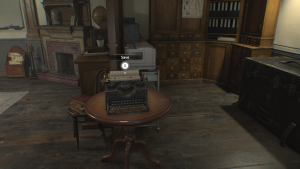
Requiem isn’t flawless. A handful of encounters feel slightly overtuned, particularly in Leon’s late‑game sections. Some backtracking in Grace’s campaign can feel like padding if you’re not invested in the environmental storytelling. And while the dual‑campaign structure is a strength, it occasionally creates tonal whiplash when switching between protagonists.
These issues are noticeable, but they never meaningfully undermine the experience.

Verdict
Resident Evil Requiem doesn’t reinvent the franchise. It doesn’t need to. Instead, it refines, consolidates, and elevates the modern Resident Evil formula into something cohesive, confident, and deeply satisfying. Leon’s campaign is a masterclass in action‑horror design, while Grace’s story brings emotional depth and atmospheric tension that lingers long after the credits roll.
This is a game made by a studio that knows its craft — and trusts it. A superb, assured entry that stands proudly alongside the series’ best.
Overall
-
CX Score - 90%90%
Summary
Pros
- A return to atmospheric survival horror
Requiem leans hard into tension, pacing, and dread — the series’ original DNA. It feels handcrafted to make players uncomfortable in the best possible way.
- Strong character work and emotional investment
The narrative gives its leads more interiority than recent entries. Motivations feel grounded, and the emotional beats land with surprising weight.
- Smart, layered environmental design
Rooms, corridors, and set‑pieces reward observation and caution. Exploration feels meaningful again, with puzzles integrated naturally into the world rather than feeling bolted on.
Cons
- Some late‑game encounters lean too heavily on spectacle
The final act occasionally slips back into bombast, undercutting the grounded horror tone the early game establishes so well. I would also like to say Capcom, where is the Arachnophobe mode in settings?
- Difficulty spikes can feel uneven
Certain enemy types and boss patterns feel tuned for frustration rather than tension, creating abrupt walls in an otherwise smooth progression.
- A few narrative threads feel underdeveloped
While the core story is strong, some side characters and lore elements are introduced with promise but never fully explored.