

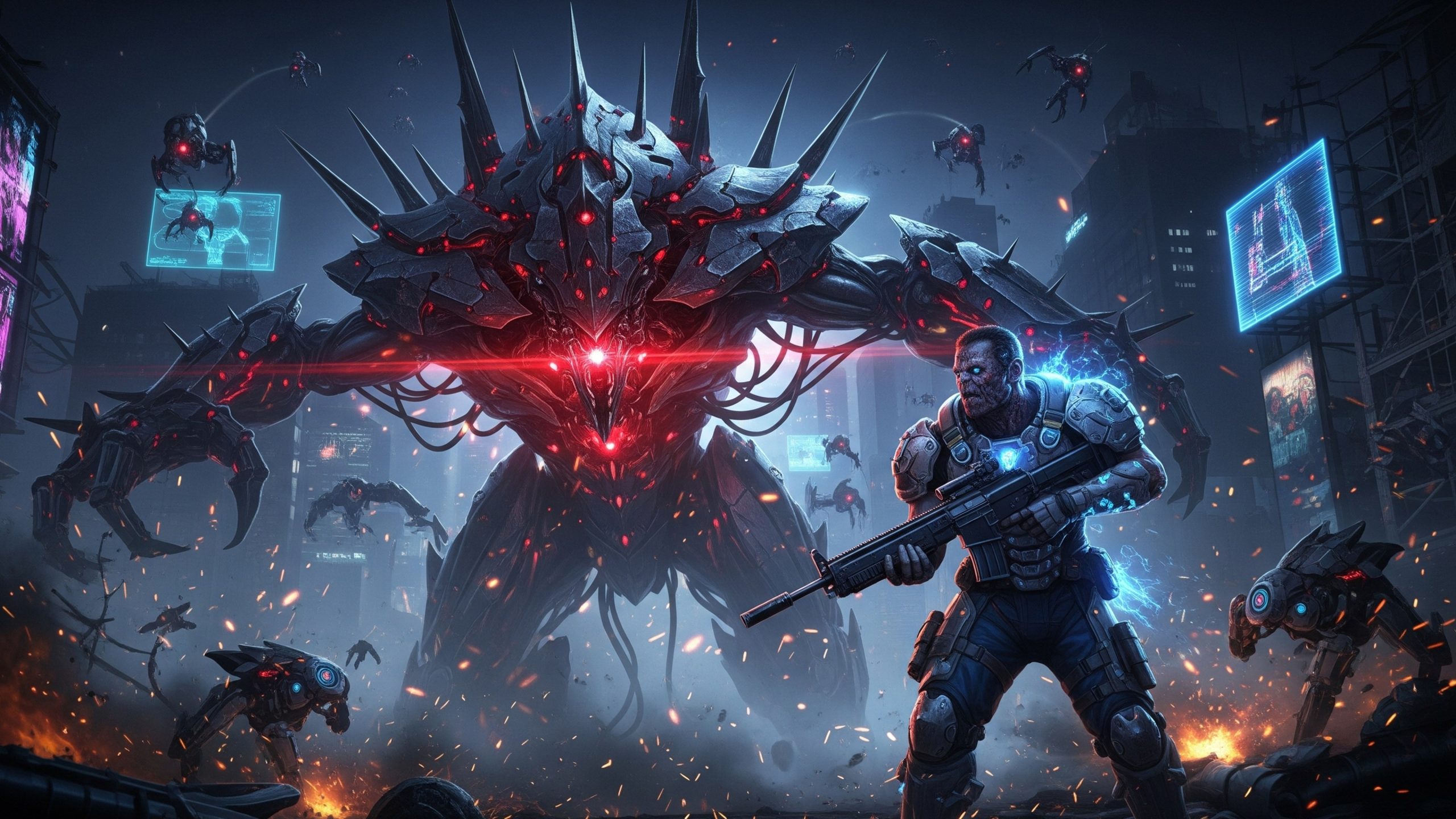
Neural Requiem doesn’t feel futuristic, dystopian, or visionary. The result is a world that isn’t broken in interesting ways — it’s broken in the way a cheap toy is broken: quietly, pointlessly, and with no story to tell.
The game keeps gesturing toward depth, but it’s the kind of gesture you make when you’re waving away a fly. There’s no soul here, no intent — just assets arranged in the approximate shape of a video game.
First is the main game loop…. The difficulty has been artificially raised by giving you very little ammunition, except for your pistol which would probably be more effective if you threw it at your foes.
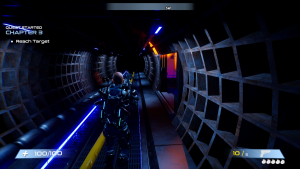
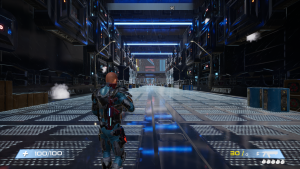
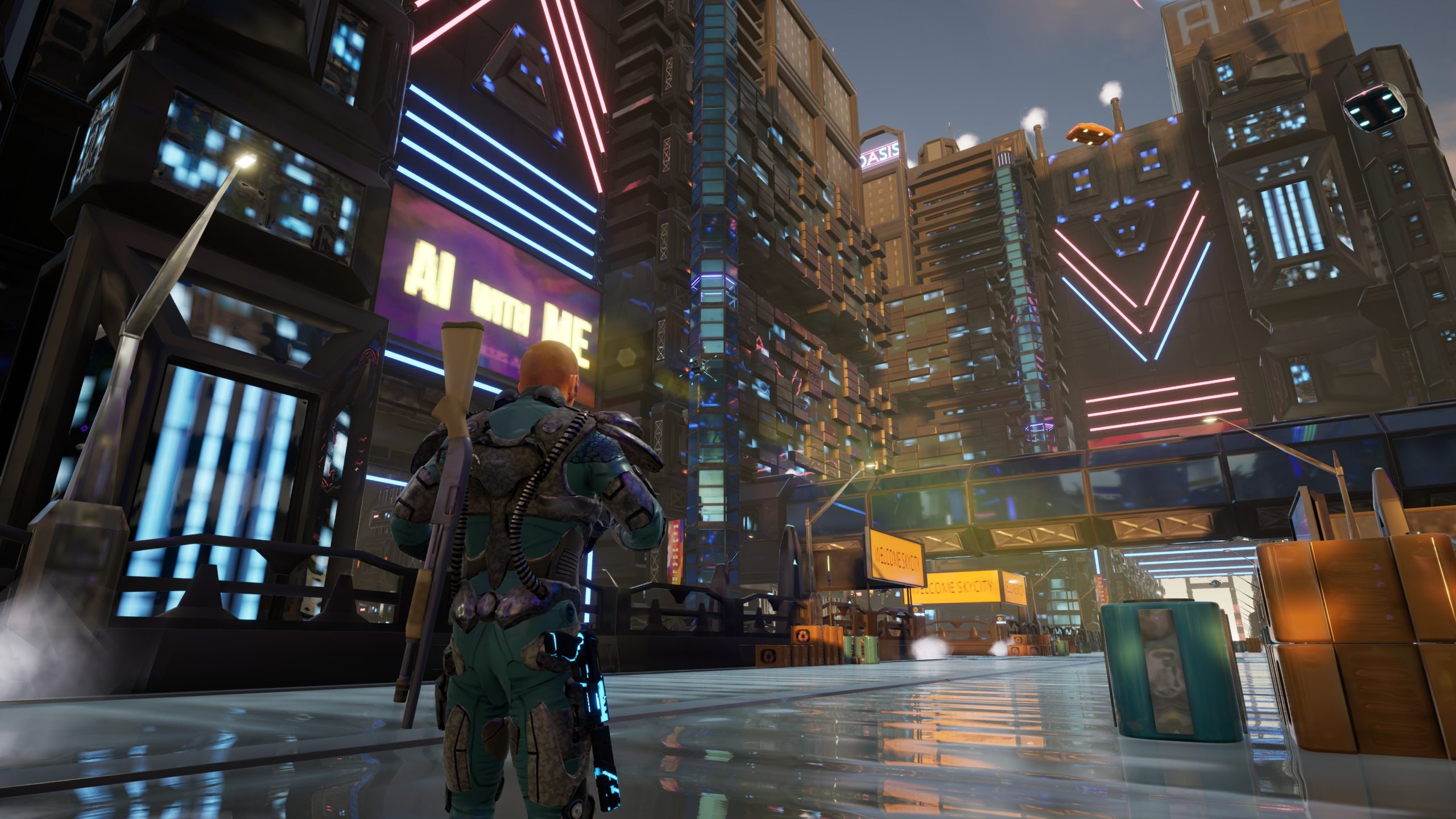
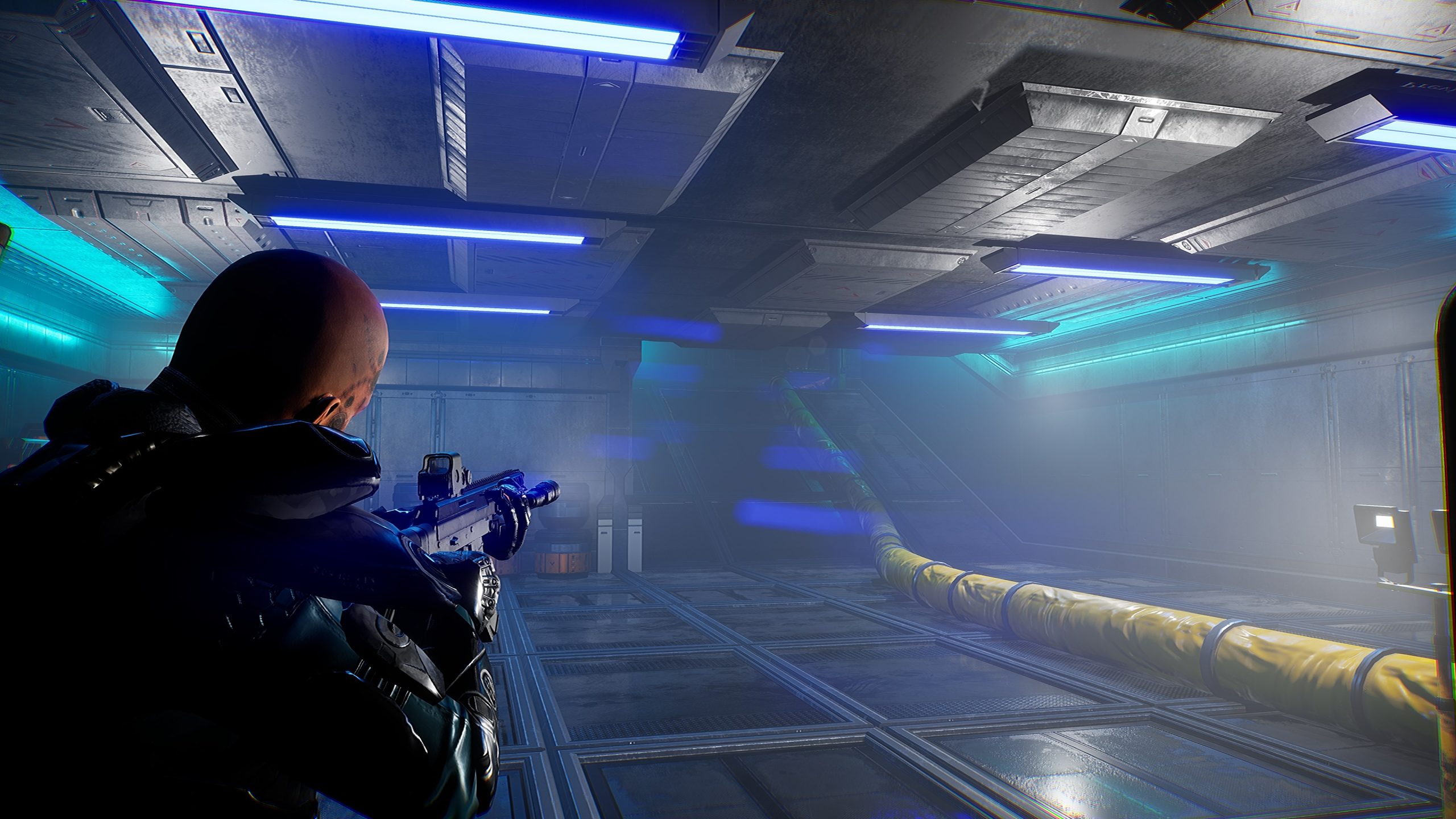
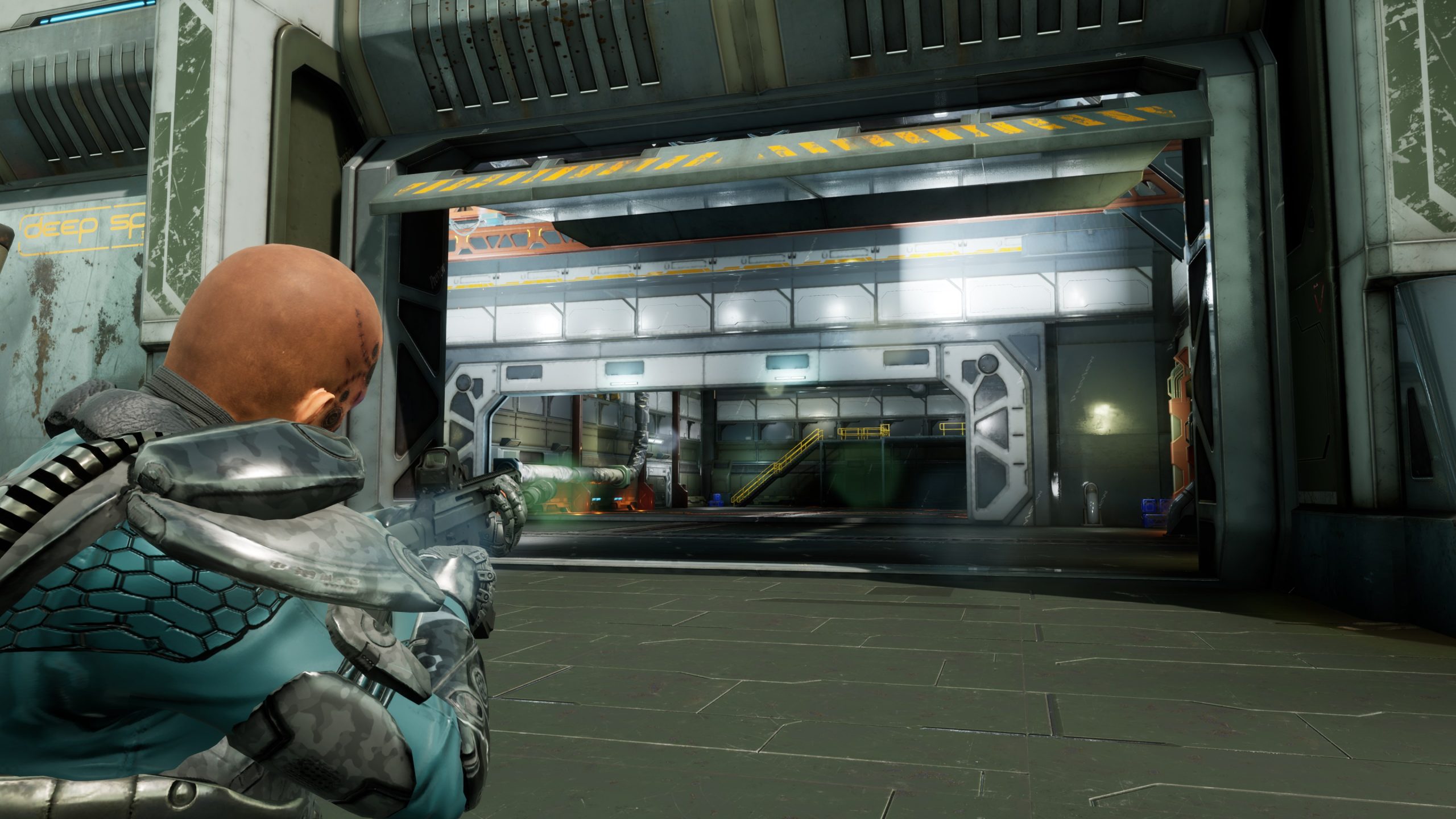
Second is the environment. Vast, long corridors of absolutely nothing. Basic scenery to look at and the occasional box, but you spend most of your time running through dead air until you meet an enemy. Every wall looks like it was textured by someone who had only ever heard rumours of art direction.
Neural Requiem is trying to lead the player down the road of a stealth adventure, but the enemies are so dim witted you can find three enemies all standing in rank and file. You sneak up behind each of them, and you are offered a stealth kill and 9 times out of 10 they will die nicely.
But if they ‘sense’ you behind them, you will incur their wrath and the only thing to do is run and hide behind a piece of convenient level furniture before they open fire. The various robots you fight are deadlier than an army sniper jumped up on caffeine and if you don’t find a safe place to hide, you will die faster than you can blink.
And when you die, the level enemies do not respawn and you do not lose anything from your inventory. There is no hazard from dying so you end up alternating between hiding and running at enemies kamikaze style.
There is a story of sorts, but it is more a collage of phrases that sound like they should matter but dissolve the moment you look at them. Characters speak in riddles not because they’re mysterious, but because the script has nothing to say and hopes you won’t notice. It’s the narrative equivalent of a slug wearing a trench coat.
Combat fares no better. Every encounter feels like you’re fighting through a layer of clingfilm. Inputs land with the enthusiasm of a damp sponge. Enemies behave like they’re waiting for a bus. There’s no tension, no rhythm, no spark — just the dull thud of systems that technically function but never rise to the level of play.
And yet, somehow, the game still has the audacity to demand a 1000‑point pilgrimage. Not as a challenge, not as a badge of honour — but as a kind of endurance test. A trial to see how long you can tolerate repetition, emptiness, and design that feels like it was assembled during a fire drill.
The FMV Lie — A Promise the Game Immediately Breaks
Neural Requiem opens with a sequence of AI‑generated FMV clips that feel like they were stitched together by a marketing algorithm desperately trying to impress while simultaneously not having a clue what they’re trying to represent.
These videos gesture at themes the game never touches: identity, transcendence, digital rebirth. They flash imagery of chrome‑skinned prophets and shimmering data‑temples, as if whispering, “Prepare yourself — you’re about to enter something profound.” But the moment the FMV ends, the illusion collapses with a thud.
No transition.
No explanation.
No acknowledgement that the previous scene even happened.
It’s as if the game itself forgot what it just showed you. This isn’t artistic ambiguity and it’s not symbolism. It’s just sloppy.
A One‑Man Studio with no one to Say “Stop”
Neural Requiem is the product of a solitary developer — a lone figure working in isolation, building a world with no witnesses and, crucially, no one to challenge him. There’s a certain romance to the lone‑creator myth, but here it plays out like a cautionary tale.
You’re dumped into the real game, half‑naked, wearing neon strips like a budget sci‑fi extra who wandered in from a different production. The camera pans around your avatar with misplaced confidence, as if the game still believes it’s living inside the FMV’s fantasy. Then the graphics load, and the truth hits: this is not the world you were sold. It’s not even the world the FMV hinted at.
A solitary developer can build something beautiful. But a solitary developer with no QA, no testers, and no external eyes will inevitably build a maze only he can navigate. Neural Requiem feels like a project that was never seen by another human being until release day — and every bug, every mismatch, every broken transition screams for the presence of someone, anyone, who could have said: “This isn’t ready.”
Controls From Another Dimension
Once you gain control of your hero, you try to move and it’s like walking through Vaseline.
The controls feel like they were coded by someone who once received a faxed photograph of a controller and had to guess what the buttons might do. There’s a strange, floaty delay to everything — as if your character is being puppeted through a layer of damp cardboard. Inputs don’t respond so much as negotiate. You press a button, and the game considers your request like a bored clerk deciding whether to stamp your form.
Movement has no weight. Combat has no rhythm. Menus behave like they’re allergic to your thumbs.
I sound as though I am being unnecessarily harsh, but there are countless examples of games developed by one person (Axiom Verge, Stardew Valley and Undertale spring immediately to mind) which don’t try to overstretch their remit and as a result they are concise, entertaining little hits. Absolute bangers.
I believe this developer has a great future, but with more people behind him. If he had a simple QA Testing team, the problems that mire Neural Requiem could be worked out and the resulting score would be more flattering.
VERDICT
Neural Requiem isn’t a failed masterpiece.
It’s not even an interesting failure. It’s a placeholder, a wasted opportunity. I hope the developer takes this as an experience and not a failure. I wish them every success with their future projects.
Overall
-
CX score - 30%30%
Summary
Pros
- Strong stealth elements when they work.
- Graphics are passable but not up to todays high standards.
Cons
- No customisation options for controls or gaming settings. Just language settings.
- Enemies are dumb but extremely deadly.
- Environments are varied but full of long bouts of empty space, followed by intense action.