

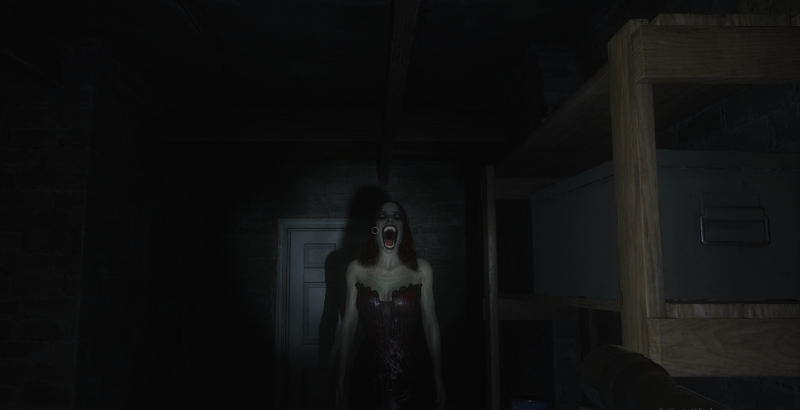
“Unsealed: The Mare” is the sequel to “Decay: The Mare. This little gem (of which I am quite fond) crafted a slow‑burn psychological tension that allowed players to breathe, think, and solve puzzles under a constant but manageable sense of dread.
However Unsealed trades that subtlety for loud jolts, resource‑draining busywork, and a repetitive chase‑loop that quickly erodes any sense of immersion.
Atmosphere: From Oppressive Tension to Noisy Distraction
Both games fit neatly under the psychological horror Umbrella (pun played for and got), the original games major strength was its atmosphere. The game understood that horror doesn’t need to shout. It simmered. It lingered. It let you explore dim hallways and abandoned rooms with a sense of unease that never quite tipped into panic. Even when the threat was present, it didn’t constantly interrupt your progress. You could work through puzzles, examine clues, and absorb the environment while feeling watched — not hunted.
Unsealed: The Mare abandons this philosophy almost immediately. Instead of cultivating dread, it forces panic. The game leans heavily on shock‑horror jump scares, the kind that feel more like a theme‑park haunted house than a psychological descent. The constant need to manage a torch that drains batteries and a lighter that requires lighter fluid turns exploration into a chore. Rather than heightening tension, these mechanics repeatedly break it. You’re not scared — you’re annoyed.
The result is a tonal shift from slow, suffocating dread to frantic, repetitive alarm and running away, and it’s a downgrade in every sense.
You play as Vera, trapped in a nightmare shaped by fragments of her family’s tragic past. As you move through shifting dream‑logic environments, you must burn cursed teddies, restore lost memories, and break sealed doors to uncover the truth behind the trauma that binds you to The Mare.
Puzzles: From Distinctive Challenges to Indistinguishable Filler
In Decay, puzzles served as anchors. They were thoughtfully placed, varied, and thematically tied to the world. Solving them felt like peeling back layers of the narrative. They gave the player moments of respite — a chance to think, breathe, and re‑engage with the story.
In Unsealed, puzzles exist, but barely. They’re simple, indistinct, and interchangeable. After the third or fourth one, they blur together into a single vague memory of switches, symbols, burning teddies and doors. Worse, the game rarely gives you the mental space to engage with them. The veil‑wearing pursuer interrupts constantly, turning every puzzle into a rushed, shallow exercise. Instead of tension, you get irritation. Instead of satisfaction, you get relief that the interruption is over.
A horror game can absolutely combine puzzles and pursuit — Decay: The Mare proved that — but Unsealed never finds the balance.
Enemy Design: A Threat That Never Evolves
The original game’s antagonist was frightening because it was unpredictable. It appeared sparingly, but meaningfully. Its presence changed the air in the room. You never knew when it might emerge, and that uncertainty was the point.
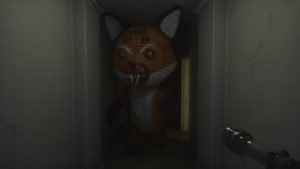
Unsealed’s veiled figure, by contrast, is constant, one‑note, and mechanically shallow. She wanders. She approaches. She looms. You die. Rinse and repeat. There’s no escalation, no behavioural variation, no psychological nuance. The game mistakes frequency for fear, and the result is a threat that becomes background noise.
When an enemy becomes predictable, it stops being scary. When it becomes routine, it becomes tedious. Unsealed crosses that line early and never recovers.
Level Design: A Tour of Identical Basements
One of the most striking differences between the game and the original is the visual identity of their environments.
Decay: The Mare offered a variety of unsettling spaces — abandoned homes, decaying corridors, surreal dream‑logic rooms — each with its own flavour and narrative purpose. The environments felt like characters in their own right.
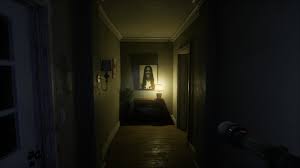
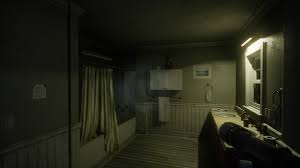
Unsealed, however, seems content to recycle the same basements, tenements, and run‑down corridors across its entire runtime. The colour palette is flat. The textures repeat. The layouts feel procedurally assembled even when they aren’t. There’s no sense of place, no escalation, no thematic progression. You could splice any two levels together and barely notice.
Atmosphere isn’t just sound and lighting — it’s geography. And Unsealed sadly offers none.
Resource Management: A Mechanic Without Meaning
Horror games often use resource scarcity to heighten tension. But the scarcity must serve the narrative or the emotional arc. In The Mare, light sources and tools were limited but reliable. They supported the mood without overwhelming it.
In Unsealed, the torch batteries and lighter fluid for your found lighter feel like padding — artificial difficulty designed to stretch thin content. They don’t deepen the experience; they interrupt it. Instead of thinking about the story or the environment, you’re thinking about whether you missed a battery in the last room.
Resource management should make you feel vulnerable. Here, it just makes you feel at the least inconvenienced. At worst, you are floundering around in the dark.
Narrative: Lost in the Noise
The original game’s story unfolded gradually, through environmental clues, subtle encounters, and puzzle‑driven revelations. It respected the player’s intelligence and rewarded curiosity.
Unsealed tries to tell a story, but the constant interruptions — the chases, the resource checks, the repeated environments — drown out any emotional resonance. Whatever narrative threads exist are overshadowed by the game’s insistence on keeping you in a perpetual state of flight. By the time you reach the third chapter (which is somewhere between 2 and 3 hours, if you pace yourself) the mechanic has worn itself paper thin.
A horror story needs quiet moments. Unsealed refuses to give you any.
Final Verdict: A Sequel That Forgets Its Own DNA
Decay: The Mare succeeded because it understood that horror is a spectrum — not a volume control. It balanced exploration, puzzles, atmosphere, and threat with a careful hand.
Unsealed: The Mare feels like a sequel made by someone who watched a highlight reel of the original rather than played it. It amplifies the wrong elements, strips away the nuance, and replaces psychological tension with mechanical repetition.
If Decay was a haunting whisper, Unsealed is someone shouting “BOO!” every five minutes.
There are flashes of potential — a few eerie sound cues, a handful of interesting puzzle ideas — but they’re buried under design choices that undermine the experience at every turn.
Unsealed isn’t unplayable. It’s just unremarkable. And for a sequel to a game built on atmosphere, that’s the biggest disappointment of all.
Overall
-
CX Score - 40%40%
Summary
Pros
- Some strong sound cues that briefly recapture the original’s atmosphere.
- Simple puzzles that are easy to grasp, even if they lack personality.
- Attempts to expand mechanics with light‑source management, even if unevenly executed.
Cons
- Relies on constant jump scares, losing the slow‑burn tension of the first game.
- Repetitive environments that all look like the same basement or tenement.
- Veiled pursuer becomes predictable, turning fear into irritation.
- The game is only 14.99 on Xbox Storefronts, but at 2 to 4 hours for most players it is a short experience.