

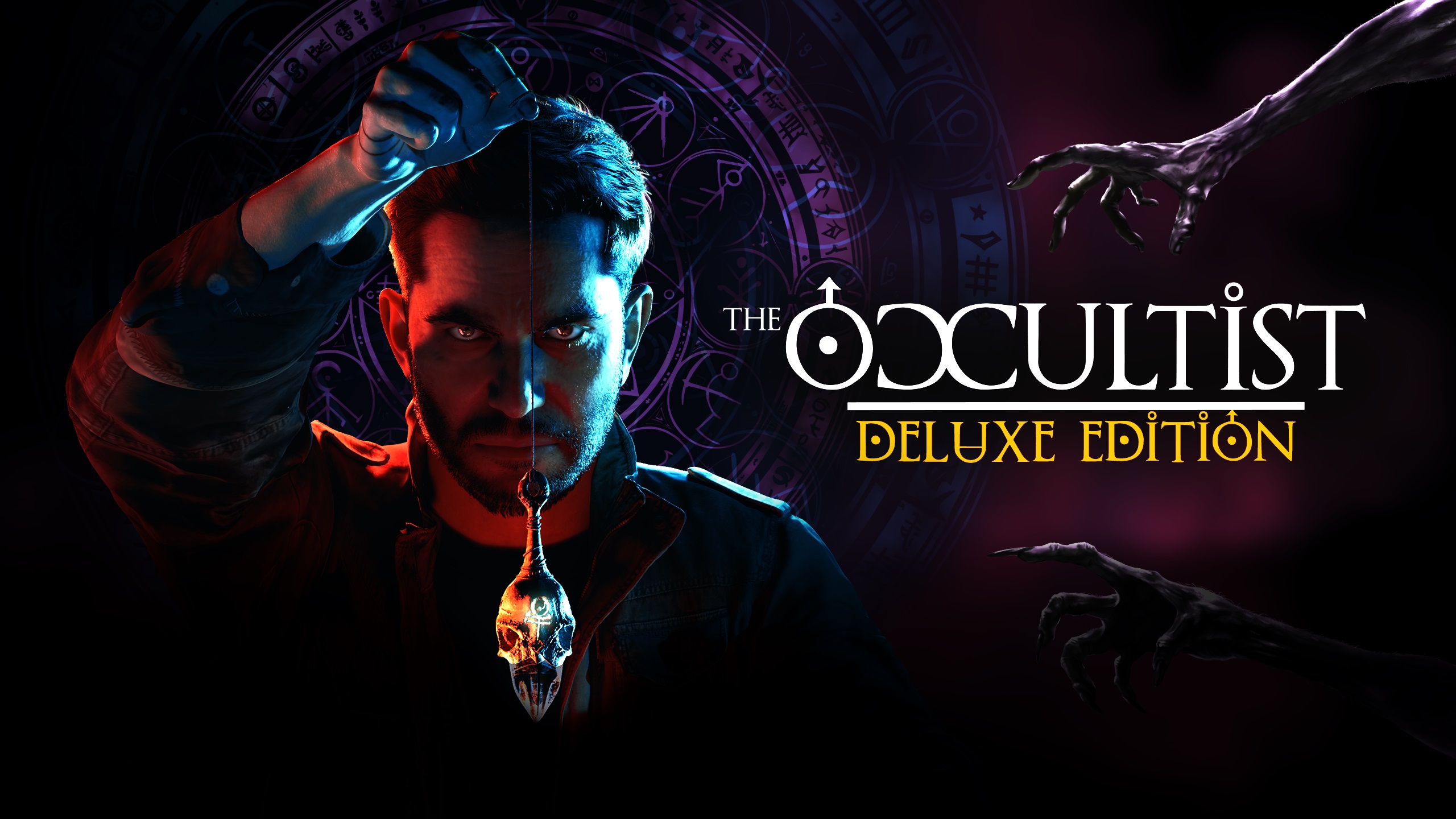
Developed by DALOAR — Published by Daedalic Entertainment
The Occultist is one of those games that comes along and grabs you when you least expect it. It doesn’t arrive with the marketing roar of a blockbuster, nor does it pretend to be something it isn’t. Instead, it quietly invites you into a world of shadows, whispers, and lingering dread — and once you’re in, it holds you there with a surprisingly confident grip.
At the centre of the story is Alan Rebels, blessed with the skill of mediumship and knowledge of the Occult. He is a man driven by a simple but powerful motivation: find his missing father, Gabriel; and his search leads him to a remote island where something terrible has happened — an entire population wiped out, their stories cut short, their spirits restless. It’s a classic setup, but it’s handled with enough restraint and atmosphere that it never feels tired. A lot of that comes down to the performance behind Alan himself. He’s voiced by Doug Cockle, best known as Geralt from The Witcher series, and that familiar gravel gives Alan a grounded, weary authenticity. It’s the kind of voice that sounds like it’s been through things — which fits the tone of the game perfectly.
Alan isn’t just wandering around with a flashlight and a bad feeling. He carries a pendulum that helps him focus his occult abilities, and these powers evolve as the story progresses. Early on, you’ll use them to highlight points of interest or repair broken mechanisms, but the game slowly layers in additional abilities that expand your toolkit in interesting ways. I won’t spoil the later ones — discovering them is part of the fun — but each skill ties neatly into the objectives scattered across the island’s levels. It creates a rhythm where exploration, puzzle‑solving, and narrative progression all feed into each other.
The island itself is a patchwork of familiar horror‑adventure locations — abandoned houses, ruined facilities, forgotten shrines — but DALOAR’s artistic direction gives each area a distinct identity. There’s a portrait painters quality to the environments; a deliberate use of colour and lighting that makes even cliché settings feel fresh. It’s clear the developers wanted the world to feel lived‑in, even in death, and that attention to detail pays off. The atmosphere is thick, sometimes oppressive, but always compelling.
Puzzles form the backbone of the gameplay, and they come in several flavours. Some are simple object‑pairing tasks — find Item A, combine it with Item B, and progress. Others involve reaching out‑of‑the‑way objects, navigating locked doors, or deciphering word locks that require you to piece together clues from the environment. Numeric padlocks also make an appearance, usually guarding key items or hints that push you toward the next objective. None of the puzzles feel unfair, but they do require you to pay attention. The game rewards curiosity, and it’s satisfying when the pieces click into place.
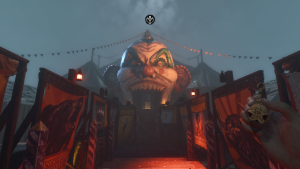
The island isn’t empty, either. It’s populated by the dead — or rather, by what’s left of them. Some spirits are lost and looking for help, offering small side objectives that flesh out the world. Others are hostile, eager to drain your health or take a swing at you with whatever spectral tool they can muster. A quick tap of the left trigger gives you a health check, which becomes second nature once you realise how quickly things can go wrong. And if you want a tip without spoilers: watch the ravens. They’re not just set dressing.
But for all its strengths, The Occultist isn’t without its frustrations. The most immediate offenders are the QuickTime Events. There aren’t many of them, but the ones that do appear are… let’s say “enthusiastically unforgiving.” Throughout my entire playthrough, I didn’t manage to pass a single one. Failure sends you straight back to your last checkpoint, which gets old fast. Thankfully, the accessibility menu includes an option to hold the button instead of mashing it — a small mercy that I strongly recommend enabling. Be smart. Don’t be like Dave.
More concerning is a repeatable bug tied to using items at points of interest. When you approach an object that requires an item, you press X to open the item wheel and then scroll to the one you need. Press A once and everything behaves as expected. Press A twice, however, and the inventory overlays itself, freezes for a moment, and then boots you straight to the dashboard. I tested this from a cold boot, and it’s reproducible every single time. It’s not game‑breaking in the sense that it corrupts saves or blocks progress, but it is immersion‑breaking, and it’s something I’ll be flagging to the developers for a future patch.
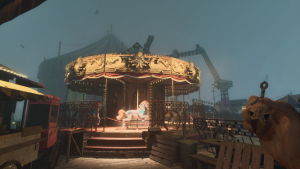
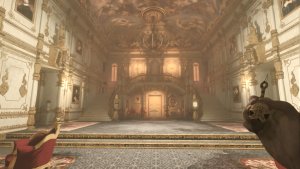
Graphically, though, The Occultist shines. It’s genuinely one of the prettiest games I’ve played recently, with moments that rival the visual punch of Resident Evil Requiem. The lighting is especially impressive — shafts of moonlight cutting through fog, candles flickering in abandoned rooms, and the eerie glow of occult symbols all contribute to a world that feels both beautiful and unsettling. On the Series S, a few secondary textures occasionally load in a bit soft but simply turning away and back usually resolves it. For a game this atmospheric running on the smaller Xbox, it’s an impressive achievement.
Performance is generally solid, with stable framerates and smooth transitions between areas. The sound design deserves praise too. Ambient noises, distant whispers, and the low hum of supernatural energy all work together to create a soundscape that keeps you on edge without resorting to cheap jump scares. The music is understated but effective, rising and falling in ways that support the narrative rather than overshadow it.
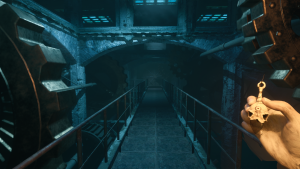
What really stands out, though, is the game’s commitment to tone. The Occultist isn’t trying to be a fast‑paced action title or a sprawling open‑world epic. It’s a focused, atmospheric adventure that wants you to slow down, pay attention, and immerse yourself in its world. It’s confident in what it is, and that confidence makes the experience feel cohesive and deliberate.
The Occultist does not go for cheap jump scares, but when it happened, I was completely off guard. As a result, I ended up hanging onto the Ceiling Light by my Fingernails. I jumped two, maybe three times but it was enough to stop me in my tracks and give Daloar a metaphorical pat on the back. Well done.
The game is a collectors dream. Newspaper Articles, notes between different members of the cast, plus strategically placed medallions mean you will comb each level with your pendulum, looking for a digital breadcrumb.
By the time the credits roll, you’ve pieced together a story that’s equal parts tragic, mysterious, and strangely hopeful. Alan’s journey is personal, and the game never loses sight of that. It’s not about saving the world — it’s about understanding what happened to one man, one family, and one island that couldn’t escape its fate.
Conclusion
I would pay full price for the Occultist. It is just different enough to all the other games in the horror genre to stand out, without having to raise it’s voice. If not for a few bugs and silly issues this score could have been raised higher further.
Highly Recommended.
Overall
-
CX Score - 85%85%
Summary
Pros
- Graphically one of the best looking games I’ve played this year. Also paints aural soundscapes that make a simple funfair the one place you don’t want to be alone.
- The atmosphere bubbles with tension and dread, but it keeps you on the edge of your seat all the way to the end credits.
- Use of skills really allows you to navigate the levels in different ways, where certain puzzles can be bypassed completely.
Cons
- There is a few bugs which can leave to a dashboard crash (Update on the way)
- Some puzzles could do with a little more direction.
- Lack of maps. Maps would make it far easier to find and retrack your steps (it’s easy to get lost).
- Boss fights lack focus, weight and seem to be in there just to give you something to fight in a violence free adventure. The circus boss felt half-baked and rushed.
- Quick time events that are just a little too quick, especially if you haven’t got the reactions of a startled gazelle.