

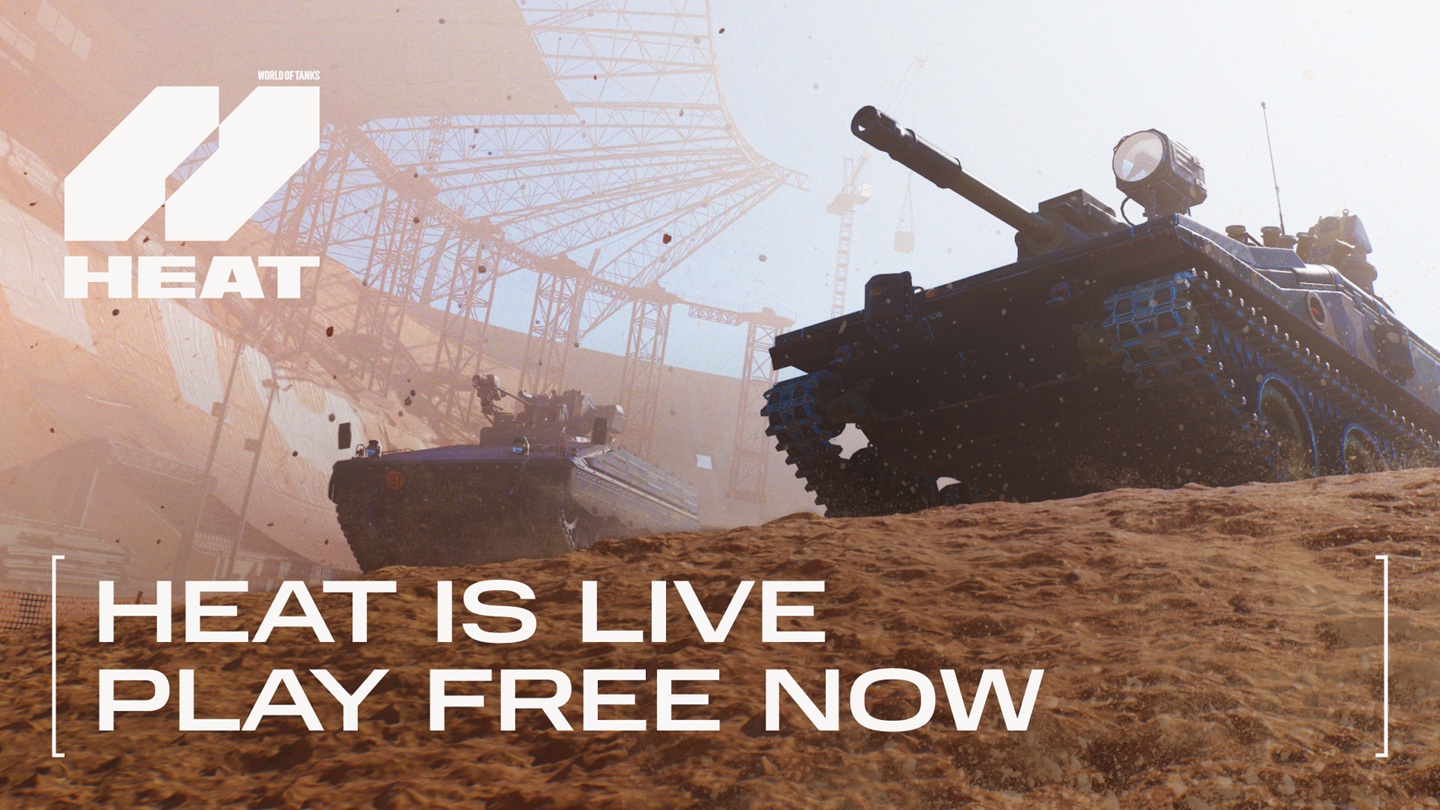
A Fresh Coat of Armour
The world of tank combat games has long been dominated by realism, methodical pacing, and a steep learning curve. World of Tanks: HEAT takes a different approach, blending armoured warfare with hero-inspired abilities and a more accessible structure designed to appeal to a broader audience. Rather than asking players to memorise armour values and weak points from the outset, it focuses on fast-paced encounters, distinctive tank commanders, and teamwork-driven battles that place as much emphasis on tactical decision-making as raw firepower.
The result is an experience that feels familiar enough for veterans of the genre while introducing enough new ideas to stand apart from its contemporaries. Although not every system reaches its full potential, World of Tanks: HEAT succeeds in delivering engaging multiplayer action on Xbox, offering a compelling alternative for players looking for something a little different from traditional military simulations.
Heroics Behind the Hull
The most obvious departure from conventional tank combat games is the introduction of Agents, each bringing unique abilities and battlefield advantages. These special characters inject a layer of personality into a genre that often prioritises machinery over individuality.
Rather than simply selecting a vehicle and entering battle, players choose an Agent whose skills can influence the outcome of engagements. Some specialise in reconnaissance, helping teams identify enemy positions, while others focus on survivability or offensive capabilities. These abilities are impactful without completely overshadowing the importance of positioning, timing, and teamwork.
The system adds welcome variety to matches. Different team compositions can significantly alter the flow of a battle, encouraging players to experiment with combinations and discover synergies between various Agent abilities. It also creates memorable moments that distinguish World of Tanks: HEAT from more traditional tank-focused experiences.
Crucially, these powers rarely feel overwhelming. Success still depends on understanding the battlefield and coordinating with teammates, ensuring that strategy remains at the heart of every encounter.

Faster Battles, Sharper Action
World of Tanks: HEAT embraces a more accessible style of combat, resulting in matches that are quicker and more immediately engaging than many of its competitors. Movement feels responsive, aiming is intuitive with a controller, and engagements tend to develop rapidly once opposing forces make contact.
This streamlined approach helps reduce the barriers to entry that can often discourage newcomers. Within a few matches, players can understand the basics and begin contributing to their team’s success. That accessibility is one of the game’s greatest strengths.
However, simplicity does come with trade-offs. While battles are consistently entertaining, some veteran players may find themselves wishing for greater tactical complexity over the long term. Certain engagements can become predictable, particularly when familiar maps and strategies begin to emerge.
Fortunately, the Agent system and varied vehicle classes help counteract this issue. Light tanks remain ideal for scouting and flanking, while heavier vehicles absorb punishment and control key areas of the battlefield. Learning when to push forward and when to hold position remains essential, providing enough strategic depth to keep matches engaging.
The pacing strikes an effective balance between action and tactical decision-making, making it easy to jump into a quick session while still rewarding players who invest time in mastering the game’s mechanics.
An Alternate History Worth Exploring
The game’s alternate-history setting provides an interesting backdrop for the action. Rather than grounding itself entirely in historical realism, World of Tanks: HEAT embraces a more imaginative interpretation of armoured warfare.
This creative freedom allows the developers to introduce distinctive environments, technology, and character designs that help establish a unique identity. While narrative elements never take centre stage, the setting contributes to the game’s overall personality and helps differentiate it from more serious military-themed experiences.
The visual design benefits from this approach as well. Vehicles feel appropriately powerful while maintaining their own distinct characteristics, and the colourful presentation prevents battlefields from becoming visually repetitive.
Although players seeking an authentic simulation may not connect with the game’s stylised direction, those willing to embrace its alternate-history premise will find a world that feels surprisingly cohesive.
Progression That Encourages Experimentation
Progression plays an important role in maintaining long-term engagement, and World of Tanks: HEAT generally performs well in this area. Unlocking new content provides a steady sense of accomplishment, giving players reasons to continue returning after their first few matches.
New vehicles, Agent upgrades, and customisation options help create meaningful goals. The progression curve feels reasonably paced, ensuring that rewards arrive frequently enough to maintain momentum without trivialising advancement.
There are moments where progression can feel slower than expected, particularly for players focused on unlocking specific items. However, the overall structure remains rewarding and avoids many of the frustrations often associated with free-to-play multiplayer games.
More importantly, progression rarely feels mandatory for enjoyment. Even early on, players have access to enough tools and options to remain competitive, helping preserve balance across the player base.
Built for Teamwork
At its best, World of Tanks: HEAT thrives on cooperation. Communication and coordination can transform an average team into a formidable force, especially when Agents complement one another effectively.
Capturing objectives, protecting vulnerable allies, and timing offensive pushes all contribute to success. Players who approach matches with a team-first mentality will likely find the most enjoyment.
The game does a respectable job of encouraging cooperation without making solo players feel excluded. Matchmaking remains accessible, and individual contributions can still have a meaningful impact on outcomes.
That said, the quality of team-based experiences inevitably depends on the players involved. Some matches demonstrate excellent coordination, while others can feel more chaotic. This inconsistency is a common challenge for multiplayer-focused games and is not unique to World of Tanks: HEAT.

Strong Performance on Xbox
From a technical perspective, World of Tanks: HEAT delivers a polished experience on Xbox. Matches load quickly, performance remains stable during intense firefights, and controls feel well suited to a controller.
Vehicle movement feels weighty without becoming cumbersome, and aiming strikes a comfortable balance between precision and accessibility. The user interface is generally clear and easy to navigate, helping players focus on the action rather than wrestling with menus.
Visually, the game presents detailed vehicle models and attractive environments that maintain clarity even during large-scale battles. Explosions carry satisfying impact, while environmental effects add atmosphere without compromising visibility.
Audio design also deserves recognition. Engine sounds convey the power of each vehicle, while weapon effects provide appropriate feedback during combat. The soundtrack is used sparingly but effectively, allowing battlefield action to remain the primary focus.
While it may not push Xbox hardware to its limits, the game consistently delivers a smooth and enjoyable experience.
A Few Dents in the Armour
Despite its many strengths, World of Tanks: HEAT is not without shortcomings.
The most significant issue is that some systems lack the depth needed to sustain long-term engagement for the most dedicated players. The streamlined design that makes the game accessible can occasionally work against it, limiting strategic complexity in certain situations.
Balance concerns may also emerge as the player base continues to evolve. While no particular Agent feels overwhelmingly dominant at present, maintaining fairness across a growing roster will require ongoing attention.
Additionally, some progression milestones can feel slightly repetitive, particularly during extended play sessions. Greater mission variety and additional incentives could help alleviate this issue over time.
None of these concerns significantly undermine the experience, but they do prevent the game from reaching its full potential.

Final Thoughts
World of Tanks: HEAT successfully reimagines armoured warfare through a more accessible and personality-driven lens. By combining tactical tank combat with unique Agent abilities, it creates a multiplayer experience that feels distinct without abandoning the strategic foundations that make the genre appealing.
Its approachable design, rewarding progression, and strong Xbox performance make it easy to recommend, particularly for players seeking team-based action that values cooperation as much as individual skill. While some systems could benefit from greater depth and refinement, the core gameplay loop remains consistently enjoyable.
World of Tanks: HEAT may not revolutionise the genre, but it delivers enough fresh ideas and polished execution to stand out in a crowded multiplayer landscape. For Xbox players looking for a blend of tactical combat and hero-inspired gameplay, this is an experience well worth deploying into.
Overall
-
CX Score - 80%80%
Summary
Pros
- Distinctive Agent system adds meaningful variety
- Accessible yet rewarding tank combat
- Strong team-based gameplay
- Stable performance on Xbox
- Satisfying progression and unlocks
- Attractive alternate-history presentation
Cons
- Some systems lack long-term depth
- Progression can occasionally feel repetitive
- Potential balance concerns as content expands