

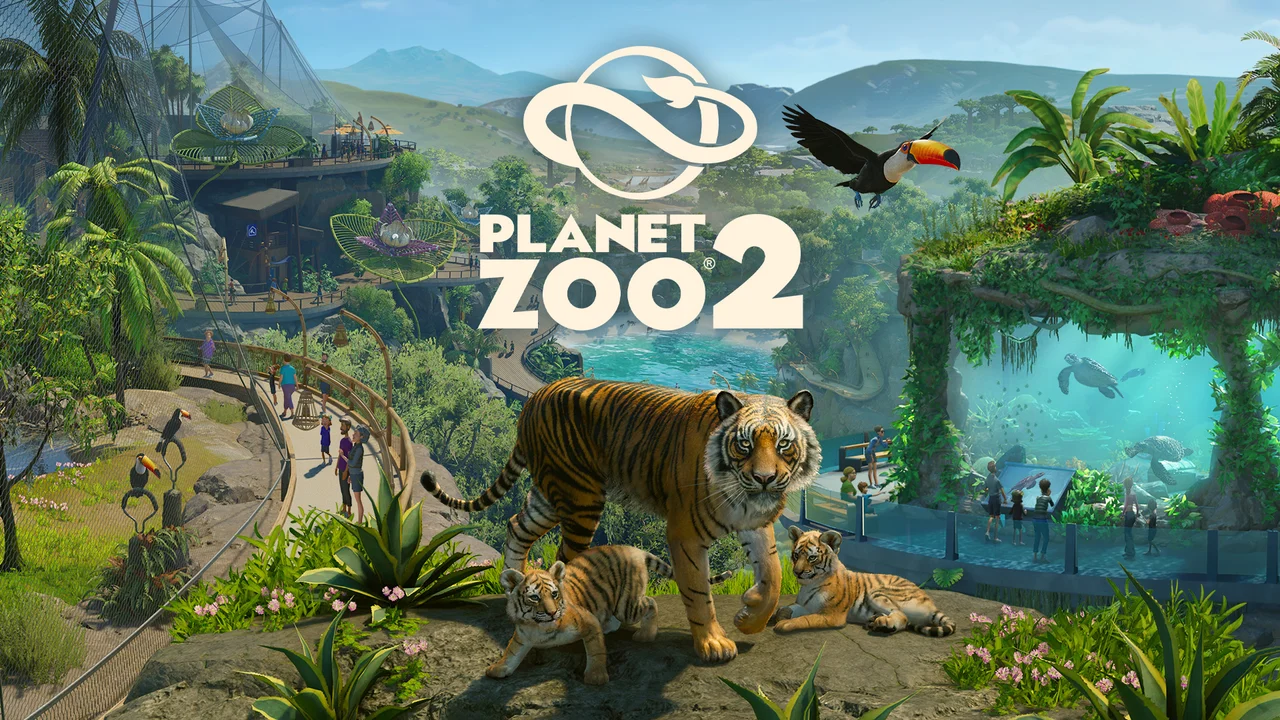
There are certain games that instantly grab your attention the moment they’re shown, and after recently attending an exclusive preview event for Planet Zoo 2, it’s safe to say Frontier Developments may have something very special on their hands.
The original Planet Zoo earned a passionate following thanks to its incredible attention to detail, deep management systems, and genuine love for wildlife conservation. It wasn’t simply a zoo-building game; it was a living ecosystem where every animal, enclosure, and decision mattered. Naturally, that left one major question when the sequel was unveiled: where do you go from there?
Having now seen Planet Zoo 2 in action and heard directly from the team behind it, the answer appears to be surprisingly simple. You make everything bigger, more connected, more creative, and more alive.
What Frontier showed during the presentation wasn’t a game looking to reinvent itself. Instead, it felt like a developer taking everything players loved about the original and pushing it significantly further.
And honestly, it was hard not to leave impressed.
Building Upon a Strong Foundation
One of the first things that became clear throughout the event was just how much respect Frontier has for the original game. There was never a sense that the studio was trying to throw away what worked before. Instead, the focus is firmly on evolution.
That approach immediately makes sense. The original Planet Zoo already established itself as one of the most detailed and authentic zoo management experiences available, so rather than rebuilding the foundations, Frontier has concentrated on expanding them.
Every system shown during the presentation felt more interconnected than before. Animal management appears deeper, habitat creation offers more flexibility, and guest interactions seem designed to react more naturally to the world around them.
The result is a sequel that feels familiar while simultaneously appearing far more ambitious.
A Zoo That Truly Feels Alive
Perhaps the most striking aspect of the entire presentation was just how alive everything felt.
Animal behaviour has clearly received a significant amount of attention, and it shows. Watching creatures interact with their surroundings felt more natural than ever, with animations blending together seamlessly and behaviours appearing far less scripted.
Rather than simply existing within an enclosure, the animals feel like active participants within the ecosystem you’ve created.
During the gameplay demonstration, there were numerous examples of species responding to environmental changes, interacting with enrichment activities, and displaying unique personality traits that made each exhibit feel distinct.
It’s these small details that elevate Planet Zoo 2 beyond a standard management simulator.
Frontier isn’t simply asking players to build attractive exhibits. They’re encouraging players to create environments where animals can genuinely thrive.
That distinction feels incredibly important.
The Skies Open Up
One of the biggest reveals during the event was the introduction of flying animals.
For years, players have dreamed about creating expansive aviaries packed with birds soaring overhead, and now that dream is becoming reality.
Seeing these new habitats in motion was genuinely impressive. Birds moved naturally through large, detailed environments, creating exhibits that felt dramatically different from anything available in the original game.
More importantly, these additions don’t appear to be superficial.
The presentation highlighted how flying species bring entirely new management challenges, enclosure requirements, and guest experiences. Designing habitats now involves considering vertical space in ways that simply weren’t possible before.
It’s the kind of addition that has the potential to fundamentally change how players approach zoo design.
And judging by the reaction in the room (so to speak), it’s something fans have been waiting a long time to see.

Creativity Without Limits
If there was one recurring theme throughout the event, it was player creativity.
Frontier repeatedly emphasised giving players more tools, more freedom, and more opportunities to build the zoo they envision.
The construction systems showcased during the presentation looked incredibly flexible, allowing for even greater customisation than before. Whether creating intricate habitats, detailed guest areas, or sprawling conservation centres, the possibilities appear vast.
What stood out wasn’t necessarily the quantity of tools available, but how approachable they seemed.
The development team appears keenly aware that while some players love spending hundreds of hours perfecting every tiny detail, others simply want to create beautiful zoos without feeling overwhelmed.
Finding that balance is never easy, but based on what was shown, Planet Zoo 2 looks determined to cater to both audiences.

Conservation Remains at the Heart of Everything
One aspect that has always separated Planet Zoo from many other management games is its focus on conservation, and thankfully that remains a central pillar of the sequel.
Throughout the presentation, Frontier spoke passionately about the importance of animal welfare, education, and environmental responsibility.
Rather than treating animals as simple attractions designed to generate profit, Planet Zoo 2 continues to frame them as living creatures with specific needs and requirements.
This philosophy influences almost every system within the game.
Habitat design, enrichment opportunities, breeding programmes, guest education, and overall zoo management all appear tied together through a stronger emphasis on conservation.
It’s a refreshing approach, and one that gives the series a unique identity within the management genre.
Guests Feel More Important Than Ever
While animals naturally take centre stage, guests appear to have received considerable attention as well.
One area highlighted during the presentation was how visitors now seem more reactive to their surroundings. Their experiences are shaped not only by the exhibits themselves but also by the wider environment you’ve created.
Path layouts, viewing areas, facilities, educational opportunities, and overall zoo flow all play a role in determining how guests engage with your park.
This creates a stronger connection between design decisions and player outcomes.
A beautifully designed zoo isn’t just visually appealing—it directly impacts how visitors experience the attraction.
That added layer of depth should make long-term management significantly more rewarding.

Designed for Long-Term Growth
Something else that stood out during the event was the scale of Frontier’s ambitions.
Everything about Planet Zoo 2 feels designed for longevity.
The expanded roster of animals, deeper management systems, increased creative freedom, and additional gameplay mechanics all point towards a game built to support hundreds of hours of experimentation.
There was a genuine sense that Frontier isn’t simply launching a sequel. They’re creating a platform capable of growing alongside its community for years to come.
Given the extensive support the original game received, that prospect is incredibly exciting.
A Strong Future on Xbox
As an Xbox player, one of the most encouraging aspects of the presentation was seeing how naturally the game appears to translate to consoles.
The original console release proved that Planet Zoo could work exceptionally well with a controller, and Planet Zoo 2 seems determined to build upon those lessons.
Menus looked intuitive, navigation appeared streamlined, and there was a clear focus on ensuring players can access the game’s depth without sacrificing usability.
Management games have often struggled on consoles in the past, but Frontier has already demonstrated that it understands how to adapt these experiences for controller players.
Based on what was shown, there’s every reason to believe Planet Zoo 2 will continue that trend.
Early Impressions
Leaving the event, the overwhelming feeling was one of excitement.
It’s easy for sequels to become trapped between innovation and familiarity, often struggling to satisfy either side. From what I saw, Planet Zoo 2 appears to be navigating that challenge remarkably well.
The original game’s strengths remain intact, but almost every system shown feels expanded, refined, or improved in meaningful ways.
The introduction of flying animals immediately stands out as a headline feature, but it’s the countless smaller improvements that may ultimately have the biggest impact. Better animal behaviour, deeper management systems, enhanced guest interactions, and increased creative freedom all contribute towards a sequel that feels genuinely ambitious.
Of course, there are still questions that can only be answered once players get their hands on the final game. Balancing, progression, long-term engagement, and performance all remain important considerations.
But as first impressions go, it’s difficult to ask for much more.

Final Thoughts
After attending the exclusive reveal event, it’s clear that Planet Zoo 2 isn’t content with simply repeating the success of its predecessor.
Instead, Frontier Developments appears determined to build upon everything that made the original special while introducing meaningful additions that expand the experience in exciting new directions.
From the introduction of flying animals and larger, more dynamic habitats to deeper management systems and enhanced player creativity, the sequel looks poised to deliver the most ambitious zoo-building experience the series has seen to date.
There’s still time before launch, and plenty more to discover, but based on what I saw during the event, Planet Zoo 2 is already shaping up to be one of the most exciting management games on the horizon for Xbox players.
And if the final game delivers on the promise shown during this preview, zoo enthusiasts are going to have a lot to look forward to.