

A Bumpy Ride That’s Finding Its Route After a Few Hotfixes
There is something strangely relaxing about driving a bus. Maybe it is the steady rhythm of pulling away from a stop, watching passengers climb aboard, checking the mirrors before easing back into traffic and slowly making your way through a city while the world carries on around you. It is certainly not the sort of experience that is going to appeal to everyone, but for those of us who enjoy simulation games, there is a genuine satisfaction in taking something that could otherwise seem incredibly ordinary and turning it into an enjoyable experience. Bus Simulator 27 understands that better than most, although getting there has not always been the smoothest journey.
At launch, there were certainly some bumps in the road. Crashes, traffic behaviour, save issues, strange penalties, passenger problems and some rather questionable AI could make the experience frustrating, particularly when you were trying to settle into what should be a fairly chilled-out driving session. Thankfully, this is where the current version of the game deserves some credit. The Xbox version has received a sizeable number of hotfixes in a very short period of time, with updates targeting everything from crashes and save protection to traffic collisions, bus handling, passenger behaviour, penalties and multiplayer. The latest update has continued that work, improving AI traffic interactions, fixing buses that refused to leave depots, addressing narrow-turn problems and even tackling some of the more peculiar passenger behaviours. In other words, this is not the same experience that greeted players at launch, and that is important when judging what is now sitting on Xbox.
And thankfully, underneath those early problems is a really enjoyable bus simulator.
Welcome to Felicia Bay
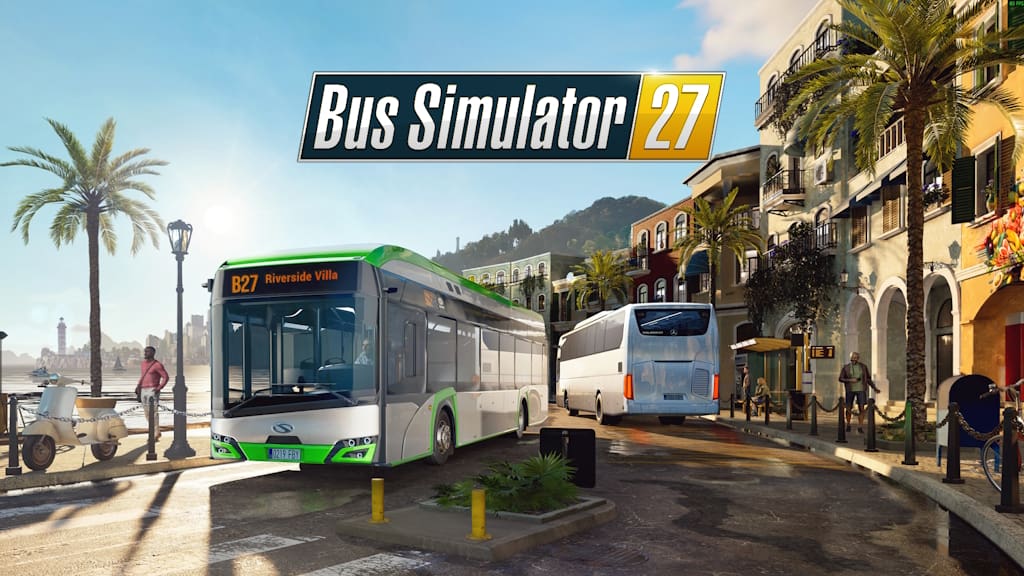
The first thing that stands out about Bus Simulator 27 is the world itself. Felicia Bay provides a sizeable playground for your bus-driving ambitions, and while it is a fictional location, it has enough character and variety to keep the journeys interesting. You aren’t simply driving around a handful of identical city streets, either. There are urban areas, residential neighbourhoods, countryside, winding roads, larger highways and plenty of locations that make each route feel different enough from the last.
What I particularly like is how the world encourages you to look beyond simply following a line from one bus stop to another. There is a sense that this is a living environment rather than a collection of roads stitched together purely for the purpose of simulation. Weather can change, the time of day moves along and traffic fills the roads around you, which means that a route can feel quite different depending on when you decide to drive it. A bright afternoon journey can eventually become a nighttime service in the rain, and those little changes do more than simply make the game look pretty. They alter the atmosphere of the entire experience.
There is also something quite satisfying about being able to step away from the bus itself. You can explore parts of Felicia Bay on foot, discover points of interest and collectibles, and even take on roles such as inspector or passenger. These additions might sound relatively minor on paper, but they help make the world feel more like a place rather than a giant driving test.
It isn’t a perfect open world, and there are moments where the simulation can still show its seams, but there is enough here to make me want to explore rather than simply drive from A to B.

Getting Behind the Wheel
Of course, none of this matters if actually driving the buses isn’t enjoyable, and this is where Bus Simulator 27 generally gets things right. There is a satisfying weight to the vehicles, and while the game is accessible enough that you don’t need to be a professional bus driver to understand what you’re doing, it still expects you to pay attention.
Braking too late, taking a corner badly or misjudging your positioning can quickly turn a tidy journey into something considerably messier. Larger buses require a little more thought, and articulated vehicles naturally demand greater awareness of what the rear section is doing when you’re navigating tighter streets. That feeling of gradually becoming more comfortable with a particular vehicle is one of the game’s biggest strengths.
The Xbox controller works well for the most part, giving you enough precision to make smaller corrections without making the whole experience feel unnecessarily complicated. There are plenty of simulation options for those who want to get more involved, but you can also simply climb aboard, start the engine and enjoy driving without spending an evening configuring every possible setting.
There are still moments where the handling can feel a little unusual, particularly when negotiating tighter turns or dealing with the more demanding roads, but the recent updates have improved several of the underlying problems. Vehicle acceleration issues have been addressed, buses struggling with certain inclines have received attention, and narrow-turn behaviour has been improved. These might not sound like headline-grabbing changes, but when you’re playing a simulator, these small improvements make a surprisingly large difference.
More Than Just Driving
One of the things that gives Bus Simulator 27 more longevity than a straightforward driving game is the management side of the experience. You’re not simply borrowing somebody else’s bus and completing routes forever. You are building your own company, developing services and gradually expanding what you can offer.
This creates a nice progression loop because every route starts to feel like it has a purpose. Completing journeys earns money and helps develop your operation, while the ability to manage your fleet and services gives you something to work towards beyond simply collecting more buses.
And there are plenty of buses to choose from. With more than 45 officially licensed vehicles, the fleet provides plenty of variety, covering different sizes and types of buses, including electric vehicles, articulated models, double-deckers and coaches. Each vehicle has its own personality, and the sheer number of options means you can spend a considerable amount of time deciding exactly what sort of company you want to build.
That variety is important because the game doesn’t force you into one particular way of playing. Story mode gives you a more structured experience, Career provides the longer-term progression, while Sandbox allows you to simply enjoy the driving and management elements without being constantly pushed towards the next objective.
It is a good mixture, and one that means Bus Simulator 27 can cater to both newcomers and people who want to sink dozens of hours into running their own virtual transport empire.
When Traffic Becomes the Problem
Unfortunately, one area where the simulation hasn’t always been quite as convincing is traffic.
The idea of sharing the road with AI cars and buses sounds great, and when everything works, it genuinely adds to the experience. Having to wait at junctions, negotiate traffic and react to what’s happening around you makes the roads feel much more believable. The problem is that the AI hasn’t always behaved particularly intelligently.
Some of the launch issues were especially frustrating because they could interfere with the basic rhythm of a route. Traffic collisions, odd junction behaviour and buses behaving strangely could make you question whether you’d just witnessed a genuine simulation of public transport or a particularly elaborate traffic comedy.
The good news is that this is another area where the hotfixes have made a noticeable difference. Traffic flow has been adjusted, junctions have received attention, collision penalties have been reduced and AI buses have been fixed in situations where they could simply sit in depots rather than actually doing the job they were assigned to do. The latest update has continued improving how AI cars and buses interact with your vehicle.
That doesn’t mean the traffic is suddenly perfect. It isn’t. But the difference between something being frustratingly broken and something occasionally behaving oddly is enormous, and Bus Simulator 27 is moving firmly towards the latter.
The Penalty Problem
One of my bigger frustrations has been the game’s approach to penalties. Simulation games need rules, obviously, and there is nothing wrong with being punished for driving badly. In fact, that is part of the fun. If I smash into a traffic light or forget to indicate before turning, I don’t expect the game to congratulate me.
The problem comes when the game appears to misunderstand what you’ve done.
At various points, Bus Simulator 27 could be rather overzealous with things such as turn signals, lane changes, kerbs and collisions. That could be particularly annoying when you’re attempting to drive carefully and still find yourself being penalised for something that wasn’t entirely your fault.
Again, though, this is where the current version is considerably better. The developers have made changes to penalty behaviour, addressed incorrect red-light penalties, reduced collision penalties and fixed several situations where turn-signal penalties weren’t behaving as intended. There is even a temporary ability to disable certain penalties, which is a welcome option while the simulation continues to be refined.
I still think the penalty system could be more forgiving, particularly for newcomers, but it no longer feels like the game is actively looking for reasons to ruin your route.

Playing Together
Multiplayer is another welcome addition, allowing up to four players to work together and build their transport company. There is something inherently amusing about the idea of getting a group of friends together and deciding that, rather than playing a shooter or racing game, you’re all going to run a bus company.
Yet it works.
You can coordinate routes, manage the fleet and simply enjoy driving together, and it adds another dimension to a game that could otherwise become a solitary experience. The recent fixes have also addressed a number of multiplayer problems, including players spawning incorrectly, loading issues and passengers behaving strangely for other players.
It isn’t going to turn Bus Simulator 27 into a completely different game, but for the right group of friends, this could easily become one of those unexpectedly addictive co-op experiences where you start with a simple “let’s try it for an hour” and somehow find yourselves still driving buses several hours later.
A Simulator That’s Still Finding Its Feet
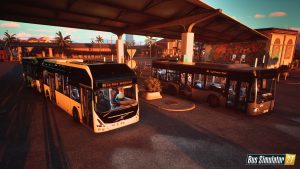
Visually, Bus Simulator 27 is generally impressive. Felicia Bay looks good, the buses themselves are the stars of the show and there is a pleasing level of detail inside the vehicles. Watching the world change around you as the weather moves from sunshine to rain and day turns into night adds considerably to the atmosphere.
There are still moments where NPC animations, traffic and environmental details remind you that this is a game rather than a perfect recreation of reality, but that is hardly unusual for a simulation of this scale.
More importantly, the developers appear to be listening. The sheer number of fixes arriving so quickly after launch is encouraging, particularly because many of them aren’t simply cosmetic changes. Stability, performance, traffic, vehicle behaviour, passenger interactions, saving and multiplayer have all received attention.
That doesn’t erase the problems the game had at launch, nor should it. But I would much rather see a developer actively tackling those issues than leave a game sitting in the same state for months. Bus Simulator 27 feels like a game that is being worked on, refined and improved rather than one that has been abandoned after release.
Overall
Bus Simulator 27 is an interesting one to score because there are two very different stories surrounding it. One is the launch version, which had more technical and gameplay problems than it really should have. The other is the game sitting on Xbox after numerous hotfixes, where many of those frustrations have already been addressed and the underlying experience is much easier to appreciate.
And it is that second version that matters to me.
What remains is a sizeable, ambitious and surprisingly enjoyable bus simulator with a great selection of licensed vehicles, a varied open world, meaningful company management, multiple game modes, plenty of customisation and an excellent co-op option. It doesn’t reinvent the simulator genre, but it doesn’t need to. What it does is provide a convincing virtual bus-driving experience that can be as relaxing or as demanding as you want it to be.
There are still rough edges. The AI can occasionally make you wonder what planet its drivers are from, the penalty system can still be a little too eager to punish mistakes and the occasional technical or visual oddity remains. But the important thing is that those issues no longer completely overshadow the experience.
Bus Simulator 27 is at its best when you stop worrying about reaching the destination as quickly as possible and simply settle into the journey. Pick your bus, plan your route, watch the weather roll in, collect your passengers and become part of the rhythm of Felicia Bay.
It might have taken a few trips around the block to get there, but Bus Simulator 27 is finally starting to feel like the bus simulator it always wanted to be.
Final Thought
Bus Simulator 27 has had a bumpy beginning, but the road ahead is looking considerably smoother. It isn’t perfect, and there are still areas that need refinement, but the combination of a huge world, excellent bus variety, enjoyable driving and surprisingly deep management makes this an easy recommendation for simulation fans. With the developers continuing to iron out the remaining problems, there is every reason to believe this is a game that will only get better with time.
Overall
-
CX Score - 80%80%
Summary
Pros
- Large and varied Felicia Bay open world
- Excellent selection of licensed buses
- Enjoyable and weighty driving model
- Strong career and company-management systems
- Story, Career and Sandbox modes provide plenty of choice
- Dynamic weather and day/night cycle
- Four-player cooperative multiplayer
- Lots of customisation and progression
- Numerous hotfixes have significantly improved the Xbox experience
Cons
- AI traffic can still behave strangely
- Penalty system remains occasionally frustrating
- Some visual and NPC issues remain
- Technical problems haven’t disappeared completely
- Can be overwhelming for newcomers