

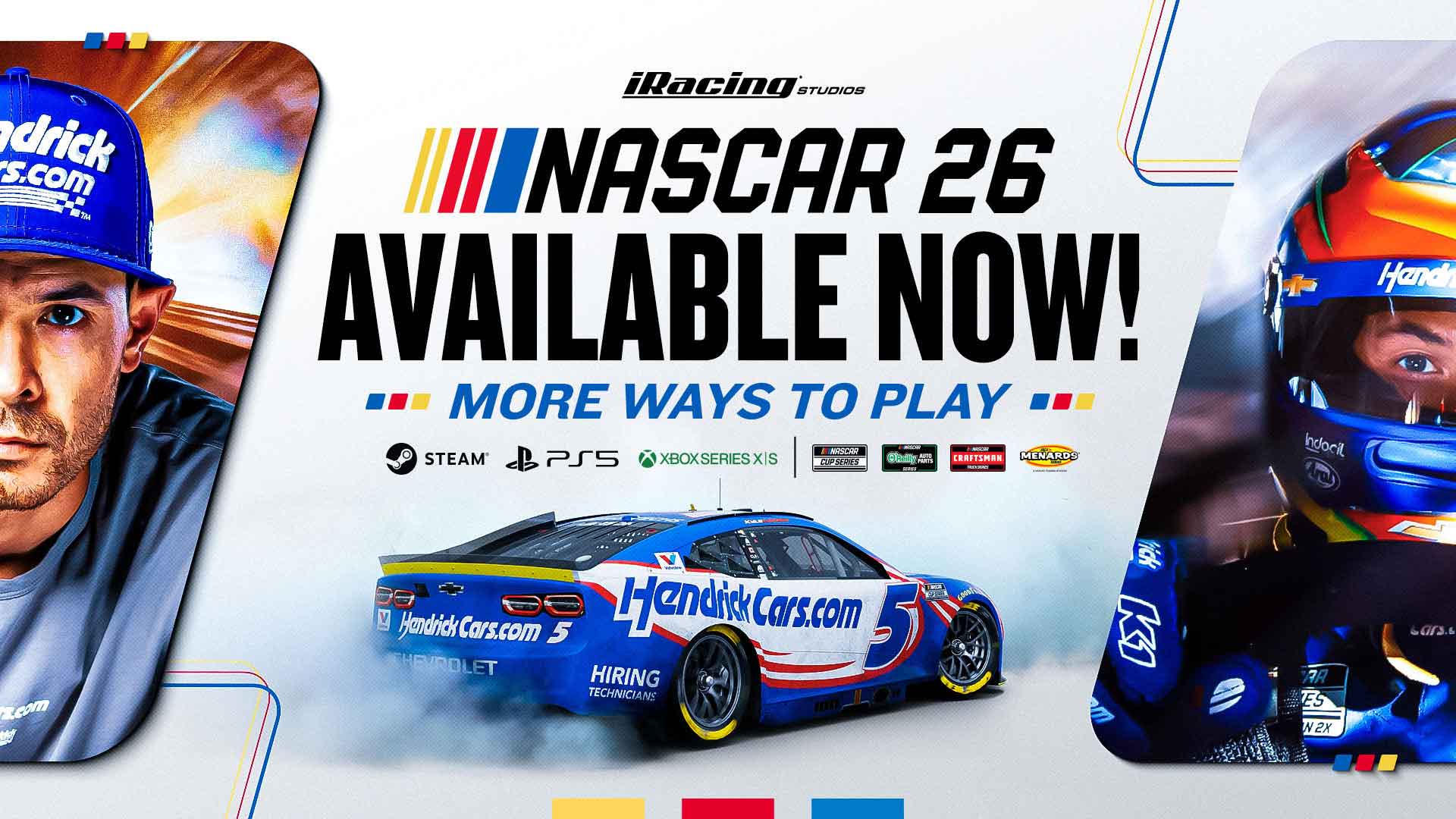
There is something quite satisfying about watching a racing series slowly find its feet. When I reviewed NASCAR 25 last year, I came away feeling that iRacing Studios had finally given NASCAR gaming the foundation it needed, but it was very much a foundation rather than a finished house. There were plenty of things to like, particularly once you got behind the wheel, but there were also enough rough edges to leave me wondering just how much could be achieved with another year of development.
That brings us to NASCAR 26, and while this isn’t the sort of sequel that completely tears up the rulebook, it does something that I think is arguably more important. It takes what worked in NASCAR 25, looks at the areas that needed attention and gradually builds upon them. The result isn’t a radically different NASCAR game, but it is a more confident and enjoyable one, particularly once you settle into a long race and begin to appreciate how much more is happening beneath the surface.
The biggest compliment I can give NASCAR 26 is that the first thing I wanted to do after finishing one race was start another. That might sound like a small thing, but with a simulation-heavy racing game, the relationship you develop with the car is everything. If the handling doesn’t feel right, everything else becomes irrelevant. Thankfully, NASCAR 26 gets that part right.
Back Behind The Wheel
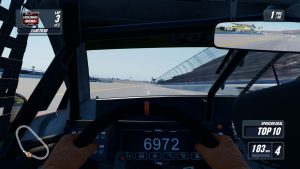
If you’ve played NASCAR 25, you’ll immediately feel at home here, but spend a little more time with NASCAR 26 and you’ll start noticing that the cars feel more communicative. There is a greater sense of weight underneath you, and the relationship between your throttle, braking and tyres feels more natural than it did previously. You’re not simply pointing the car into a corner and hoping for the best; you’re constantly making little adjustments to keep the car settled and maintain that precious momentum.
That becomes particularly noticeable when you’re trying to find the right balance through the longer corners. NASCAR racing is all about managing that relationship between speed and grip, and NASCAR 26 does a better job of making you feel when you’ve asked too much of the car. Push too hard and you can feel the front beginning to wash out, get too aggressive with the throttle and the rear can become considerably less cooperative. It isn’t brutally difficult, but it does demand more thought than simply holding the accelerator down and turning left.
The braking improvements are another welcome part of that experience. Braking in a NASCAR game isn’t quite the same affair as it is in a traditional circuit racer, but NASCAR 26 gives you a much better sense of what the car is doing when you lean on the brakes. There is a little more consequence to being too aggressive, and that makes the process of getting the car slowed down and settled for the next corner considerably more rewarding.
What I particularly like is that this hasn’t come at the expense of accessibility. You can still pick up the controller and get racing without needing to spend hours learning every setting before you even leave the pits. There is plenty here for the more serious racer to get their teeth into, but the game doesn’t constantly remind you that you’re playing a simulation. It simply lets you find your own level.
And that philosophy carries over nicely into the way NASCAR 26 handles its tyres and changing track conditions.
Every Lap Can Tell A Different Story
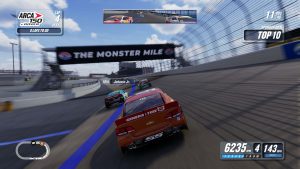
One of the things that can make a racing game feel special is when you stop feeling like you’re simply repeating the same lap over and over again. NASCAR 26 moves further towards that feeling with its dynamic track and tyre systems, and while these aren’t always perfect, they add a welcome layer of unpredictability to longer races.
As rubber builds up on the racing surface, grip changes, and the line that worked beautifully at the start of a race may not necessarily remain the best option several laps later. That might not sound revolutionary, but when you’re racing around an oval for lap after lap, these little changes become important. Suddenly, you’re not just thinking about how quickly you can get around the next corner; you’re thinking about how much you’re asking from the tyres and whether the way you’re driving now is going to hurt you later.
That is where NASCAR 26 starts to become particularly enjoyable.
You can attack a stint aggressively and try to gain as much ground as possible, but there is a price to pay if you abuse the tyres. Alternatively, you can be more conservative, protect your rubber and hope that your patience pays off towards the end of the stint. Neither approach is guaranteed to work every time, and that is precisely what makes it interesting.
There are still occasions where the tyre behaviour doesn’t feel quite as consistent as it should, and the way grip develops can sometimes leave you wondering why the car suddenly feels different. However, the overall direction is absolutely right. This is the sort of system that can become increasingly impressive with further refinement, and it gives NASCAR 26 a greater sense of life than its predecessor.
Of course, how much fun you have with that depends to some degree on the cars around you, and this is where the AI continues to be something of a mixed bag.
When The Pack Comes Alive
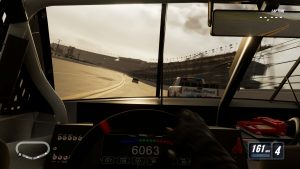
There are races in NASCAR 26 where the AI is fantastic. You’ll find yourself running three-wide, fighting for position and constantly checking your mirrors because the car behind you is looking for the smallest opportunity to get alongside. Those are the moments when NASCAR 26 really captures the appeal of the sport.
Then there are other races where you find yourself wondering what everyone else on the track is doing.
The AI can still be inconsistent, particularly when it comes to how aggressively it races and how different difficulty settings translate from one circuit to another. You can have a fantastic battle one minute and then encounter behaviour that feels considerably less convincing the next. It doesn’t ruin the game, but it does prevent the racing from feeling as consistently authentic as it could.
That inconsistency is particularly noticeable because the underlying racing model is capable of producing some brilliant moments. When the AI gets it right, the pack feels alive, and those close battles are exactly what I want from a NASCAR game. When it gets it wrong, however, the illusion can disappear rather quickly.
The ability to adjust driver ratings does help, particularly if you enjoy creating your own competitive field, and it gives more experienced players some additional control over how their races unfold. It doesn’t completely solve the underlying issue, but it does give you another way of shaping the experience.
It is one of those areas where I hope iRacing Studios continues to push forward because the potential is clearly there.
Building A Career
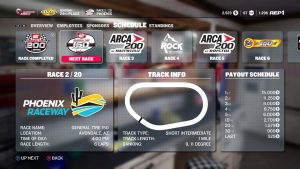
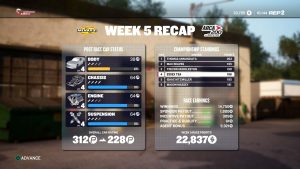
Career Mode is another area where NASCAR 26 feels like a continuation rather than a complete reinvention. There is more progression to consider, more reasons to care about improving your operation and a greater sense that you’re working your way towards something rather than simply ticking races off a calendar.
Moving through the different classes is particularly enjoyable because the cars have enough personality to make those changes feel worthwhile. Jumping between the different levels of NASCAR isn’t simply a case of getting into a slightly faster version of the same vehicle. Each has its own characteristics, and learning how to get the most out of them is part of the fun.
Where Career Mode still leaves me wanting a little more is in the way it presents that journey.
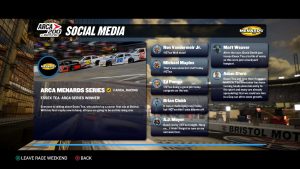
There is plenty to do, but I still don’t feel quite as connected to the career itself as I would like. The menus and progression systems work perfectly well, but there is room for more personality. I’d love to see stronger rivalries, more meaningful relationships with teams and drivers, and a greater feeling that the decisions you’re making away from the track actually shape the career you’re building.
The framework is there, though, and it is considerably easier to lose yourself in a season when you’re constantly working towards improving your team and progressing through the various stages of your career.
For those who don’t want to commit to that sort of long-term experience, NASCAR 26 has another option that I really enjoyed.
Straight Into The Chase
The Chase is a wonderfully straightforward addition because it understands that sometimes you simply want to go racing.
Rather than committing yourself to an entire season, you can jump into the final stage of the championship and immediately find yourself fighting for the title. It’s a simple idea, but one that works particularly well when you only have a limited amount of time or simply fancy experiencing the pressure of a championship finale.
It also fits nicely alongside the more traditional Career and Championship options. NASCAR 26 is at its best when it gives you different reasons to return without making every mode feel unnecessarily complicated.
That same philosophy applies to Peak Performance, which provides a useful introduction for players who might be new to the series. NASCAR can be intimidating if you’re unfamiliar with the cars, tracks and racing etiquette, so having something that allows you to learn at your own pace is a welcome addition.
For experienced players, it isn’t going to transform the game, but NASCAR 26 increasingly feels like a game that wants to bring people into the sport rather than immediately throwing them into the deep end.
The Show Gets Better
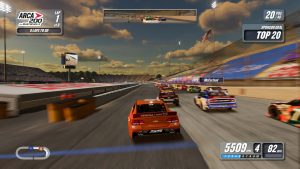
Visually, NASCAR 26 continues the progress made by its predecessor. The cars look fantastic, the tracks have plenty of detail and the presentation does a good job of making race weekends feel like events rather than simply a collection of races.
The lighting is particularly effective, with different times of day creating some genuinely impressive moments. There is something about coming through a corner with the sun hanging low over the track, surrounded by a pack of cars, that reminds you just how good a modern NASCAR game can look.
The crashes have also received attention, although this is still an area where I think there is more work to be done. NASCAR is a sport where contact is inevitable, and when you eventually get caught up in a major incident, you want the visual consequences to feel as dramatic as the crash itself. NASCAR 26 has improved things, but the damage modelling still doesn’t quite deliver the level of destruction I’d like to see.
There are also occasional visual quirks and small technical issues that remind you this isn’t a completely polished package. Thankfully, they tend to be the sort of things that disappear into the background once you’re properly involved in a race.
And that’s important, because NASCAR 26 is at its best when you’re concentrating on the racing rather than looking for problems.
Opening Up The Grid
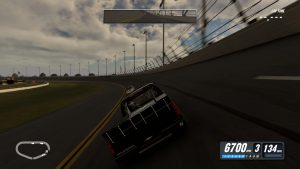
The introduction of cross-platform multiplayer is another step in the right direction, and one that could prove increasingly important as the online community grows.
There is something inherently more exciting about a NASCAR race when you know the cars around you are being controlled by real people. Of course, that also means you’re going to encounter the inevitable first-corner hero who appears to believe that braking is merely a suggestion, but that’s part of the territory.
The important thing is that there are now more opportunities to fill the grid and find races against real opponents. NASCAR is a sport that benefits enormously from having a full field, and the more populated the online experience becomes, the better it will be.
It isn’t perfect, and I’d still like to see more sophisticated systems around online racing and driver behaviour, but this is another sensible step forward.
One More Lap
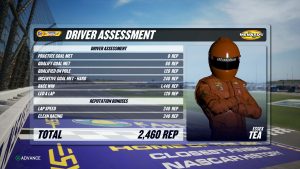
The interesting thing about NASCAR 26 is that I don’t think it will leave anyone thinking that the series has suddenly become a completely different beast. That’s not what iRacing Studios has attempted to do.
Instead, it feels like the developers have looked at NASCAR 25, identified the areas that could be stronger and spent another year making those foundations more solid. The driving is more satisfying, the tyres and track conditions add more depth, the presentation has improved and there are more ways to approach the sport.
But there are still areas where NASCAR 26 needs to grow.
The AI remains inconsistent, Career Mode could have considerably more personality, the damage modelling doesn’t quite match the spectacle of NASCAR itself and there are occasional technical issues that stop the game from feeling completely polished.
None of those problems are enough to derail the experience, though, and importantly, they don’t change the fact that NASCAR 26 is enjoyable to play.
After spending a considerable amount of time with it, I found myself increasingly appreciating the little things. Managing a set of tyres, trying to hold onto the car through a long corner, protecting your position in traffic or finding a different line as the track evolves all create those small moments that keep pulling you back in.
That is exactly what I wanted from the follow-up to NASCAR 25.
Final Thoughts
NASCAR 26 isn’t the giant leap that completely transforms the series, but I don’t think it needed to be. What it needed to do was take the promising foundation of NASCAR 25 and prove that iRacing Studios understands where the series needs to go.
For the most part, it does.
The driving is the strongest part of the package, with improved braking, tyre behaviour and track evolution making the cars more enjoyable to drive and giving longer races a greater sense of strategy. When the AI joins in and everything clicks, there are some genuinely fantastic NASCAR battles to be had, while the new Chase mode and improved career progression give you plenty of reasons to keep coming back.
The visual presentation has also moved forward, and cross-platform multiplayer is a particularly welcome addition that should help keep the online side of things populated.
There are still frustrations, and the inconsistent AI is probably the biggest one. Career Mode also feels like it is one substantial layer of personality away from being something truly special, while damage modelling and the occasional technical issue remind us that there is still work ahead.
But compare that to where we were with NASCAR 25, and the direction is encouraging.
Last year I gave NASCAR 25 an 80/100 because it felt like the beginning of something. NASCAR 26 earns its 82/100 because it feels like that something is beginning to take shape.
It may not have crossed the finish line just yet, but the car is certainly finding its groove.
NASCAR 26 builds intelligently on the foundations of NASCAR 25, delivering better racing, more interesting tyre and track behaviour, improved presentation and more ways to enjoy the NASCAR experience. It isn’t without its problems, but the important thing is that iRacing Studios continues to move the series forward. There is still plenty of room for improvement, but NASCAR 26 is another promising lap in the right direction.
Overall
-
CX Score - 82%82%
Summary
Pros
- Excellent driving model
- Improved braking and tyre behaviour
- Dynamic track conditions add depth
- Strong visual presentation
- Career progression has improved
- The Chase is a welcome addition
Cons
- AI remains inconsistent
- Career Mode still lacks personality
- Damage modelling could be considerably better
- Some technical and visual issues remain