

Developer/Publisher: Wildsphere
Played on Xbox series X and S
By Dave Angel
Introduction: A Flicker in the Dark
Nostalgia is a powerful currency in modern gaming, but there is a distinct difference between a title that lovingly pays homage to the past and one that feels structurally trapped in it. Escape to Umbra is a single-player survival horror experience that occupies a strange, liminal space in the current gaming landscape. From its opening frames, the premise sets a chilling, atmospheric stage. You step into the small shoes of a young child celebrating a birthday. The room is quiet, the cake is set, and just as you lean in to blow out the candles, reality fractures.
Instantly, the warmth of the birthday celebration is swallowed by an oppressive, nightmarish realm. You are thrust into a bleak environment pursued relentlessly by a towering, malevolent entity known as the Umbra—a shadowy witch who embodies the terrifying bedtime stories of youth. It is a classic horror hook that promises psychological depth and high-stakes tension. Unfortunately, the execution fails to live up to the concept. Rather than delivering a modern nightmare, Escape to Umbra delivers a mechanical and visual experience that feels as though it was developed, mastered, and shelved during the Xbox 360 era, only to be unearthed today without any modern refinements.
Atmosphere, Visuals, and the 2006 Aesthetic
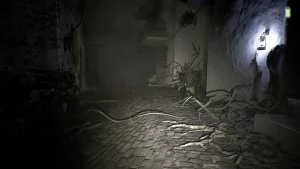
When you first step into the desolate streets and decaying buildings of the game, the im
mediate impression is one of intense technical regression. The graphics are noticeably dated. Textures are flat, character models lack fluid animations, and environmental assets feel repetitive. For a game released in the current generation, it is jarring to see an aesthetic that would look more at home alongside early 7th-generation console titles.
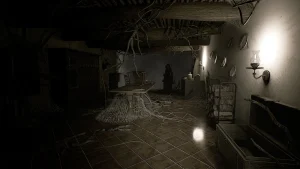
Horror, however, has a long history of overcoming technical limitations through brilliant art direction and lighting. To its credit, Escape to Umbra understands this balance to some degree. The game’s utilization of light and shadow is arguably its strongest asset. The darkness feels heavy, and the way light cuts through the gloom provides a genuine sense of isolation. Yet, even this praise must be qualified. While the shadows are effective at hiding the muddy textures, they are not brilliant or groundbreaking. The lighting system lacks the dynamic complexity required to truly unnerve the player, serving as a functional tool rather than an artistic triumph. The overall presentation leaves you with the distinct impression that the developers were severely limited by budget, talent, or simply a lack of ambition.
I have tested the game on both my Series S and X and found no graphical issues beyond those presented by the graphics as a whole. It was locked at 60 and did not fluctuate at all.
Gameplay Mechanics: The Torch, The Spirits, and The Witch
The core gameplay loop centres around navigation, resource management, and avoidance. To survive the night, you are given three primary tools, the most significant of which is your trusty torch. In a departure from the traditional survival horror trope popularized by Resident Evil or Silent Hill, you do not need to scour the environment for discarded AA batteries. Instead, the torch operates on a self-recharging mechanism; turn it off, and the power slowly returns.
This mechanical choice creates a specific tension because the torch is not just for visibility—it is your primary defensive weapon. The crumbling town is populated by roaming spirits that stalk the corridors and alleyways. Shining your light directly at them acts as a deterrent, keeping them at bay and clearing a path forward. This forces a constant, rhythmic management of your light source: burning power to keep spirits away, then plunging yourself into total darkness to let the battery recover. The torch can be ‘fired’ by press Right Trigger, and you hit a spirit with a blast of light energy.
However, this tension is completely shattered whenever the primary antagonist appears. The Umbra herself defies the rules established by the lesser spirits. If you get within shouting distance of this shadowy witch, the game shifts from a tense stealth experience to an immediate, unceremonious death sentence. There is no struggle mechanic, no hiding under a bed at the last second, and no tactical use of your tools to stun her. Proximity equals death.
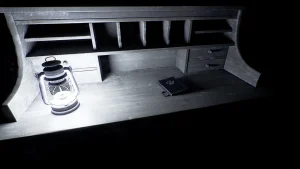
When the Umbra catches you, you are sent straight back to your last save point. In another nod to retro game design, saving is tied to physical objects within the world: Oil Lanterns scattered sparingly throughout the environment. Because the Umbra’s detection range can feel inconsistent, you will frequently find yourself losing significant chunks of progress simply because you rounded a corner and triggered an instant-death animation.
Puzzles, Hand-Holding, and Final Execution
Between avoiding spirits and running from the witch, your progression through this nightmare relies on the remaining two tools in your arsenal: a mysterious journal and a clowder of helpful felines. Found early in the journey, the book functions as a narrative diary detailing the grim fates and obstacles faced by previous escapers who failed to elude the Umbra. While it adds a welcome layer of lore, its primary function is to lay bare the game’s obstacles, removing any real sense of mystery or discovery.
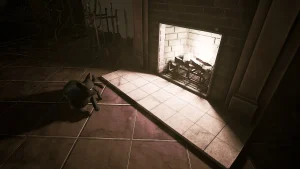
This lack of player autonomy is amplified by the game’s implementation of cats as a literal navigation system. In what should be an open, terrifying labyrinth, the presence of these animals strips away any organic exploration. They appear dynamically to lead you directly from point A to point B, strictly enforcing a highly linear play progression to your next objective. The environment reinforces this handholding through literal paw prints painted onto the walls of certain areas. These markers indicate a designated safe zone where the Umbra cannot touch you. However, the moment you step away from the paint, the safety net is gone, and you take your life into your own hands.
This explicit signalling kills the organic tension essential to good horror. Rather than naturally reading the environment or hiding dynamically, you are simply following a visual trail of breadcrumbs. This heavy guidance makes the game’s elementary puzzles feel even more trivial. They rarely require critical thinking, usually boiling down to finding a specific key or matching basic symbols.
Worse still, the puzzle design exposes a frustrating lack of accessibility. Several puzzles rely heavily on colour differentiation. For the average player, these sections take mere seconds to solve, but for colour-blind gamers, they present an artificial, frustrating roadblock due to the complete lack of alternative visual cues or accessibility toggles. It is a glaring oversight that highlights a broader issue with the game: it simply does not feel as though it is trying. Every system, from the AI to the level design, feels like the bare minimum required to qualify as a video game. The jump scares are formulaic and predictable, resulting in sudden loud noises that shock the system momentarily rather than building genuine, psychological dread.
Conclusion: A missed opportunity
Escape to Umbra is a frustrating experience not because it is completely unplayable, but because it is aggressively mediocre. It possesses a solid conceptual foundation and a few mechanical ideas that could have shone brightly under the right creative direction. Instead, those ideas are smothered by dated graphics, uninspired puzzle design, and a punishing instant-death mechanic that drains the fun out of exploration.
A horror game needs to feel alive, dangerous, and unpredictable. By spelling out the dangers in a found book and literally guiding the player by the hand with feline navigation, Escape to Umbra feels rigid, automated, and lazy. It earns a middle-of-the-road score simply because it functions, but it leaves absolutely no lasting impression. It is a budget-tier throwback that forgets to bring the passion of the eras it mimics.
Overall
-
CX Score - 50%50%
Summary
Pros
- Compelling Core Premise: The opening concept of a child’s birthday instantly fracturing into a nightmare creates an immediate, intriguing hook.
- Smart Torch Mechanic: The self-recharging flashlight removes tedious item foraging while creating a good gameplay rhythm of risk and reward.
- Effective Use of Shadows: While technically dated, the heavy darkness successfully hides visual flaws and builds a baseline creepy atmosphere.
- Atmospheric Safe Zones: The painted paw prints provide a clear visual indicator of safety, creating temporary pockets of relief amid the tension.
- Classic Save System: The use of stationary Oil Lanterns as save points provides a nostalgic nod to classic survival horror architecture.
Cons
- Dated Visual Presentation: The graphics, animations, and textures feel deeply outdated, resembling an early Xbox 360 title rather than a modern release.
- Overly Linear Navigation: The cat-guided objective system feels incredibly restrictive, holding the player’s hand and killing any desire for exploration.
- Frustrating Instant-Death AI: Getting anywhere near the Umbra results in an immediate game over, turning potentially tense stealth segments into annoying trial-and-error chores.
- Insultingly Simple Puzzles: The environmental challenges are incredibly basic and fail to offer any meaningful engagement or intellectual stimulation.
- Poor Accessibility Design: Crucial puzzles rely strictly on color-coding without alternative symbols, making them completely unplayable for colour-blind individuals.