


First Impressions
I first played Apidya’ wayyyyyyyy back in 1992 when my Mum and Dad bought it for me to play on my trusty Amiga home computer. I was already used to the side-scrolling genre ‘Shoot-‘Em-Up’ back them as the Amiga had loads to choose from. Classic games such as R-Type, Turrican and Xenon II were all the rage as the home computer market had the 16-Bit Consoles to now compete with.
Originally published by Blue Byte (as Play Byte), in the early 1990s, this new 24-bit pixel remake was developed by ININ Games, with members of the original team, along with apparently a developer who was also a mega fan of the original version. So straight from the beginning, you can tell this remake was a labour of love for everyone involved.
Plot
The plot for Apidya’ is a classic tale for the era. Our blue haired hero Ikuro comes home to find his beloved wife, Yuri, stung and close to death by a swarm of killer insects sent by the evil Dark Wizard Hexaae who was jealous of the perfect happy life they had together. Heartbroken and swearing revenge on the Wizard, he transforms himself into a Bee (just go with it at this point) and heads out on not only a quest for vengeance, but to acquire the magical antidote to restore his Wife. You know that old chestnut.
I’d like to say this made perfect sense in the 90s, as basically nearly every computer game’s plot back then involved either revenge for the murder of your father/brother/sensi or rescuing your girlfriend/wife/princess.
Gameplay Overview
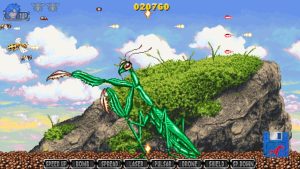
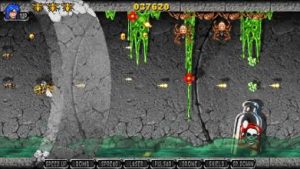
At its core, Apidya’ Special is a horizontal side scrolling shoot-‘em-up. The gameplay is smooth and the graphics colourful. Authentic Japanese audio announces the game’s title when it loads and explains the story with animated storyboards all in original Japanese, with English subtitles. A classic nod to its anime style roots. You can even at this point switch from updated back to classic to see the story in its current form or its original style which was impressive for the time.
The Main Menu has four options. With ‘Start’ allowing you to, well, start a ‘New Game’ or ‘Load Game’ from a previously checkpoint in a playthrough or ‘Continue’ right from where you left off last time you played. Although the game doesn’t allow you to save anywhere actually in game (which seems to be a standard modern thing with many remakes and remasters), it does save automatically at the start of each of the multiple Stages within a World.
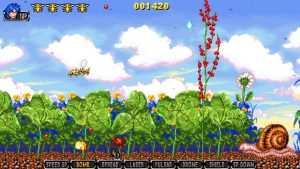
The next choice is ‘Options’, which splits between ‘Video’ to turn the remake graphics on or off, widescreen mode on or off, and my personal favourite the ‘CRT Filter’ on or off which lets you add back in the ‘Rolling Scanlines’ of CRT screens from the 90s and the ‘Chroma Artifacts’ to make your vision extra blurry.
Finally, we have ‘Controls’ which gives you the basic control layout for moving your Bee and firing. Along with options to turn the ‘Vibration’ on and off and adjusting sensitivity. There are no options to remap the controls to different buttons, but since the game basically only has movement and fire (along with an Extra button), it’s not too hard to get to grips with the controls. Bee Ikuro is controlled via the left thumbstick as you’d expect, with ‘A’ being primary rapid fire which you’ll use most of the time. The ‘Y’ button is single shot fire, however if you hold it down for a few seconds you build up a ‘super shot’ which releases as a Bee stinger projectile to clear the path and inflict have damage on enemies and bosses.
The last option on the main menu is ‘Credits’ which allow you to view the ‘Game Credits’ and game ‘Licenses’ so you can see how much effort and time was put into carefully crafting this remake for a new generation.
When you start a New Game, you’re given the options to select your ‘Difficulty’ from Easy, Normal and Hard. You can turn on and off the options to reset the Stage you’re currently playing back to the start upon death, as well as downgrading your weapons back to basic upon death too. You can even adjust the game’s speed between standard European 50FPS and NTSC 60FPS. All these available accessibility tweaks help you to truly tailor your playstyle experience, allowing you to make the core gameplay as challenging or easy as wanted. Perfect for any generation of gamer playing.
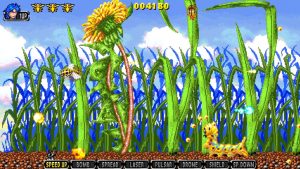
Like all classic shooters from the 90s, your Bee character in Apidya’ Special has a single hit point of life. One hit and you lost one of your starting lives. Additional lives can be earned for reaching adjustable point milestones in game as you play and added or removed before you start in the Options menu.
Your Bee can level up its firepower as you progress by collecting red petal flowers that are dropped by some swarms of enemies as you blast them. These allow you to cycle through weapon choices shown at the bottom of the screen that range from a speed boost, bombs that drop and roll for taking out ground-based enemies, upgrades to your fire rate and type of fire projectile, up to two drones that help and provide additional firepower and protection too, there’s even a shield to absorb some enemy fire. Selecting these can be toggled between the player doing it manually, or the game doing it for you so you can fully focus on the frantic waves of enemies consistently coming at you.
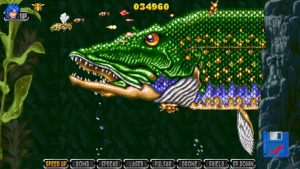
Speaking of enemies, the choice and variety shown in Apidya’ Special is something to behold. Considered unique back in 1992 due to its concept of insect enemies, the developers truly went to town on enemy types to throw at you as you play. Ranging from basic insects, beetles and the like, up to some truly weird and wonderful types in the later Stages all spewing red glowing balls of death. Each World has its own type plus mini and end of level Bosses fit the Stages their in perfectly.
One small gripe is that your Bee can only shoot from the left to the right side of the screen, permanently stuck facing right with no option to shoot behind you. This can be particularly frustrating in some of the tighter areas such as Stage 3 and Stage 4. Often, unless you know what’s coming, it’s easy to get boxed in and die without the gift of foresight and death can often be unfair. Obviously, shooter games from the 90s were all like this but I can see it putting off younger, never players to the genre.
The game itself has 5 distinct and upgraded Worlds, Meadow, Pond, Sewers, Cyber and finally Lair to blast through. Each of these has up to 5 stages within them, with mini-Bosses scattered between them. Special Stages are also included, some new, some classic that are hidden away behind in game actions along with some randomised events introduced with brand new enemy types. The final World however, can only be accessed if the game is played on Normal or Hard. This focuses the player to play on harder difficulties for a more rewarding challenge and also encourages multiply playthroughs to see all the game has to offer. However, this is still a limit amount.
There’s also a new ‘Co-Op Mode’ introduced which the original didn’t have. Allowing two players to team up with their own Bees to take on more of the insect hordes.
Presentation
Right from the get-go, the game oozes retro gaming goodness. The ‘Press Any Button’ screen is straight from the classic original, updated for this remake. Most of the gameplay dialogue is announced in an authentic Japanese tone ranging from ‘Game Over’ to the classic ‘Do You Want To Continue’ messages.
As a pretty authentic remake of the original classic, the game has been completely overhauled and rebuilt from the ground up. The developers have revived a previously lost, unfinished and unreleased 1990s console port of the original game, along with unused and original assets that never made it into the Amiga version. This, along with new 24-bit pixel artwork, additional sound effects and new remastered and remixed soundtrack by the legendary composer Chris Hulsbeck that has only now been released, all add up to a comprehensive remake.
The original music soundtrack that accompanied the Amiga’s shooty goodness was perfect for the game, a thumping, catching, electronic synth melody that strangely suited the insect bullet spewing chaos on screen. It was no Xenon 2: MegaBlast level of heart pounding awesomeness, but it was still one of the best examples of music being matched perfectly with a game in my opinion. Lots of synth tones and bass accompany the carnage onscreen. Each Stage has its own updated version of the old soundtrack, however there’s not a big difference between each one per Stage. It’s nice the soundtrack has been remixed for this updated game, but a bit more variety to accompany this remake would have been nice too.
The ability to switch on the fly (no pun intended) from the original 4:3 console version (with added CRT grainy filter to further take you back) to simulate the classic retro feel of playing in your parents living room in 1992 to the new, updated HD Widescreen visuals with shiny new parallax effects is smooth and allows you to experience the game in two ways. As already mentioned, you can even switch the title screen and story board intro between original and remake, which is a nice touch.
Finally, the inclusion of the classic post-game ability to enter your name next to your high score to show off your prowess is a great nod to how games from the 90s era and even their arcade cabinet counterparts used to be. Everything about this remake, for me at least, shows a great deal of love and dedication to make the very best version of this title they could. Updating it for the current generation of consoles but keeping the core gameplay and feel for us nostalgia loving old school gamers.
The Bottom Line
Overall, Apidya’ Special is a worthy upgrade to the mostly forgotten original. However, once you take off the rose-tinted nostalgia spectacles and sit down to play it, you find it’s a short but sweet experience. The ability to pause the game anytime and hit the ‘Reload Last Save’ to redo a particular area better means the difficulty of the core game becomes a choice rather than a necessity. The original game was tough by design and although I can understand they have to make the new version as accessible as possible, it does lose some of its charm that was behind the challenge.
If you’re looking for a hardcore shooter with hours of gaming goodness and unlocks, you’ll unfortunately will be disappointed by what Apidya’ actually comes with. With only 5 main Worlds to get through. On the lower difficulties, you can finish the game in just over an hour.
It’s been 33 years since Apidya graced our (then) CRT television screens. And it’s mix of unique setting, insect enemies, bizarre concept, challenging gameplay and retro classic soundtrack made it somewhat of a cult classic from the 90s era, which makes it a perfect title for a remake as there’s nothing quite like it visually, or has been for over 30 years now.
Fortunately, the developers wisely priced the game at release at the respectable cost of only £17.49, meaning that the gaming goodness on offer is worthy of the entry fee. Although I can’t say it’s for everyone, if you’re a fan of solid shoot-‘em-ups, retro remakes or a game where you can switch off your brain and just shoot stuff for a while, then you can’t really go wrong with trying out Apidya’ Special.
Overall
-
CX Score - 75%75%
Summary
Pros
- Classic old school shoot-‘em-up goodness
- Simple and enjoyable gameplay
- Fast, frantic and fluid action
- Great update of a nostalgic title from the 90s
Cons
- Very repetitive gameplay loop
- No shiny modern character upgrade, your Bee looks the same, sprite-y in original and remake
- Play it through once on medium and you’ve basically seen it all
- Short game length for a shooter with only 5 Worlds and a few Special Stages