

A Promising Return to the Dirt
There is something incredibly satisfying about throwing a motocross bike into a corner, finding just enough grip to keep the back wheel under control, and powering out of the turn with a wall of dirt flying behind you. Motocross is a sport that demands a completely different approach to traditional circuit racing, and capturing that feeling in a video game is no easy task. With MXGP26, the official motocross series takes another shot at delivering an authentic off-road racing experience, introducing a new technical foundation, improved terrain deformation and a renewed focus on the way bikes behave on the track.
After spending time with MXGP26 on Xbox, I came away with a genuinely positive impression. There is plenty here to enjoy, particularly once you begin to understand how the bikes react to the terrain and start finding your rhythm around the circuits. The handling has a satisfying weight to it, the changing track conditions can make races more interesting, and there is a real sense of achievement when you put together a clean race against a competitive field.
However, as much as I have enjoyed my time with MXGP26, there is one enormous omission that is difficult to ignore. The complete lack of a proper career mode is quite shocking for a racing game in this day and age. This is a game that gets enough of the fundamentals right to build something special around them, yet it leaves players without the long-term journey that could have transformed an enjoyable motocross experience into something much more memorable.
Getting to Grips with the Dirt
The biggest change in MXGP26 is the move to Unreal Engine 5, which provides a more modern visual foundation for the series. The improvements are particularly noticeable when you are out on the track, where mud, sand and other surfaces can change as the race progresses. Rather than simply riding around a fixed circuit, you begin to see the effects of every lap, with ruts developing and the surface becoming increasingly unpredictable as the field tears through it.
This is more than just a visual flourish. Those changing surfaces can influence how you approach a corner, where you decide to position your bike and how confidently you can accelerate out of a turn. A racing line that worked beautifully at the start can become considerably less appealing after several laps, forcing you to make adjustments rather than relying entirely on muscle memory. It gives races a more organic feel and helps reinforce the idea that motocross is about adapting to the conditions as much as it is about speed.
I particularly enjoyed the way this encourages you to pay attention to what is happening beneath your wheels. You cannot always charge into every corner and expect the bike to behave exactly as you want, especially when the track has become heavily rutted. There is a satisfying balance between aggression and restraint, and learning when to push harder or take a slightly safer line becomes an important part of the experience.
Of course, the terrain system is not perfect. There are occasions when the surface can feel a little too unforgiving, with small imperfections unsettling the bike in ways that do not always feel entirely fair. A promising lap can be interrupted by an awkward landing or an unexpected loss of control, leaving you wondering whether you made a mistake or the physics simply had other ideas. These moments are frustrating, but they do not erase the appeal of a system that gives the racing a welcome sense of unpredictability.
Finding Your Rhythm on Two Wheels
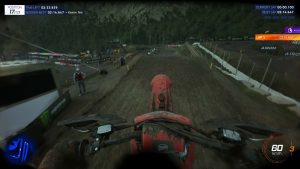
Motocross games have a learning curve, and MXGP26 is no exception. Controlling a bike over uneven terrain requires a different mindset from racing a car around a conventional circuit. Weight transfer, braking, throttle control and the positioning of your rider all play their part, and getting everything to work together takes time.
Initially, it can feel as though the bike has a mind of its own. Corners that look straightforward can quickly become awkward, jumps require careful preparation, and a poorly judged landing can ruin an otherwise decent run. Yet there is a real sense of satisfaction in gradually getting to grips with the handling. As you become more familiar with the way the bike responds, you start to understand how to carry speed through corners, maintain stability over rough ground and approach jumps with greater confidence.
That learning process is one of the things I enjoyed most about MXGP26. The game rewards patience, and there is a genuine difference between simply getting around a circuit and riding it well. When everything clicks, the racing feels fantastic, with the bike moving naturally beneath you as you navigate the track and fight for position.
The bike setup options also deserve credit. Adjusting your machine allows you to fine-tune its behaviour, giving practice sessions a practical purpose beyond simply learning the layout. Different settings can make a noticeable difference to how the bike feels, encouraging experimentation until you find an arrangement that suits your riding style and the conditions.
Unfortunately, MXGP26 could do a better job of helping newcomers understand these systems. The learning curve is steep, and written instructions can only take you so far when you need to understand how rider movement and bike control work together. More hands-on tutorials would have made the experience considerably more welcoming, especially for anyone approaching motocross games for the first time.
There is a fine line between a challenging game and one that leaves players struggling to understand what they are doing wrong. MXGP26 occasionally comes close to the latter, but once you begin to find your feet, the underlying handling model provides plenty of reasons to keep practising.
Official Racing, Without the Career
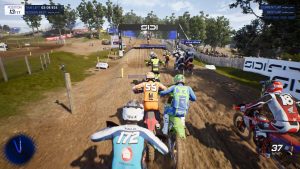
MXGP26 includes 19 official circuits alongside the licensed bikes and riders associated with the MXGP and MX2 championships. For fans of the sport, having that official content provides a welcome foundation, and the range of tracks helps keep the racing varied. Different layouts and conditions demand different approaches, ensuring that success on one circuit does not automatically translate into an easy victory on the next.
The Championship mode offers a straightforward way to experience the competitive side of the sport. You can customise aspects of the competition, including its schedule and race format, while the Grand Prix and Time Attack options provide alternatives when you fancy something shorter or want to concentrate on improving your performance around a particular circuit. Online multiplayer adds another avenue for competition, allowing you to test your abilities against other players rather than relying solely on computer-controlled opponents.
There is enough variety here to enjoy individual races and spend time improving your lap times. I also appreciate the ability to tailor the experience to your preferences rather than being forced into a rigid structure every time you play. Sometimes, jumping straight into a race is exactly what you want from a motorsport game.

But this is where my biggest criticism comes into play, because MXGP26 has no proper career mode, and I find that omission genuinely baffling.
For a racing game released in 2026, a career mode should be a fundamental part of the package. Motocross is perfectly suited to a progression-based experience, where you begin as an unknown rider, earn your place in the paddock, attract sponsors, develop your bike and work your way towards championship glory. The opportunity to start in MX2 before eventually moving into MXGP would provide a natural sense of progression, while rivalries, team changes and season objectives could give every race greater meaning.
Instead, MXGP26 largely asks you to choose a competition, race through it and return to the menus when it is over. You can create your own rider and take part in a championship, but that is not the same as building a career. There is no substantial journey to follow, no meaningful climb through the ranks and no lasting story that makes each result feel like another step towards a bigger goal.
This is particularly disappointing because the core racing provides a solid foundation for exactly that kind of experience. I would love to have a reason to keep returning to the game beyond improving lap times or completing another championship. Give me a young rider with something to prove, a team willing to take a chance on me and a season in which every result matters. Let me earn better equipment, negotiate sponsorships and work towards becoming a world champion.
Those additions could elevate MXGP26 considerably, giving its strongest elements a purpose beyond the next race. Without them, the experience feels much more limited than it needs to be. I genuinely enjoy the racing, but I cannot help thinking about how much more invested I would be if there were a proper career to build.

Looking the Part
The move to Unreal Engine 5 gives MXGP26 a noticeable visual boost, and the track surfaces are the clear highlight. Watching the dirt change throughout a race helps create a convincing impression of a circuit being battered by a field of powerful motocross bikes. The weather effects add further atmosphere, while mud and grime accumulating on the riders and machines help sell the physical nature of the sport.
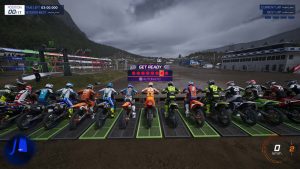
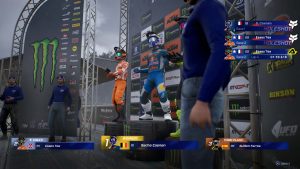
The presentation is not without its rough edges, however. Some environmental details lack the same level of polish as the bikes and track surfaces, while pre-race sequences can feel rather static. There is room for more dynamic camera work and a stronger sense of occasion, particularly when a championship event should feel like a major sporting spectacle.
The audio is similarly functional rather than spectacular. The engines provide the expected soundtrack to the racing, but there is not always enough surrounding atmosphere to make the events feel as alive as they could. More commentary, crowd interaction and a greater sense of drama would help bring the championship experience together.
None of these issues ruined my enjoyment, and I would much rather have a game with engaging racing than one that looks spectacular but feels lifeless behind the controller. Still, a little more polish in these areas would have made MXGP26 feel like a more complete package.
When the Racing Gets Messy
The artificial intelligence can provide some entertaining competition, although its behaviour is not always consistent. Depending on the difficulty setting, opponents can sometimes feel too easy to challenge or suddenly become far more aggressive than expected. Finding a comfortable middle ground can take a little experimentation, particularly when you want close racing without every event turning into a battle for survival.
Collisions and recovery can also be unpredictable. Motocross is naturally chaotic, and contact between riders is part of the sport, but there are moments when an awkward interaction or an unfortunate landing can produce a result that feels disproportionate to what happened. When you have spent several laps putting together a good performance, being thrown off course by an unusual physics reaction is hardly ideal.
These problems are worth mentioning because they can interrupt what is otherwise an enjoyable racing experience. Better balancing and some additional refinement would help make the competition more consistent, allowing the game’s handling and terrain systems to shine without unnecessary distractions.
Even so, I never felt that these issues completely overshadowed the positives. There is a good game underneath the occasional frustration, and the basic act of racing remains enjoyable enough to keep drawing me back.
Final Verdict
MXGP26 is a game I have genuinely enjoyed playing, and that is important to stress because my criticisms come from wanting to see it do more with what it already gets right. The handling offers a satisfying challenge, the dynamic terrain gives races an interesting extra dimension, and the official circuits and bikes provide a solid foundation for fans of motocross. When you find your rhythm and start tackling the tracks with confidence, there is plenty of fun to be had.
It is not without its frustrations, of course. The learning curve could be handled better, the physics occasionally produce some questionable moments, and the presentation lacks the atmosphere that would help turn individual races into memorable events. These are areas where further refinement would make a meaningful difference, but they are not the reason MXGP26 falls short of its potential.
That honour belongs to the missing career mode. I simply cannot understand why a modern racing game would launch without such an important feature, particularly when its core gameplay gives developers so much to build upon. Championship racing is enjoyable, but it cannot replace the feeling of developing a rider, earning opportunities, progressing through the ranks and working towards the ultimate prize. A proper career mode would give the entire experience greater purpose and provide a compelling reason to keep playing long after the first few races.
For now, MXGP26 is an enjoyable motocross game that gets enough right to make me hopeful for the future, but it feels like a foundation rather than the finished article. I would happily spend more time with it, and I would be even happier if there were a meaningful career waiting for me when I returned.
Overall
Summary
Pros
- Enjoyable motocross handling once you master the controls.
- Dynamic terrain deformation adds variety and tactical depth.
- Official circuits, licensed bikes and championship riders.
- Useful bike setup options that can make a difference on track.
- Improved visuals and weather effects.
Cons
- No proper career mode, a significant omission for a modern racing game.
- Occasional inconsistencies with physics, collisions and recovery.
- AI difficulty can feel uneven.
- Presentation and audio lack some of the atmosphere the sport deserves.