


First Impressions
Control Resonant is the much-anticipated sequel to the 2019 video game Control. Where the protagonist Jesse Faden had to battle to save the Federal Bureau Of Control, or FBC for short, from a interdimensional attack of the malevolent Hiss and ultimately stop not only it, but various other threats, from escaping the FBC’s headquarters known as The Oldest House. That game ended with The Oldest House on lockdown for seven long years with no one going in or out as the fight continued inside its walls.
This time around however, you play as Jesse’s brother Dylan as he wakes from his seven year long coma amidst a citywide paranatural crisis dubbed ‘The Patterning’, while being mysteriously bonded to an object of power called The Aberrant. He is then tasked with finding his missing sister and figuring out how the heck the Altered World Event, or AWE started within the city, effected its inhabitants and to ultimately take back control.
All this sets up the latest chapter in the interconnected story spanning the majority of Remedy’s gaming series, collectively dubbed the ‘Remedyverse’ by fans. You have got to love how much detail Remedy puts into each new release, such as setting their games in real-time and the current year so time passes the same in real life as in their games. As an example, the first Control game was set in 2019 (when it first was released) and the sequel was released recently in 2026 and is set in this year too. In the game’s timeframe and lore, seven years has also passed between the two titles, and uncovering what has happened to the FBC, Jesse, The Board and Dylan himself is the driving focus of the game’s narrative.
Since this game has only just released and thus the anticipation for the game was very high, I shall endeavour to keep this review as spoiler free as possible and focus mostly on the basics and what to expect in the first few hours on gameplay. The Achievement list also has pretty much the majority of its unlocks set as ‘Secret’ which would indicate a lot of them to be for story progression. For titles such as these, I find this helps a lot with avoiding spoilers as you play and you can experience the game and story from the beginning. I’m personally glad Remedy choose to do this.
Plot
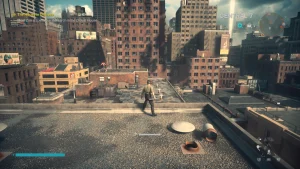
As expected, Control Resonant’s plot is suitably weird and wonderful. Often bordering on downright bonkers. If you’ve played any previous Remedy titles (and if you haven’t, I highly recommend you do so), then you probably know what to expect by now. As stated, seven years have passed since the first Control and the lockdown of the Oldest House due to the Hiss invasion. A major paranatural incursion dubbed ‘The Patterning’ has engulfed the whole of Manhattan, cutting it off from the rest of the world and trapping not only the Federal Bureau Of Control and the population of the city inside, but also breaking the lockdown that has existed within the FBC’s headquarters for the past seven years to contain the dangers inside. Now paranatural threats, both old and new are loose in the city and running rampant.
With his FBC handler Zoe helping with information and support, Dylan must brave the patterned Manhatton and the various threats, dangers whilst exploring the various thresholds within the city limits to find out basically what has happened and why it is going on. All the while fighting the Hiss, the Mold and the various boss type Resonants that give the title its name, located over the city.
By the end, some mysteries will be solved, but new mysteries will undoubtable be unearthed with plot threads left for the inevitable DLCs.

Gameplay Overview
Unlike its predecessor, Resonant is an open world, sandbox with exploration and lite R.P.G. elements. Remedy did something similar between the releases of Alan Wake and Alan Wake 2, going from fairly linier and narrative levels, to over the shoulder camera survival horror. In a similar move, the original Control featured a tight, sometimes linear narrative and progression through the story within the Oldest House, Resonant trades that for a sprawling open world in the form of a corrupted and twisted Manhattan Island. Think of the film ‘Inception’ as a base line comparison, but then crank up the city wide weirdness up to eleven and you’ll get the picture. You really have to admire Remedy to constantly evolve their games and mixing up the genres within a series as new releases are added.
The title screen of Control Resonant presents you with a multitude of options right from the get-go. Firstly, there’s a ‘CONTROL Recap’ of the original game and the story up til now to get the player up to speed or refresh the narrative from the first game. Then there’s ‘New Game’ and ‘Load Game’ as you expect. The ‘Options’ menu is a pretty comprehensive list, ranging from the usual Invert Camera, Controller Sensitivity and movement options to Graphic performance, Motion Blur and Music/Speech/Effects Volume. The sheer amount of tinkering and customisation available to fine tune your gaming experience with this title is remarkable and hats off to Remedy for looking at the choice of options from every angle to cater to every Gamer’s preferred gameplay setup. Finally, we have the ‘Credits’ menu that lists all the creative people who made the game, along with a rather catchy backing track accompanying it.
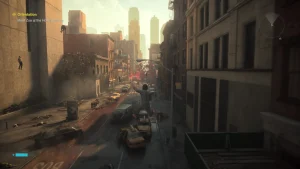
Ingame Dylan himself is like a Jedi Master on steroids, with him early on in the game gaining the ability to dash, double-jump, hover and dash in mid-air. Credit to the developers as the controls for Dylan’s abilities is well mapped and executed for a controller layout. Everything collectable or interesting in the world can be interactive with via the ‘LB’ button, which includes collecting the various notes, letters and files just like in the original Control to expand on the world building and lore, to even using Dylan’s telekinesis abilities to pick up objects to solve simple collection and puzzles elements during quests.
As with Control and games like the Alan Wake series before them, the world is full of collectables and bits of information for you to unearth and discover.
The way you navigate and move around the world feels almost intuitive once you get the basics down. Traversal can best be described as a cross between the games [Prototype] and the inFamous series mechanics, with Dylan stopping short of actually being able to run vertically up buildings. Moving around the city’s zones is fun and fluid between action encounters, with plenty of tucked away and hidden supplies and lore in various nooks and crannies. Along with mysterious ice cream van that sells valuable materials for upgrades and pieces of power and health upgrades to supplement your powers of attack and defence against the various enemies you’ll encounter.
The camera also does a fine job of keeping up the chaos onscreen and never seemed to get stuck for fixed in position during my time playing. The game does feature a ‘lock on’ mechanic to help you target specific enemies, however I would highly recommend not using it in the open world as it can leave you quite vulnerable in the heat of battle to enemies offscreen and their attacks, being better suited for the numerous boss battles you’ll face during the story.
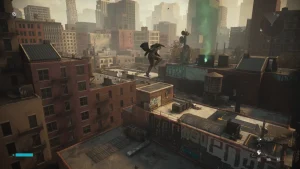
Dylan’s core abilities are mapped perfectly to the controller so you don’t often have to waste time thinking what to press to do what. Jump and double-jump is the ‘A’ button, with holding it making him hover for a few seconds, dash, or Rush as it’s called is the ‘B’ button. Attack with your current primary form of the Abberrant is the ‘X’ button and finally attacking with the secondary alterative form is the ‘Y’ button. The world is just as destructible as the original game, with Dylan able to literally rip pieces of the world around him telekinetically and launch it as an attack much like Jesse in the original, which is a great ability for crowd control. Or use the rubble as a makeshift shield to protect against oncoming attack.
You will come across many NPCs during your quest, some returning from the first Control and some brand-new ones. Most interactions with them involve a conversation wheel where Dylan can select one of usually two or three replies. Some conversations, however, are also time sensitive a bit like Mass Effect’s Paragon and Renegade system so it definitely pays to, well, pay attention. Your main contact is your previously mentioned FBC handler called Zoe. A lot of story beats and dialogue unfolds between Dylan and her during the main story campaign, were you get to see them start off as reluctant partners in a crisis, to eventually a mutual respect and budding friendship. Dylan’s social awkwardness with others due to his years of isolation and lack of social cues often make for light-hearted dialogue which helps keep the story and the characters grounded. Often breaking up the bleak, end of the world perspective of the main story.
Combat is fast and furious with Resonant, with even more emphasis on movement during fights with the Hiss and other threats. Enemies can be attacked with a Primary and also Secondary attack forms of Dylan’s melee weapon. If you deal enough damage to a particular enemy, you increase its ‘Falter’ bar which is basically a stagger gauge. Once full you can then perform an execution on them, which gives you the ‘Dominance’ status, boosting melee damage for a time to 100% primary and 50% secondary attack forms while also guaranteeing more health drops from slain enemies. Particularly helpful as most combat encounters see Dylan vastly outnumbered and dodging attacks from all angles. Dominance items can also be found in the world as a pick up, again handy for close encounters.
With Dylan being what is known as a ‘Parauutilitarian’, he has special abilities such as previously mentioned ‘Rush’ that not only allows him to move at a much quicker pace, but also removes status ailments that he may become afflicted with during combat. In encounters with the Hiss especially, smaller Hiss forms will constantly spawn in until Dylan kills the larger Hiss combatants. This often adds a layer of strategy to the encounters as you juggle the need to destroy the main Hiss enemies to end the threat all the while dealing with the smaller foes to avoid being overwhelmed. My only gripe with the combat, at least in the early parts of the game, is that attacking seems to devolve into little more than button mashing to whittle down an enemy’s health as fast as possible. It’s only later, as you unlock new attacks for Dylan that you can then vary your options to inflict damage on foes.

You don’t upgrade Dylan in the traditional sese in Resonant either, as you clear out enemy encounters that are roaming in the different ‘zones’ that the city is now divided into, that zone ‘levels up’ and gains you access to better upgrades for Dylan, but also more health pickups, etc. As you explore the open world, you may also encounter what is known as ‘World Feats’ that will be added to your map which are optional objectives that earn you valuable rewards and additional Zone XP to level it up faster. So it’s definitely worth completing as much as you can as you come across it. I found myself planting many custom markers onto the map with ‘Y’ as a reference point for my mini map to come back to later as I was already working on a main or side quest.
Checkpoints scattered throughout the city are activated by your weapon as you draw near act as respawn points and allow a brief reprieve from the chaos. This is often a good place to then enter a place called ‘The Gap’ which is basically Dylan’s mindscape that can be accessed via holding down on the controller’s D-Pad. This is where a towering version of the Abberant can be seem sticking out of a bleak and desolate landscape. Under it though, is an area where you can upgrade Dylans weapon, the aforementioned Abberant, and also create Artifacts that provide buffs and perks to his Loadout, select Combat Abilities such as the telekinetic ‘Barrage’ that was great fun and an offensive tool in the first game mentioned earlier, and assign skill points to his talent tree from different abilities and perks.
As typical for this genre of game, the talent tree has branches that allow you to specialise in a particular playstyle and combat ability. Choosing to go down one ‘branch’ usually means a selection from one or two, with each ‘tier’ of his Talent tree having perks you can unlock to make it to the next tier, so choose wisely. Fortunately, there is an option to ‘respec’ Dylan if an upgrade or ability isn’t to your personal liking. There’s also a handy combat area section that’ll allow you the ability to test new loadouts and builds as you unlock more abilities and weapon forms. More importantly, this will let you decide if you like the unlock and build before you commit and ‘lock in’ a new upgrade or weapon mode and return to the real world. All these are accessed via the ‘LB’ trigger on your Xbox controller.
The Gap also allows you to view Dylan’s overall ‘Stats & Effects’ by pressing ‘Y’ on the ‘Loadout’ screen, so you can see everything from his overall current Build Power, to Aberrant Strength, General and Main statistics. All handily in one place for quick access and review.
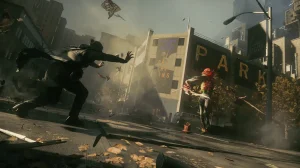
The Gap is also where you can upgrade the Aberrant’s core abilities and forms, and assign perks and upgrades to each of its forms, along with Combo Finishers and tinker with Dylan’s core stats and abilities. You can also communicate with the mysterious ‘The Board’ in this area, as they now seem bonded to Dylan in some way through the Aberrant. They often will speak to Dylan giving him instructions and ‘advice’ on the current situation in their own, unique way.
Mysterious ‘doors’ can be located and activated by pressing ‘LB’ to enable fast travel routes around the city. Allowing swift and easy access to previously visited parts of the city. With only a small loading screen during the transition.
A neat touch in this era of ‘hand holding’ by a lot of video games that blatantly signpost your next destination and everything on the way there, Resonant goes the other way narratively. Locations and points of interest that appear on your map, but a lot of the side content such as optional quests for rewards and to expand the lore, etc is left for the player to find through expansive exploration and sometimes sheer luck. Despite the map often looking huge and a little overwhelming at points, with the sheer amount of stuff to uncover on the map, it never feels like ‘filler’ or ‘busy work’ at any point during my playthrough.
The developers definitely took their time crafting not only the main narrative, but also all the smaller side content and putting in just enough of it, with just enough variety, to make players want to explore off the beaten path to see what they can uncover without taking any priority from the main quest line. At one point I randomly discovered a vending machine tucked away in an alley, upon trying to interact with it I was then forced to fight it and destroy it before it escaped. I’d like to say this was the weirdest thing I did during my playtime with this title, but then I’d be lying.
Boss encounters with entities call ‘Resonants’ can be found scattered over the map. With the exception of the first Resonant you fight and the final one in the endgame, you’re able to tackle the others in any order you wish. However, each one will grant new upgrades and abilities to Dylan but will also respawn previously defeated enemy mobs on the map at a higher level. This is an intentional design built into the game to prevent Dylan becoming overpowered, but also then having nothing to test his new abilities on ingame and the map becoming empty.

Presentation
This title is up there with Remedy’s best releases by far. The level of detail that has gone into creating the city of New York as an open sandbox for you to run, jump, glide and fight in is exceptional. Graphically the detail is all there for a once bustling metropolis in a midst of a paranatural incursion. Each game Remedy puts out constantly ups the ante in terms of graphics and gameplay and Resonant is no exception with the scale, lighting and sound.
The city can be eerily quiet as expected, but when the action kicks in the sound effects and background score really kick in. Boss battles equally have their own ‘feel’ and the areas you face them in are perfectly suited to each one. Often learning how to use the environment around you as much as learning how the boss attacks as you probe for weaknesses is key to defeating them. Enemy variety is varied with Hiss and Mold coming in both older types from the first Control, but also many new variations to deal with.
During my time with the game, I only experienced a few acts of pop in and pop out of detail in the open world and the occasional boss fights when there was so much going on onscreen.

The Bottom Line
Control Resonant is a worthy and solid sequel to the original. Building upon the world introduced to us in Control and expanding it tenfold. The game design is tight, sharp and easy to get into. My only minor gripe is that you can find yourself underpowered and ill-prepared for certain encounters, especially Resonant boss battles if you’re not careful, with certain necessary upgrades and abilities requiring a lot of exploring and back tracking. But if you’re like me and go everywhere and do everything this isn’t going to be a problem as long as you take your time.
This title has even managed to scratch my openworld power fantasy, not fulfilled since my [Prototype] playing days and made the Control games my second favourite series (still wanting a Quantum Break sequel one day if you’re reading this and are somehow able too Remedy), and although the Alan Wake games are still my personal favourites within the ‘Remedyverse’, Resonant feels like a well polished, thought out and solid entry into the ever expanding series of interconnected games this developer seems to be building. At this point, this is quickly becoming gaming’s version of the MCU with all the references, call backs and interconnections to previously released games.
Considering this could be classed as a AAA release, the price point for the Xbox version is only £49.99 at time of release, and the ‘Digital Deluxe Edition’ with extra goodies such as a Digital Artbook and Original Soundtrack for a small price upgrade to £58.49.
I find it very easy to recommend you pick up and try Control Resonant. Even if you haven’t played the first one, there’s enough here when you first play to jump onto the narrative and get into the larger overarching story. If you like large, sprawling areas with ‘Metroidvania’ style gaming mechanics and wibbly-wobbly-timey-wimey plots then this game is definitely one for you.
As The Board would probably say… “[Try It/What Have You Got To Lose/Pineapple] or words to that effect.
Overall
-
CX score - 85%85%
Summary
Pros
- More classic Remedy weirdness, both in gameplay and style
- Complex story and plenty to uncover
- Fast, frantic and fluid melee action
- Easy to learn, smooth parkour movement around the city
- Lots to discover and do, with plenty of variation
Cons
- If you’re not a fan of Remedy games or their stories this title will not change that
- Enemy battles can often seem overwhelming, and offscreen enemies can score cheap hits
- The control scheme has a lot for you to remember, especially in tense scenes
- Melee combat can often be a case of spamming attacks with no subtly or style
- Difficulty spike early on in game can lead to frustrating areas to replay