

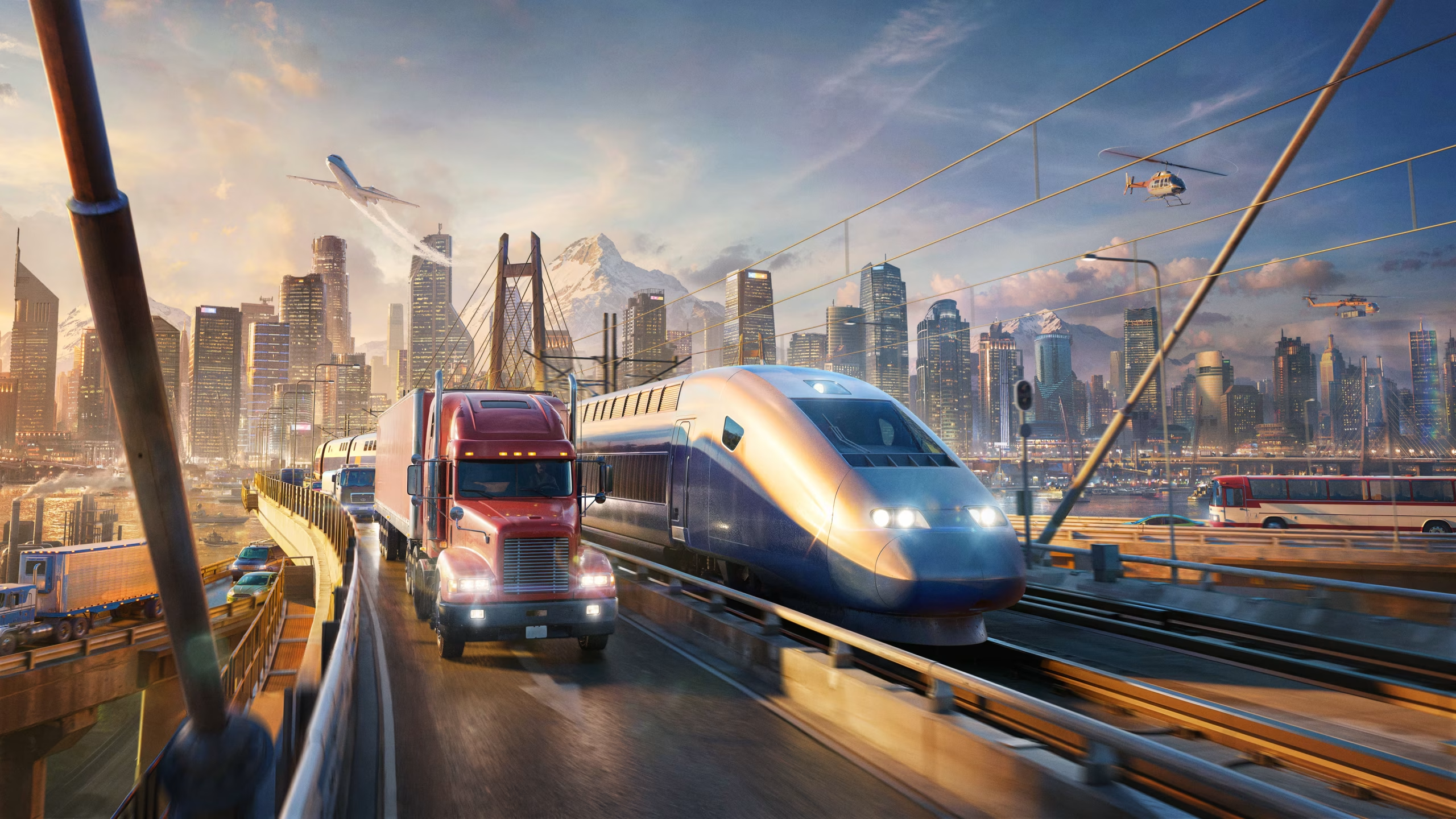
There is something wonderfully satisfying about taking a world that is barely ticking along and gradually turning it into a perfectly functioning transportation network. A couple of buses become a handful of routes, those routes create demand for better infrastructure, then suddenly you are staring at a sprawling network of roads, railways, ships and aircraft, wondering how on earth you ended up spending hours planning a junction. That is the magic of Transport Fever 3, a game that can appear daunting at first but becomes remarkably addictive once its systems start to fall into place.
Transport Fever 3 is all about connecting the dots. Towns need people moving around them, industries need resources delivered, factories need materials and your growing transport company needs to make enough money to keep everything moving. What initially seems like a fairly straightforward management game quickly develops into something considerably deeper, but thankfully, this latest entry does a much better job of bringing you into that complexity without making you feel completely lost.
Building Your Transport Empire
Starting in the early 1900s, your transportation empire begins in a much humbler fashion than the sprawling networks you can eventually create. Horse-drawn vehicles and early forms of transport are your bread and butter, with a small town providing your first opportunity to connect residential, commercial and industrial areas. It is a wonderfully simple introduction to what can eventually become a ridiculously complicated logistical puzzle.
The clever part is how naturally Transport Fever 3 builds upon that foundation. You might begin by running a small passenger service between two parts of a town, only to realise that the settlement needs resources to continue growing. Suddenly, you are looking at a nearby producer, figuring out how to get those goods into town and working out whether your current infrastructure can handle the additional traffic.
Before long, that single route has become several interconnected services, and that is when Transport Fever 3 really starts to get its hooks into you. You are no longer simply placing roads and buying vehicles; you are thinking about efficiency, distance, capacity, running costs and how one part of your network affects another. It becomes a constant process of spotting a problem, finding a solution and then discovering that your solution has created another problem somewhere else.
And honestly, I love that.

A World That Grows With You
The maps are not simply static playgrounds waiting for you to fill them with transport. Cities and towns develop according to how effectively you serve them, and watching a small settlement gradually become a much larger community is incredibly rewarding. Give people reliable transport and provide the resources they need, and the world begins to change around you.
This creates a wonderful sense of progression without relying on the traditional structure of unlocking arbitrary abilities or grinding through repetitive objectives. Your progression is tied to the development of your company and the transportation technology available to you, meaning there is always a reason to look towards the next generation of vehicles and infrastructure.
There is also a real historical charm to watching transportation evolve. Those early horse-drawn services eventually give way to increasingly capable buses, trains, ships and aircraft, and the transition makes the world feel as though it is genuinely moving forward. The sheer range of vehicles available is impressive, and for anyone who has even a passing interest in transport, there is a ridiculous amount to admire.

Logistics Can Be Surprisingly Relaxing
What surprised me most about Transport Fever 3 is just how relaxing it can be. This is still a management game where your decisions can leave you staring at a financial disaster, but there is something incredibly calming about watching your carefully planned network operate successfully.
There is no need to rush. You can take your time, study the map and decide where your next investment should go. Even when things start becoming complicated, the game rarely feels as though it is forcing you to move at an uncomfortable pace. You can spend time tweaking a route, watching trains roll into a station or simply following a vehicle as it makes its way through the world.
That slower pace works particularly well on Xbox. There is something strangely satisfying about sitting back and watching your transportation empire come alive, especially once you have several different modes of transport working together. One minute you are worrying about a single bus route, and the next you are watching cargo being moved across an entire region through a chain involving trucks, trains and ships.
It is management gaming at its most satisfying: not because everything is easy, but because you can see the results of your decisions.

Campaign or Sandbox?
Transport Fever 3 offers both structured scenarios and a more open sandbox experience, and I think both have their place. The campaign provides a useful way into the mechanics, giving you specific objectives rather than simply dropping you onto a gigantic map and effectively saying, “Off you go.”
That is particularly useful for newcomers. There are an awful lot of systems here, and while the game has improved how it explains them, there are still moments when you can find yourself wondering why a particular route isn’t working or why a particular industry isn’t receiving the resources it needs.
The sandbox is where I suspect most players will eventually spend the majority of their time, though. This is where Transport Fever 3 really opens up, allowing you to create the network you want and develop it at your own pace. There is no single correct way to approach a map, and that freedom is one of the game’s greatest strengths.
You can play cautiously, building up a small profitable network before expanding, or take bigger risks by investing heavily in ambitious projects. Of course, those big ideas can also leave you staring at a rather unpleasant bank balance when things don’t go according to plan.

Money, Money, Money
Financial management is a huge part of the experience, and Transport Fever 3 does a great job of making every major expansion feel like a decision rather than simply another button to press.
A railway can transform your business, but building one is expensive. Taking the shortest route through a mountain might seem sensible until you see the price of the required infrastructure. Suddenly, that slightly longer route around the obstacle starts looking considerably more attractive.
This constant balancing act gives your decisions genuine weight. You are always asking whether you can afford to expand, whether a new service will actually generate enough income and whether it is better to improve an existing route rather than immediately chasing the next big project.
Subsidies and smaller objectives also provide some useful direction when the sheer openness of the sandbox becomes overwhelming. They give you specific jobs to complete, while also providing a little extra income and encouraging you to explore parts of the map you might otherwise ignore.
The beauty is that these tasks never completely take control away from you. They are suggestions rather than instructions, and you remain free to pursue your own plans.

Xbox Controls and Interface
This is probably where Transport Fever 3 feels least comfortable on console. There is an enormous amount of information to manage, and while the interface does a good job of presenting that information, navigating some of the deeper menus with a controller can occasionally become fiddly.
As your network expands, so does the number of vehicles and lines you need to keep track of. Managing a handful of services is straightforward enough, but once you have dozens of routes operating simultaneously, finding exactly what you need can become a little more cumbersome than it should be.
Thankfully, there are some useful quality-of-life features that make managing a growing empire considerably easier. Notifications help identify problems within your network, and the ability to organise and rename lines becomes increasingly valuable as your transportation empire expands.
These may sound like small additions, but they become incredibly important once your neat little operation turns into a sprawling monster of roads, railways and vehicles. The game understands that complexity is inevitable and provides enough tools to help you deal with it.
A Beautiful Transportation Playground
Transport Fever 3 is not trying to be a cinematic showcase, but it looks good for what it is. The ability to zoom right into your world and watch individual vehicles and citizens going about their business adds a lovely sense of scale.
The changing environments, weather and day-and-night cycle also help keep the maps feeling alive, while the huge variety of vehicles provides plenty to look at as your company progresses through the decades.
There is something particularly enjoyable about watching a network you created from scratch operating in real time. A train pulls into a station, passengers board, a truck heads off towards an industrial site and somewhere else a ship is moving cargo across the water. It is all happening because of decisions you made.
That is the real visual reward here.
Final Thoughts
Transport Fever 3 is the sort of game that can quietly consume your time without you even realising it. You sit down intending to establish a couple of bus routes, only to look at the clock several hours later and realise you have somehow built a transportation empire spanning an entire region.
That is because the game understands the appeal of logistics. There is genuine satisfaction in taking a problem and finding an elegant solution, whether that means adding another bus, creating a new rail connection, establishing a cargo route or completely redesigning part of your network because your previous plan has become hopelessly inefficient.
It is also a game that respects the player. You can delve as deeply into its systems as you want, or simply concentrate on the parts you enjoy most. The campaign helps newcomers learn the ropes, while the sandbox provides the freedom that will keep experienced players coming back for another attempt.
The Xbox version does have some controller-related frustrations, particularly when you are managing a huge number of lines and vehicles, but these never managed to overshadow the sheer enjoyment I found in building and managing my networks.
Transport Fever 3 is a fantastic addition to the Xbox simulation and strategy library. It is deep without constantly making you feel overwhelmed, complex without losing sight of what makes it fun, and surprisingly relaxing despite the number of financial disasters you can create for yourself.
If you enjoy watching a plan slowly come together, there are few things more satisfying than seeing your first humble transport route evolve into a huge interconnected network. Transport Fever 3 makes that journey incredibly rewarding — just make sure you keep an eye on the bank balance before you decide that building a railway through a mountain is a brilliant idea.
Overall
-
CX Score - 80%80%
Summary
Pros
- Deep and incredibly satisfying logistics gameplay
- Much more approachable for newcomers
- Huge variety of vehicles and transport options
- Campaign and sandbox provide plenty of freedom
- Cities genuinely grow around your transport network
- Excellent sense of progression through the decades
Cons
- Some controller and menu interactions can feel fiddly
- Managing very large networks can become cumbersome
- The learning curve can still be intimidating initially
- Occasional frustrations when routes or connections don’t behave as expected