

Played on Xbox Series S and X
“There’s a skeleton in my closet.”
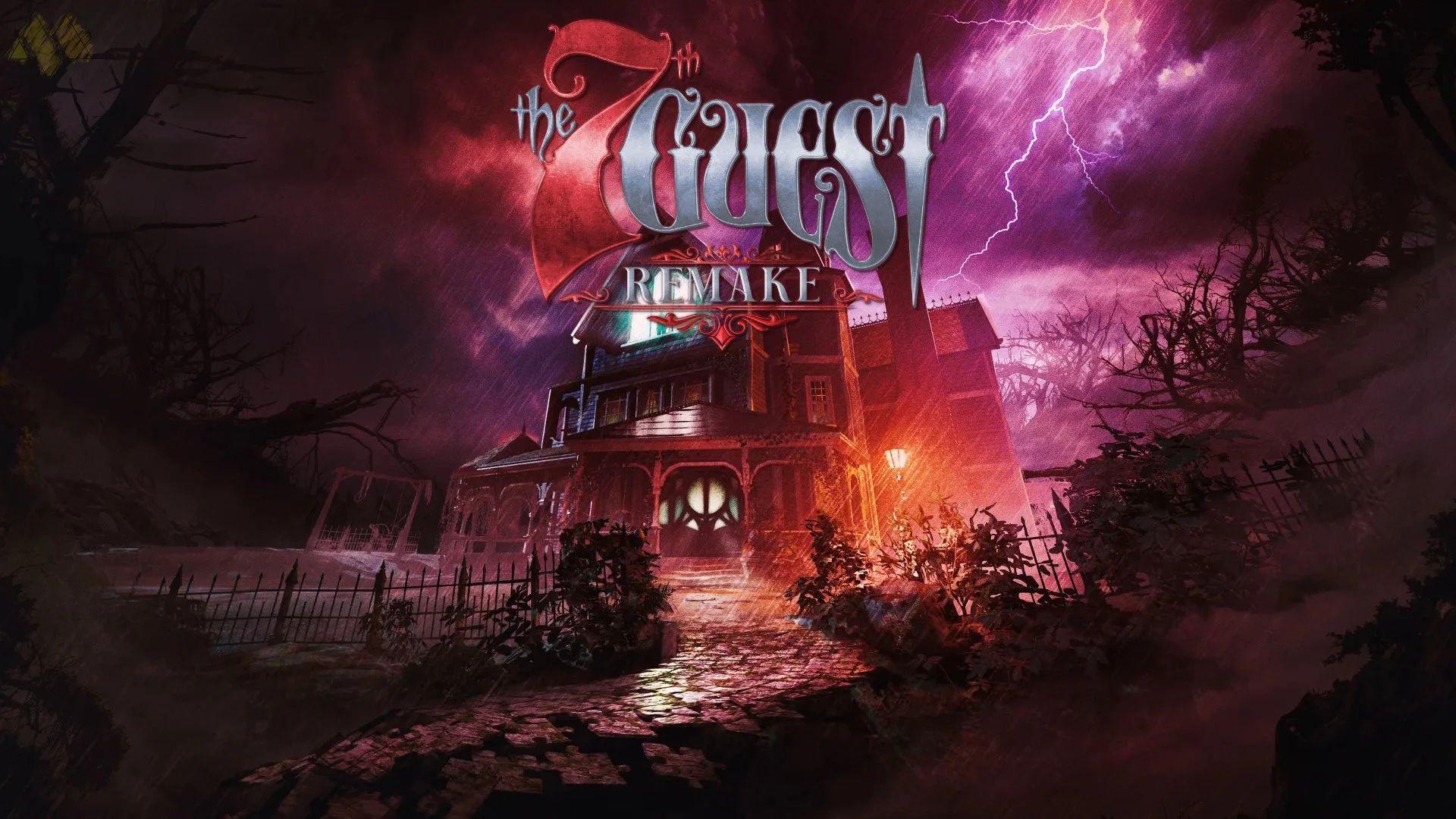
The 7th Guest was one of those early‑90s curiosities that lived in the collective memory more as a vibe than a game. It was a haunted CD‑ROM showcase, a strange little FMV experiment, and a product of that era when developers were convinced that digitised actors and pre‑rendered mansions were the future of interactive storytelling. The remake on Xbox Series consoles takes that legacy and rebuilds it with modern tools, modern pacing, and a modern understanding of what makes a mystery actually feel mysterious. It’s not just a facelift; it’s a reinterpretation — one that respects the bones of the original while confidently reshaping everything around them.
The result is a game that feels like a séance: half nostalgia, half reinvention, and wholly committed to its own theatrical weirdness.
Atmosphere & Presentation
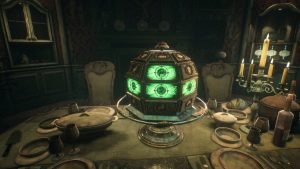
The first thing that hits you is the mansion. Stauf’s mansion has always been the star of the show, but the remake elevates it into something genuinely mesmerising. The developers lean heavily into volumetric fog, dynamic lighting, and shifting architecture to create a space that feels alive — not metaphorically, but literally. Rooms breathe. Shadows move independently of their sources. Hallways subtly change shape when you’re not looking. It’s the kind of environmental storytelling that doesn’t need exposition; the building itself is the narrator.
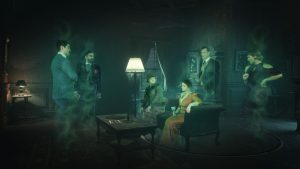
The use of volumetric mixed‑reality FMV is the remake’s biggest swing. Instead of the flat, grainy video of the original, characters now appear as ghostly holographic projections, drifting in and out of scenes like memories that haven’t fully decided whether they want to be remembered. It’s a bold stylistic choice, and it works far better than it has any right to. The actors feel present without ever feeling physical, which is exactly the tone a game like this deserves.
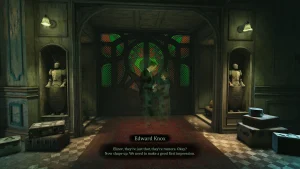
The mansion’s aesthetic is a blend of gothic surrealism and theatrical horror — less jump scares and more a feeling you are constantly being watched. It’s a slow burn, but a deliberate one.
Story & Tone
The narrative remains close to the original: six guests, one sinister host, and a house full of puzzles that reveal the truth behind Henry Stauf’s twisted genius. But the remake sharpens the storytelling, giving each guest more personality, more presence, and more emotional texture. The performances are intentionally heightened — almost stage‑like — which fits the ghostly FMV aesthetic perfectly.
The writing leans into ambiguity. Characters speak in riddles, half‑truths, and fragmented memories. You’re never quite sure whether you’re witnessing events as they happened or as the house wants you to see them. This is where the remake shines: it understands that horror doesn’t need clarity. Horror thrives in the gaps.
The tone is confident, eerie, and occasionally playful. There are moments where the game winks at you — not in a comedic way, but in a “yes, we know this is theatrical, and we’re doing it on purpose” way. It’s a refreshing change from modern horror’s obsession with bleakness.
Gameplay & Puzzles
One new mechanism that is in this version and not the original is the magic lamp which you get right at the start of the game. Its power is to turn back time on things you are looking at, make hidden things appear and have a disturbing effect on the paintings in the mansion. All of which will make you want to keep using it just to see all the extra little details.
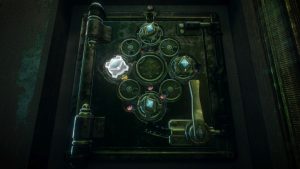
The puzzles are the heart of the 7th Guest, and the remake treats them with respect. Each puzzle is reimagined rather than simply recreated. They’re tactile, clever, and visually integrated into the environment. Instead of feeling like isolated minigames, they feel like manifestations of the mansion’s personality.
Difficulty is a bumpy road. The game wants you to think, not suffer. Solutions feel earned, not extracted through trial and error. And when you do get stuck, the hint system is subtle enough that it doesn’t break immersion.
Whoever it was that created the Doll room puzzle, I want to send you some flowers. With all the heads cut off and mixed up. Here’s a roll of tape, please feel free to make some sense out of that *wipes dirt off hands, feeling smug*.
A few standout puzzle types:
- Spatial illusions — Rooms that rearrange themselves as you interact with them.
- Symbolic logic challenges — Classic Stauf brain‑twisters with a modern twist.
- Environmental riddles — Clues hidden in lighting, sound, or shifting architecture.
The remake also introduces a few new puzzle concepts that play with perspective and motion in ways the original hardware could never have handled. These are some of the best moments in the game — the kind that make you stop and appreciate the craftsmanship.
Performance on Xbox Series S/X
On Xbox Series X, the game runs beautifully. The lighting, particle effects, and FMV projections all benefit from the extra horsepower. Load times are nearly instant, transitions are smooth, and the mansion’s shifting geometry never stutters.
On Xbox Series S, the experience is still strong, though you’ll notice slightly softer shadows and occasional resolution dips during the more visually complex sequences. None of this impacts gameplay, and the atmosphere remains intact. If anything, the slight softness adds a layer of dreamlike haze that actually suits the tone.
The game targets 60fps on both consoles, and it hits that target consistently. The only exceptions are a few puzzle transitions that briefly dip into the high 50s, but these are rare and barely noticeable.
Audio & Sound Design
Sound is where the remake becomes genuinely special. The audio design is meticulous — every creak, whisper, and distant piano note feels placed with intention. The mansion doesn’t just look alive; it sounds alive.
The soundtrack blends eerie ambient tones with subtle melodic motifs that echo the original game’s iconic themes. It’s not bombastic. It’s not intrusive. It’s atmospheric in the purest sense.
The voice acting is theatrical, but never campy. Characters feel like ghosts performing their own tragedies on loop, trapped in memories they can’t escape. It’s haunting in a way that lingers long after you put the controller down.
Final Thoughts
The 7th Guest Remake is a rare thing: a modern reinterpretation that understands exactly what made the original special while refusing to be shackled by nostalgia. It’s atmospheric, clever, theatrical, and confidently strange. It’s a puzzle‑box wrapped in a ghost story wrapped in a mansion that feels like it’s watching you.
On Xbox Series consoles, it’s a polished, stable, and visually striking experience that feels right at home on modern hardware. It’s not a loud horror game. It’s not a fast horror game. It’s a curious horror game — one that invites you to explore, observe, and think.
And when you finally step back outside Stauf’s mansion, you’ll realise it’s the kind of game that doesn’t just stay in your memory. It lingers.
Overall
-
CX Score - 80%80%
Summary
Pros
- Atmosphere — One of the most visually and tonally cohesive horror remakes in years.
- Puzzle design — Clever, varied, and integrated into the environment.
- FMV reinvention — A bold stylistic choice that pays off.
- Performance — Smooth, stable, and visually impressive.
- Narrative tone — Ambiguous, theatrical, and confidently weird.
Cons
- Pacing — The slow burn won’t be for everyone.
- Navigation — Some rooms require more backtracking than necessary.
- You don’t get to climb through the oven! – IYKYK
- Occasional visual noise — The holographic FMV can feel cluttered in a few scenes.
- Difficulty Spikes – You can feel as though the puzzles go from obvious to obscure and several steps in between. But it does help to keep the gameplay fresh.
- But on the end, this is just a port – A port of the remake made for the VR market. Some may say “cash cow” but others will say it introduces another style of puzzler to a new audience. You are the judge.