

All views expressed in this feature are my own. Your personal mileage may vary.
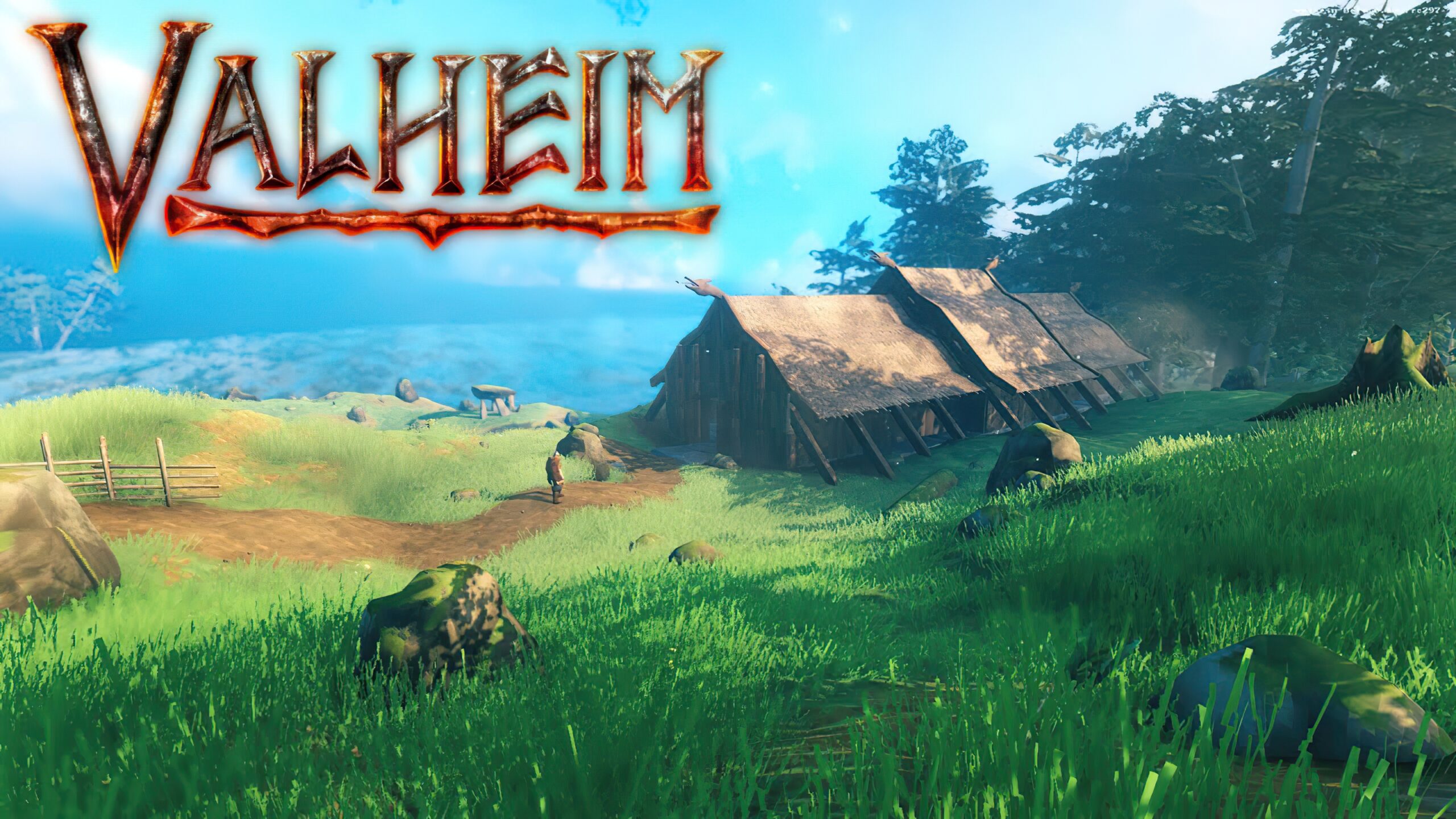
In an era where the modern AAA video game costs eighty quid, demands a second mortgage to access its cosmetic battle passes, and frequently arrives with the technical stability of a wet cardboard box, a small group of Swedish developers at Iron Gate Studio committed a quiet act of absolute economic heresy. Three years ago, they asked for roughly sixteen pounds in exchange for a gigabyte-and-a-half file download. In return, they handed us a vast, procedurally generated Norse purgatory, a club, a wooden hammer, and the distinct, looming threat of immediate decapitation via an aggressive falling pine tree.
Now, as September 9th ushers in the long-awaited 1.0 update—complete with the frozen expanse of the Deep North—Valheim finally sheds its “Early Access” cloak. It stands tall as a fully realized, nine-biome sandbox titan. Yet, as we stand on the icy threshold of the game’s final frontier, the most compelling story isn’t just that Iron Gate actually finished the thing. It’s the sheer, staggering, almost absurd relative value proposition the game represents in today’s gaming marketplace Even with the impending £10 launch bump bringing the standard price tag to roughly twenty-six pounds, I believe it remains one of the single biggest bargains in all of digital entertainment.
To measure Valheim by standard video game metrics—hours per pound spent—is like measuring a fine single malt by the fluid ounce. The math is silly. You pay less than the price of a mid-tier takeout pizza, and in return, you receive hundreds, if not thousands, of hours of manic, cozy, terrifying, and strangely therapeutic entertainment. The true return on investment isn’t just time elapsed; it is the quality of the agency the game affords you.
The £16 Architecture Degree and the Terraform Dream
Take, for instance, the building system. Most survival games treat construction as an awkward grid-locked necessity—a series of flat boxes tacked together to store your chest collection. Valheim turned it into a full-blown structural engineering sandbox wrapped in atmospheric genius.The magic lies in two core mechanics: the deformable landscape and the structural integrity physics.
Before you even lay a single wooden floorboard, Valheim lets you play God with the earth itself. Want a sunken basement carved into the side of a mountain? Grab a pickaxe. Need a moat wide enough to prevent a horde of aggrieved Greydwarves from ruining your Sunday roast? Break out the hoe and start raising dirt pillars. The landscape isn’t a static backdrop; it’s clay. You carve out roads, flatten hilltops, dig harbour docks for your Longship, and reshape the world to suit your architectural whims.
And then comes the actual timber. Valheim’s building physics rely on a color-coded structural load system—from deep blue (grounded/foundational) up to flashing red (about to collapse under its own hubris). It forces you to think like an actual carpenter. You can’t just float a three-story Viking mead hall on a single wooden post; you need support beams, core wood pillars, and iron-reinforced framing.
The reward for this mental labour is unparalleled atmospheric ROI. There is no feeling in modern gaming quite like sitting inside a timber hall you built with your own two hands, watching smoke rise toward a custom-built chimney flue, while a violent thunderstorm rages outside. The rain hits the thatch roof, the hearth crackles, the Rested buff ticks upward, and suddenly, you realize you haven’t looked at the clock in four hours. You aren’t just playing a game; you’ve built a home.
The Ten-Viking Shield Wall: Cross-Platform Chaos
If Valheim is a therapeutic paradise in single-player, adding other people turns it into an absolute masterclass in emergent multiplayer comedy. The game fully supports up to 10-player co-op across seamless cross-platform play.
Whether your gaming crew is playing on PC, Xbox One, or Xbox Series X/S, or joining the shanigans soon on Switch 2 and PS5, everyone shares the same world without barrier or friction. There are no proprietary network fees, no artificial platform walls, and no headaches. You simply spin up a dedicated server or host a world from your desktop, pass out the password, and let the Norse choir assemble.
Crucially, the game scales its difficulty dynamically based on the number of players nearby. A solo run feels like a quiet, survivalist journey; a 10-player server feels like a glorious, chaotic Viking campaign.
Through the natural flow of action and reaction with a team, roles naturally emerge:
You’ll have one player who morphs into the full-time village architect, refusing to leave the base until the decorative dragon heads are symmetrical.
Another becomes the master chef, tending crops and brewing stamina meads.
Meanwhile, the remaining eight brave souls set sail on a Longship into uncharted waters, singing sea shanties right up until a Sea Serpent capsizes the boat and sends three weeks’ worth of iron gear to the bottom of the ocean.
Author’s Note: Speak of the devil—I’ll be hosting a fresh 1.0 full-playthrough world on my own dedicated server once the update drops. If you fancy joining the crew, raiding biomes, or helping me haul copper across three continents, hit me up via the CompleteXbox.
Five Years of Biomes: A Slow-Burn Masterclass in Escalation
The journey from those humble early days to the 1.0 release has been a masterclass in organic expansion. While other live-service games drop flashy, shallow seasonal updates that vanish into thin air three months later, Iron Gate’s major patches added permanent, transformative layers to the world. Each biome added along the way didn’t just change the colour of the grass; it entirely recalibrated how the game is played.
The Meadows: A peaceful, sun-dappled onboarding ramp where the biggest threat is misjudging the trajectory of a felled oak tree.
The Black Forest: The moment the training wheels fall off. Suddenly you’re dodging trolls, managing stamina, and mining copper in the pitch black while eerie music reminds you that you don’t belong here.
The Swamps: The ultimate filter. A claustrophobic, poison-drenched nightmare that forced players to master comfort levels, mead brewing, and parry timings, turning the game into a tense tactical survival effort.
The Mountains: A shift toward environmental hazard, introducing freezing mechanics, verticality, wolf-taming, and the sheer joy of sliding down a peak on a wooden shield.
The Plains: A deceptive paradise of golden grass and bright sunshine, ruined instantly by the terrifying, high-pitched buzz of a Deaths Quito or a raid of cackling Fulings.
The Mistlands: A radical overhaul of vision and verticality. It forced players out of their comfort zones with dense fog, introduced magical Eitr systems, and demanded the use of mist torches just to navigate terrain inhabited by giant bugs.
The Ashlands: A brutal, apocalyptic landing zone of fire and brimstone where the ocean itself boils, requiring siege weapons, undead warfare, and absolute combat mastery just to secure a foothold.
Now, the loop reaches its apex with the Deep North on September 9th. The final piece of the puzzle promises to turn the very top of the world map into a frozen, end-game gauntlet. It rounds out a progression arc that feels earnable, brutal, and deeply satisfying. You don’t buy power in Valheim; you forge it, you smelt it and bleed for it.

Charms, Adrenaline, and Hidden Delights: Mechanics That Matter
What makes Valheim’s market positioning so unique is how it approaches player progression. It rejects the bloated skill trees and endless “+0.5% critical hit chance” passive traits that clog up modern action RPGs. Instead, it ties progression to visceral, tangible mechanics.
The stamina and health system, governed entirely by food intake, remains one of the cleverest design choices in the genre. You aren’t inherently strong; you are only as good as your last meal. Balancing a diet of high-health meats with high-stamina berries or soups adds a constant layer of meaningful preparation before any excursion.
Over the years, the sandbox has quietly expanded its combat tools to cater to wildly different playstyles: From basic flint spears to two-handed Atgeirs, heavy crossbows (Arbalests), dual-wielding knives, elemental staves, and giant siege engines.
Adrenaline & Stamina
Clutched combat encounters rely on tight stamina management, where emergency dodges and timed parries yield huge posture-breaking rewards.
Magic & Eitr System
The introduction of magic in the Mistlands biome transforms late-game combat from purely physical brawling to elemental artillery, shield-bubbling, and summoning undead minions. In a balanced team, they can be the difference between victory and defeat.
Charms & Trinkets
Passive gear upgrades and specialized accessories that allow fine-tuning of resource gathering, resistance, and mobility.
Beyond the headline mechanics, Valheim is stuffed with “hidden delights”—those tiny, unscripted moments of emergent gameplay that money simply cannot buy in a scripted AAA campaign.
It’s the sheer panic of harpooning a Sea Serpent to drag it onto a beach, only for a nearby Fuling village to start fighting the monster for you. It’s discovering that you can ride a Lox into battle like a furry, terrifying tank. It’s setting up a portal network that spans three continents, only to realize you forgot to bring the materials for the return gate and are now stranded on a rock in the middle of nowhere as night falls.
I have left many “wonders” for the players themselves to find about the wonderful world of Valheim.
The Verdict: The Golden Standard of Gaming Value
When you step back and look at the landscape of modern gaming, Valheim stands as a towering, pine-scented rebuke to the industry’s worst instincts. It doesn’t nag you with microtransactions. It doesn’t require a constant online connection to play solo. It doesn’t treat your time as a metric to be monetized by engagement algorithms. It offers a world that respects your intelligence, punishes your overconfidence, and rewards your creativity.
Even with the £10 post-launch price increase factored in, a ticket to this world gets you a front-row seat to epic Viking sagas, chaotic 10-player cross-platform misadventures, and quiet, rainy afternoons spent perfecting the overhang on a timber roof. As the sails unfurl toward the frozen glaciers of the Deep North, leaving early access isn’t just a technical milestone for Iron Gate—it’s a victory lap.
In terms of value, craft, and soul per square inch, Valheim isn’t just a great purchase in the current marketplace. It might just be the bargain of the decade. If you decide to buy without hesitation, be prepared to say goodbye to your social life.
SKOL!