

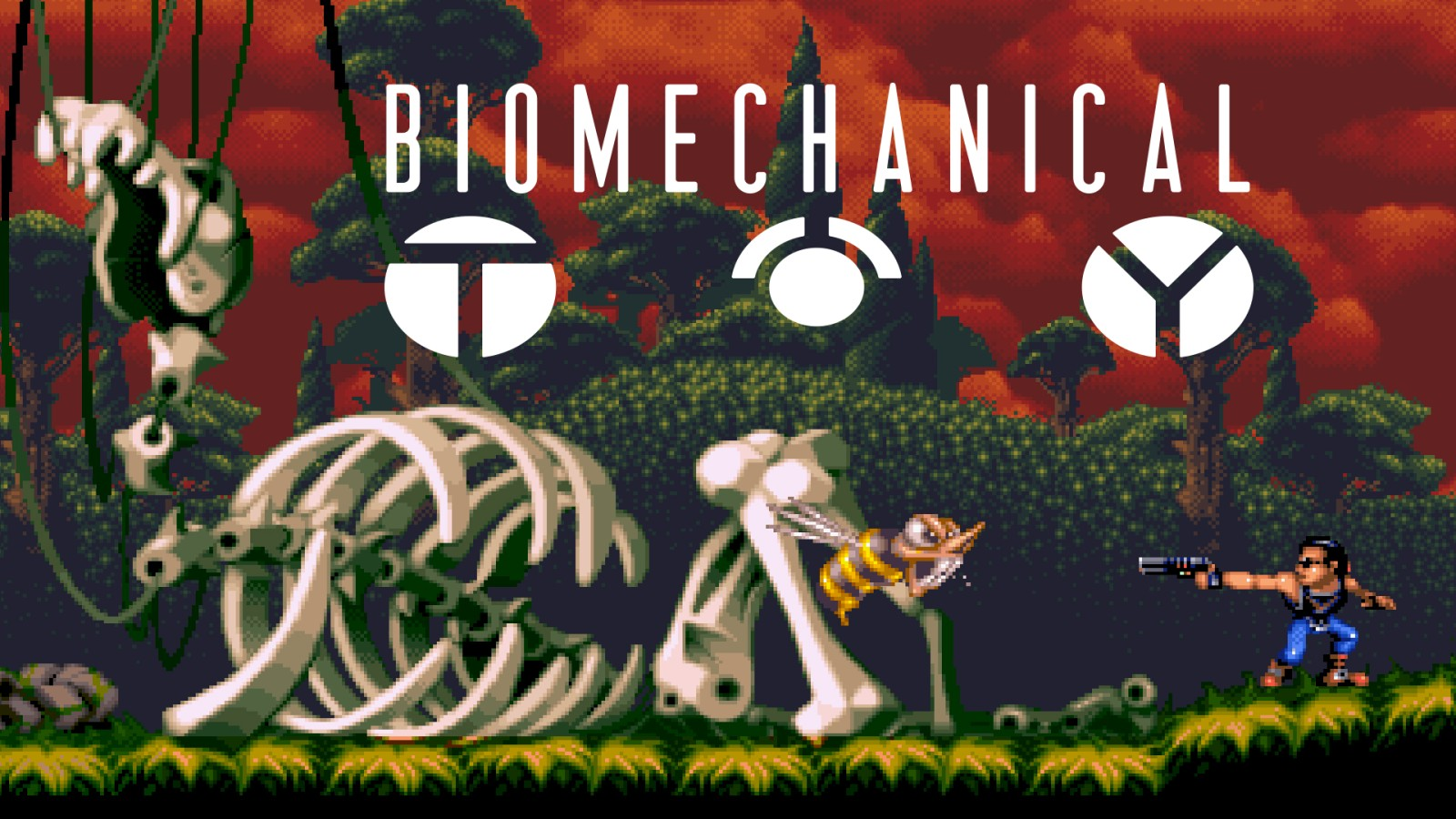
My love of old-school arcade shooters varies. I have to be in the mood to tackle the often hectic action. Furthermore, the lack of depth can be testing. Therefore, I take the genre with a pinch of salt. However, when I was offered a rather obscure remake to review, I was intrigued. Biomechanical Toy is a game I rarely played in the 90s. Accordingly, I was interested in seeing how it held up with a modern audience.
QUByte Interactive have developed this classic, if not low-key, arcade experience. It is a single-player game that focuses on run-and-gun mechanics. Consequently, it is fast-paced, often messy, but tough to put down. With many levels to tackle, bosses to overcome, and a vibrant pixelated world to endure, this embodies the 90s in every layer.
Biomechanical Toy tells a shallow tale.
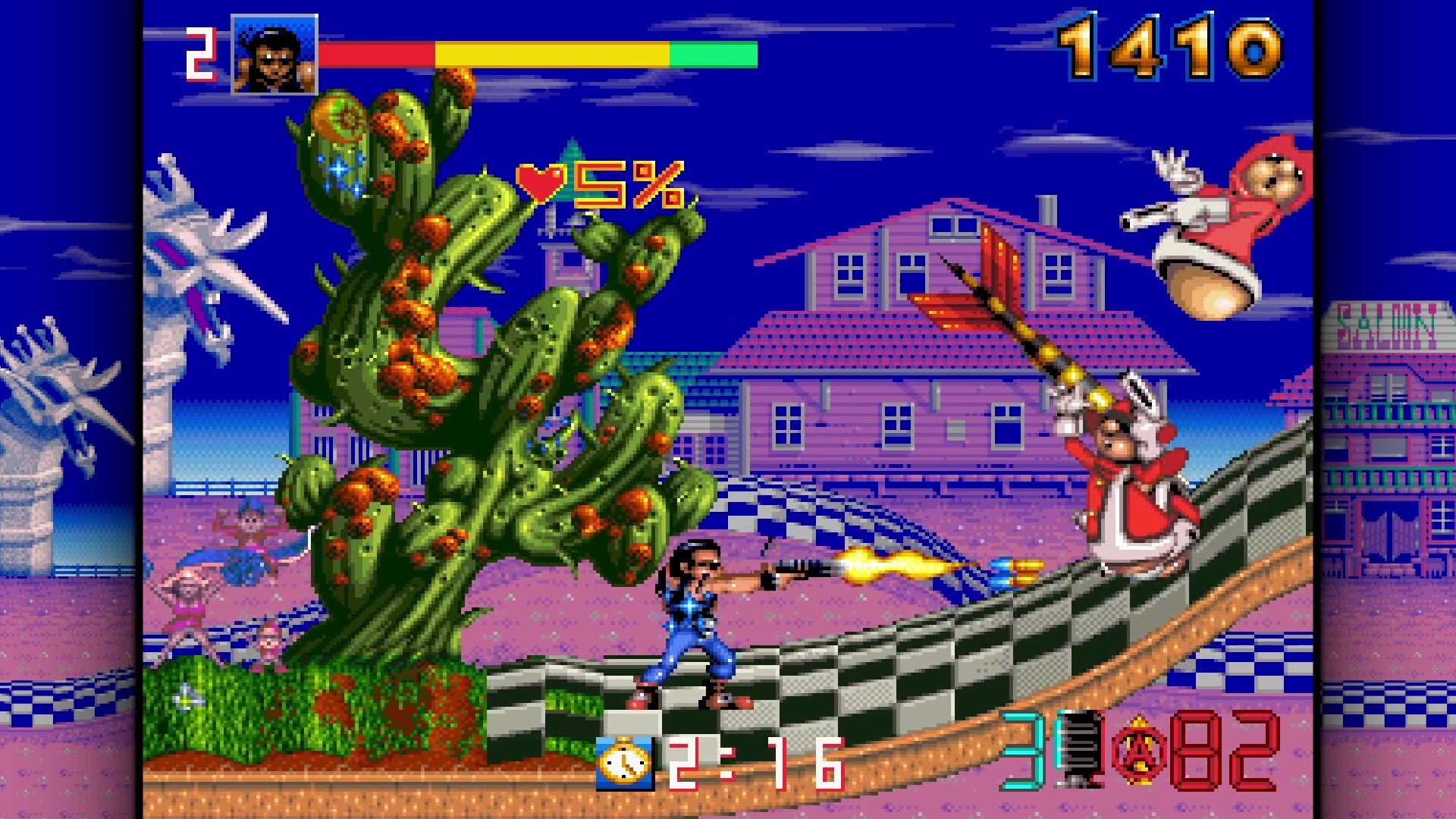
If I’m honest, no one tackles this genre for a rich and high-end story. Instead, it is the action that keeps you going. Biomechanical Toy doesn’t break this mould with its paper-thin story, baseless characters, and nearly pointless script. However, this isn’t a complaint, more of an observation. I didn’t care about the lack of emotion or a detailed story. Instead, I fell for the 90s shooting madness.
You play the role of Inguz, a heavily armed hero who wishes to save the day. The villain, Scrubby, has stolen the magic pendulum. This artefact gives every toy its life, and without it, the world will crumble. Subsequently, Inguz will stop at nothing to thwart the madman and save the day.
Simple mechanics.
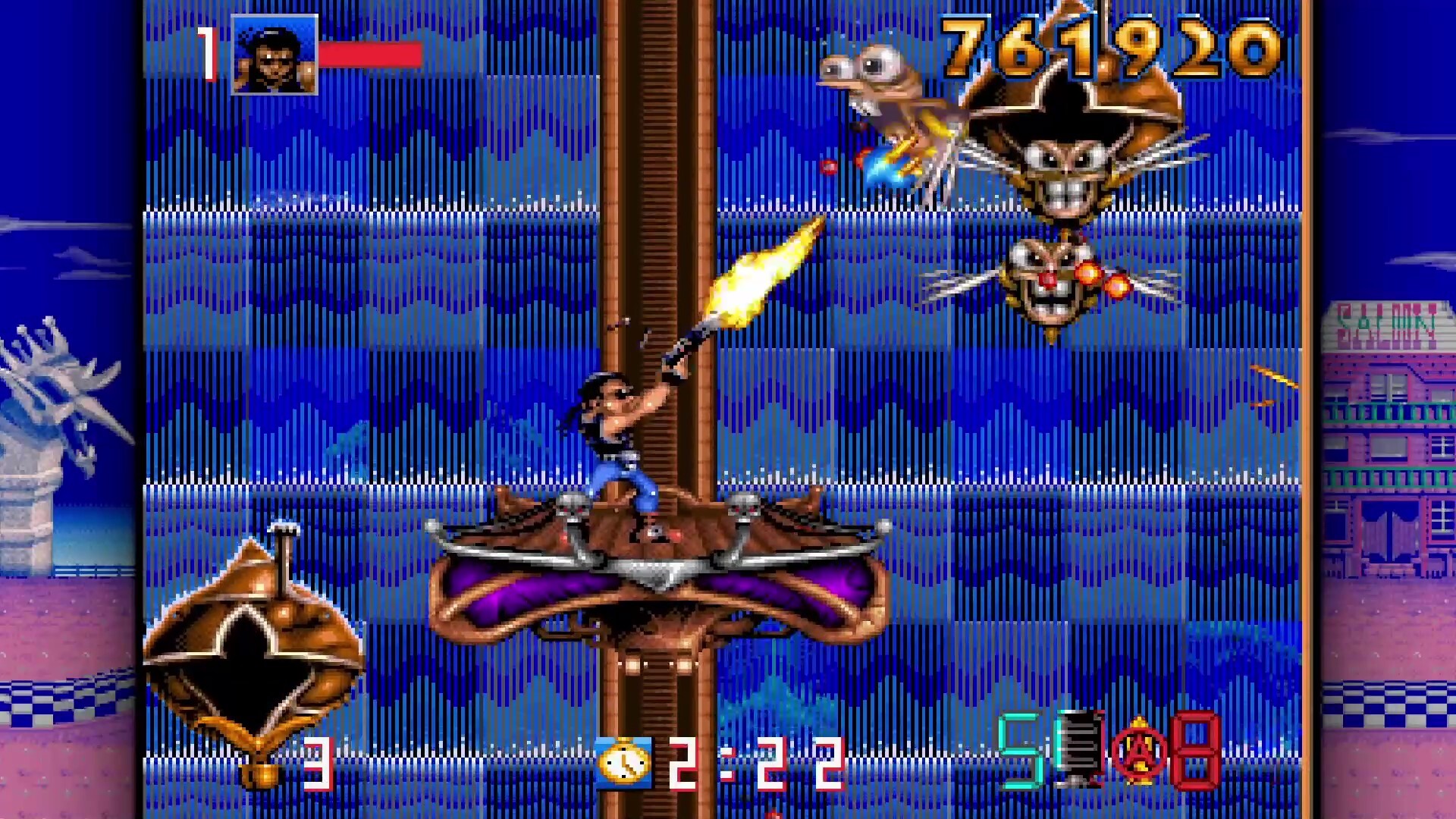
The 2D run-and-gun mechanics reminded me of Contra and Metal Slug. The action is a little stiff as it reflects the D-pad nature of the 90s era. Moreover, your foes lack intelligence and taking them down requires a little practice and not much else.
This genre demands little from its audience. With waves of enemies to overcome, characters to rescue, weapon upgrades to gather, and treasure to collect, it has a distinct arcade edge. On top of this, there are boss battles to enjoy.
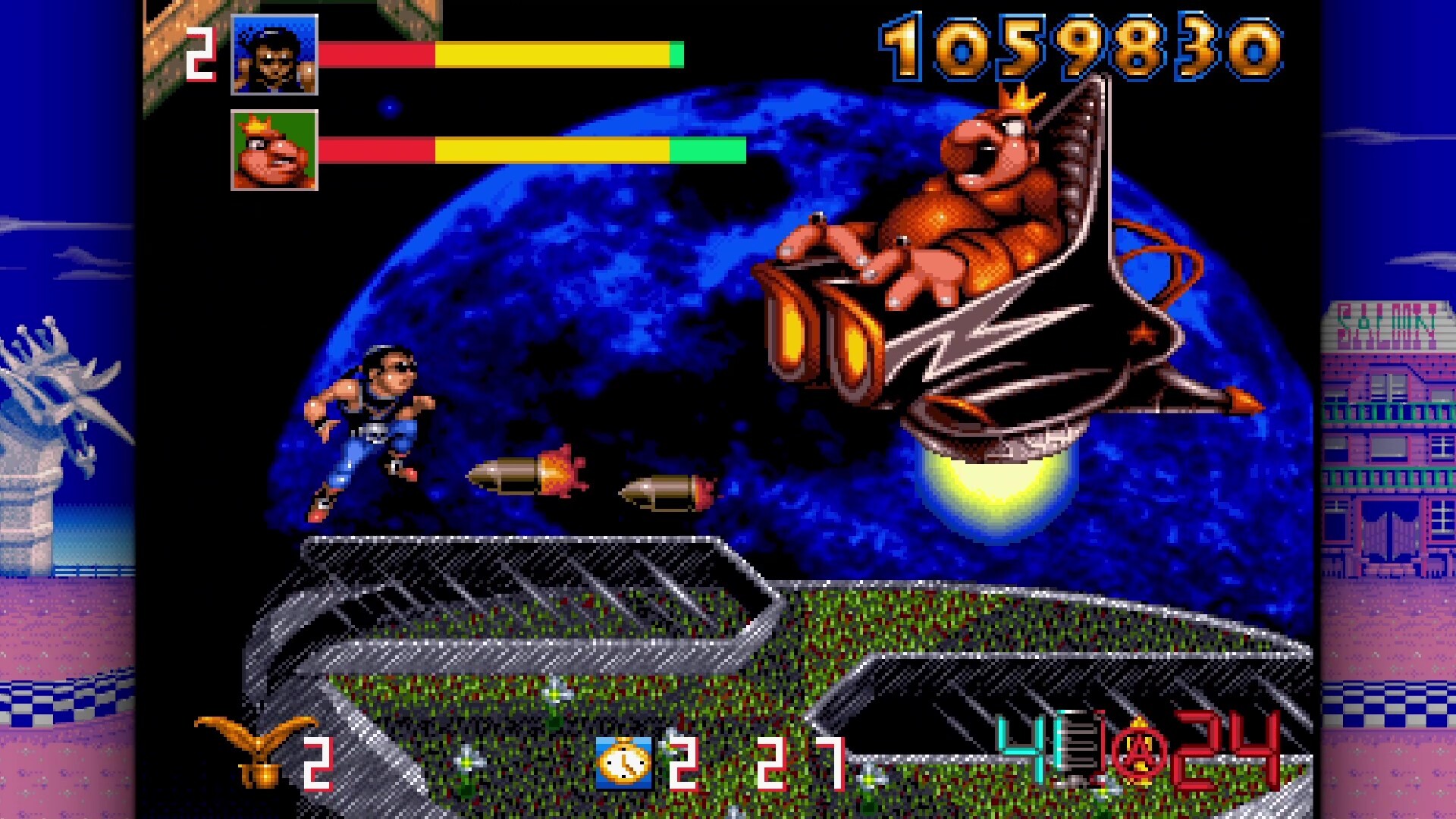
Where Biomechanical Toy excels is in the boss battles. These don’t introduce new mechanics, but they test what you’ve learned from the stage. With movement patterns to study, large pools of health, and plenty of projectiles to avoid, you’ll have to be quick, accurate, and patient to complete each stage.
Biomechanical Toy is disgustingly vibrant.
Although this is extremely dated, I was impressed by the stage design. The use of height and layers makes it more interesting than many of its 90s peers. Additionally, although the sprites are basic, they offer enough variety to keep you entertained. The animation is basic, but it works well with the genre and the retro action. The audio offers an era-specific profile that is gloriously nostalgic. The music is aggressive and often unnecessarily harsh. Furthermore, the sound effects are OTT and pretty repetitive.
The controls are as simple as you’d expect. With relatively clunky aiming, basic weaponry, but oddly responsive inputs, this is a joy to play. Where Biomechanical Toy falls short is its short story and underwhelming complexity. You’ll have much of the game covered in under 5 hours, and this was unfortunate. However, the fast-paced madness can be enjoyed repeatedly, so there is some replay value.
Biomechanical Toy is a blast from the past.
Biomechanical Toy didn’t get the praise it deserved the first time around. Sadly, it was overlooked, but not anymore. This dated 90s title ticks many boxes, even if it isn’t the longest game I’ve played. Accordingly, if you love classic arcade mechanics, I recommend grabbing a copy from the Xbox store!
Overall
-
CX Score - 75%75%
Summary
Pros
- Vibrant pixelated visuals
- Nice stage design
- Retro audio
- Responsive controls
- Fun gameplay
Cons
- It isn’t long enough
- Paper thin story
- Clunky aiming