

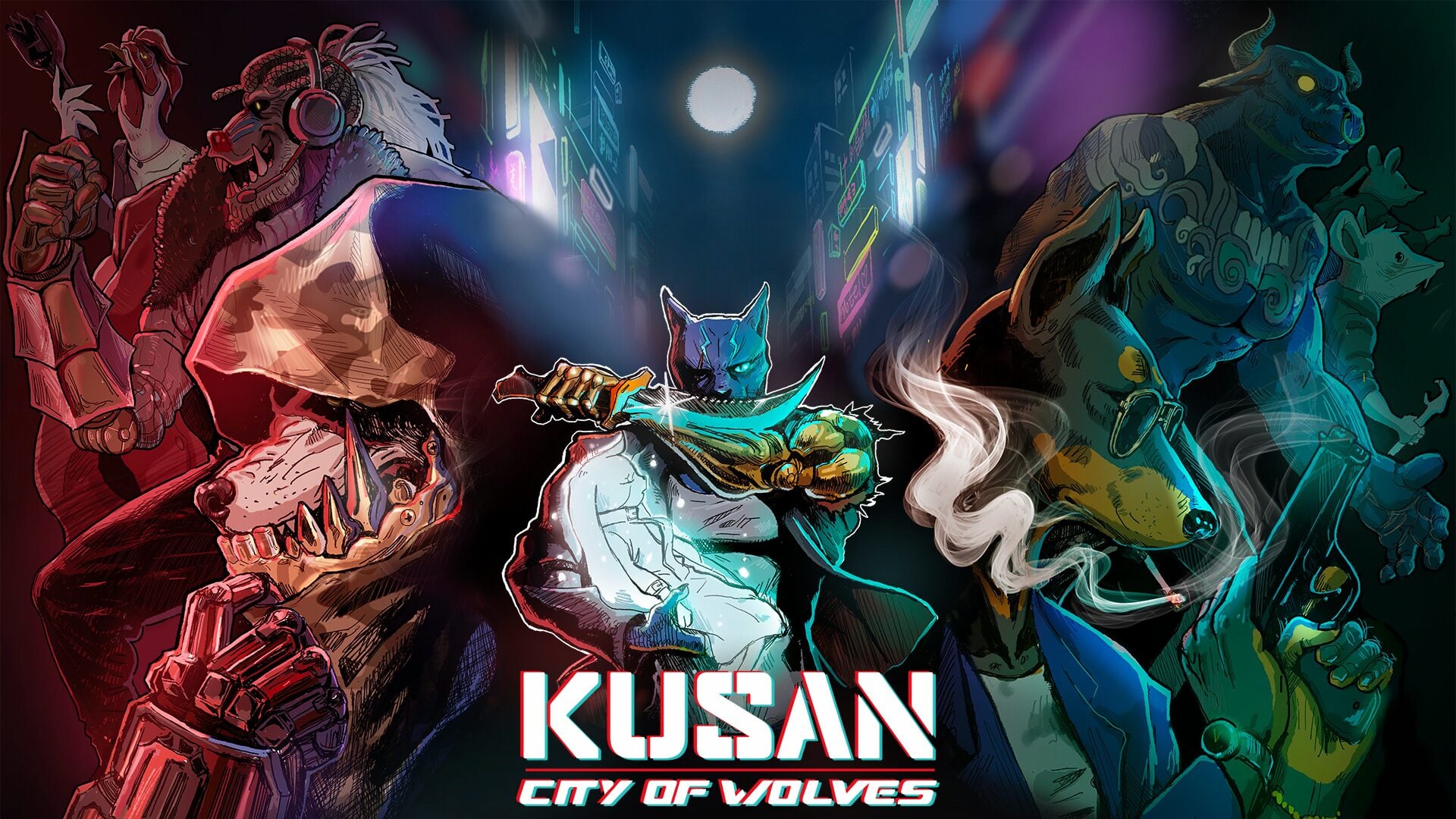
At first glance, Kusan wears its inspirations proudly on its sleeve. Set in a dystopian, crime riddled metropolis populated by underworld figureheads, you step into the polished combat boots of Jin a hardened former soldier turned mercenary “fixer” who happens to be a panther with a military grade prosthetic power arm. What unfolds across its sprawling story chapters is an unapologetically violent, twitchy and heavy action game that takes the classic top down room clearing formula, injects a healthy shot of John Wick close quarters choreography, and wraps the whole thing in a visually striking comic book presentation.
The fundamental rule of Kusan is brutal simplicity in that enemies die fast, but Jin dies just as fast if not twice as fast. A single stray bullet, a fraction of a second delay or a missed blade throw will instantly reset the room. Yet rather than wallowing in tedious loading screens, pressing the restart button on your controller instantly snaps you back to the threshold of the room, ready to try again. This zero-friction restart loop is the lifeblood of the experience and the curse because you are itching to juts give it one more shot and find yourself in an endless death loop. My advice would be to walk away, take a breather and you bare better results.
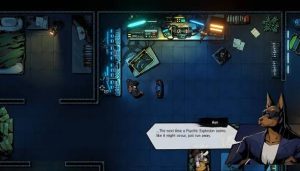
Where Kusan distinguishes itself from traditional twin stick shooters is in Jin’s expansive, hybrid toolkit. Rather than relying solely on dropped firearms, Jin is a weapon of mass destruction built around three core pillars:
- The Cyber Hand: Jin’s cybernetic prosthetic arm serves as his primary close quarters tool. It isn’t just for punching bad guys into oblivion, it doubles as a parry mechanism that can deflect incoming melee attacks and reflect bullets directly back at shooters when timed correctly. Also charging up melee attack unleashes a devastating dash punch that allows you to get closer to enemies quicker and sends enemies careening into walls or each other sometimes getting collateral kills.
- The Quantum Knife: A auto-targeting throwing blade designed for mid range combat and to be used when in a pinch. The knife offers an immediate answer to enemies advancing outside of punch range. Upgrading your skills allows you to pull off stylish follow up manoeuvres, such as punching the knife mid flight to ricochet it into a second target or just an easier way to retract to be able to use it again quickly in tense moments.
- Conventional Firearms: crossbows, pistols, and automatic rifles are plenty within the game as you unlock with ammo dropped by fallen enemies. As ammo is strictly limited, forcing firearms into a role as tactical crowd control options rather than primary which when learning a room can prove useful during boss fights and crowd control.
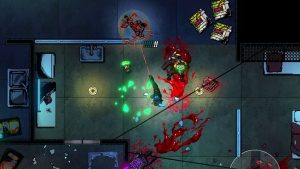
The magic of Kusan happens when these systems lock together and you learn multiple combos / abilities or play a way you are comfortable with. You breach a doorway, toss a Quantum Knife to pin a gunman on the left, execute a parry on a baseball bat wielding baddy in front of you, punch his body into a second guy, grab some ammo nearby and clear the remaining three goons in a single continuous burst of motion. The feeling of when it clicks or you press buttons in a panic and don’t know what you just did but it was cool is such a rewarding feeling.
Rather than a simple linear skill tree, Jin’s prosthetic arm is upgraded using a grid. Passive perks and active skill modifiers come in various shapes and sizes reminiscent of Resident Evil’s inventory tiles and act as blocks. There are multiple upgrades to use, try out and perfect that improve your characters abilities and weapons, access other weapons or just optimise how much room it takes up. This system adds a welcome layer of strategy between missions. Players can adapt and swap out to help them out with a room they are struggling with to give themselves an advantage or if they are wanting to get a higher score and practice combos learning what works to their playstyle.
From a purely artistic standpoint, Kusan: City of Wolves is impressive. The game blends pixel art game environments with high-resolution, comic book panel cutscenes during story progression. The cast ranging from canine street enforcers to feline crime bosses is drawn with a dark, gritty graphic novel aesthetic that avoids feeling cliché. Panels slice across the screen like you are reading a comic piece by piece with clear typography, cool looking art work and a very well done storyline.
The central premise is Jin attempting to protect a young woman possessing dangerous abilities while navigating a crumbling city tearing itself apart which is standard noir fare. However, the narrative frequently over complicates itself by introducing a dizzying barrage of baddies, corporate entities, research groups, and past military history all at once.
Because the core gameplay thrives on momentum and speed, longer dialogue sequences between chapters can occasionally feel like a roadblock to the action. Thankfully, cut scenes can be fast forwarded or skipped entirely, but those hoping for a tightly spun, mysterious narrative on par with the game’s visual style may find the storytelling slightly bulky.
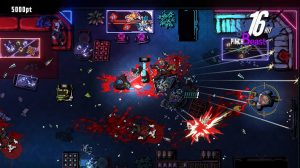
A high-speed twin stick shooter lives and dies by its soundtrack, and CIRCLEfromDOT nailed the musical pulse of Kusan. The soundtrack blends heavy synthwave basslines, hip hop inspired beats and industrial electronic tracks. The music doesn’t just sit quietly in the background, it’s aggressive pushes you forward, practically begging you to sprint into rooms blindly with fists flying which fools you into a false sense of security. Complemented by crunchy sound design the distinct CLANG of a successful parry, the heavy thud of a gun blast, and the wet sound of a knife execution, the audio work plays a vital role in giving player actions physical feedback and boy is it rewarding.
A hardcore action game is only as good as its level design, and for the most part, succeeds in delivering multi room stages that function like aggressive spatial puzzles with time taken out the chaos to plan what combination of attacks works and who to priorities. Stages are broken down into distinct floors within nightclubs, neon soaked labs, and roads filled with oncoming traffic with plenty variation.
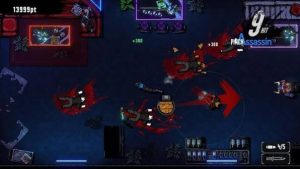
The visual layout of every room is clear from a top down perspective, allowing you to peek through doors, evaluate everything in your line of sight, and plan an initial assault path. Environmental destruction plays a key role in combat which can be launched into groups of foes using the melee attacks, and glass partitions that enemies can catch a sneak peak of you and move towards you. However, the level design isn’t without its stumbles. In denser late game levels, screen clutter can occasionally work against the player. Vibrant particle effects and heavy blood splatters sometimes cause small enemy projectiles or enemies to blend into the floor graphics, resulting in occasional trial and error deaths where you aren’t entirely clear on what hit you until you restart. Not to mention with the fast paced action sometimes all you just see colour with the boss levels.
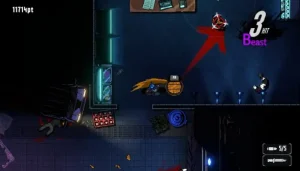
Kusan: City of Wolves doesn’t attempt to reinvent top down action, but it polishes its core mechanics. By pairing lightning-fast twin stick shooting with kinetic melee parries, flexible modular upgrades, and a killer electronic soundtrack, CIRCLEfromDOT has delivered one of the most thrilling indie action games available on Xbox Series X|S this year. While its narrative over complications and occasional visual clutter hold it back from absolute perfection, its core combat loop is pure digital dopamine for reflex driven gamers and achievement / score hunters alike. If you have been waiting for a game to scratch that unrelenting Hotline Miami itch with a modern, stylish twist, Kusan: City of Wolves and fancy a challenge this definitely deserves a look in.
Overall
-
CX Score - 85%85%
Summary
Pros
- Combat and flow is fantastic
- Upgrade system is very good
- Soundtrack is killer
Cons
- Overstuffed Storytelling
- Visual Clutter