


Lost In The Sands Of Arrakis
There are few game worlds quite as instantly recognisable as Arrakis. Even before you take your first steps across its endless dunes, there is something about the idea of a planet almost entirely consumed by sand, where water is more valuable than gold and one careless step can result in a gigantic sandworm bursting from beneath your feet, that makes it an irresistible setting for a video game. Dune: Awakening takes that world and throws it into the survival genre, creating an experience that is considerably bigger and more ambitious than I initially expected. This isn’t simply a Dune game with some survival mechanics bolted onto the side; it is a huge open-world adventure where survival, exploration, combat, crafting, character progression and the politics of Arrakis all become part of one enormous journey.
What makes the Xbox version particularly interesting is that it arrives with an awful lot already packed into it. This isn’t a bare-bones console release waiting for content to catch up. The full Book One story is here, alongside the additions and improvements made to the game since its original release, while the new single-player mode fundamentally changes how you can approach the experience. You can play entirely alone, take on Arrakis with friends through private servers, or experience the larger shared world if that’s what you want. For someone who loves survival games but doesn’t necessarily want the pressure of having other players around all the time, that flexibility is a genuinely welcome addition.
And after spending time wandering those enormous deserts, building shelters, gathering resources and repeatedly asking myself whether I really had enough water to make it to the next destination, I came away feeling that Funcom has created something special here. It isn’t perfect, and there are moments where the systems can become unnecessarily complicated or frustrating, but there is a remarkable amount to discover beneath the sand.
Welcome To Arrakis
The first few hours of Dune: Awakening do a fantastic job of making you understand just how hostile Arrakis really is. You aren’t a mighty warrior arriving with an arsenal of weapons and a perfectly equipped base. You are vulnerable, thirsty and largely dependent on whatever resources you can find. The sun is a constant threat, the environment wants you dead and the enormous creatures beneath the sand are a rather brutal reminder that you are very much not at the top of the food chain.
That vulnerability is one of the things I enjoyed most about the game. Survival games live or die by whether their mechanics make the player feel like they are actually surviving, and Arrakis manages this extremely well. Water isn’t simply another bar that occasionally needs filling; it becomes something you think about when planning an expedition. You start considering how far you can travel, where you can find resources, whether you have enough supplies to return safely and whether wandering a little further into the unknown is worth the risk.
Then there is the sandworm.
Few things make you reconsider your life choices quite like hearing the unmistakable signs that something enormous is moving beneath the ground. The first time you realise what is happening, the natural instinct is to panic. You learn quickly that travelling across open sand isn’t simply a case of pointing your character towards the next objective and holding down the accelerator. Arrakis demands respect, and learning how to move through it safely becomes one of the game’s most satisfying lessons.

A Dune Story With A Difference
The story takes place within an alternate version of the Dune universe, which gives Funcom considerable freedom to tell its own story while still using the characters, factions and ideas that make the setting so fascinating. The absence of Paul Atreides creates an intriguing starting point, and rather than simply retelling familiar events, Dune: Awakening creates its own interpretation of what Arrakis might look like under different circumstances.
For someone who knows the Dune universe, there is plenty here to enjoy, but I also think newcomers are given enough information to understand what is happening without needing to have memorised every name, faction and political relationship beforehand. The story gradually introduces you to the world while you’re actually playing rather than dumping a mountain of lore onto you before you’ve even had the chance to take your first steps.
That approach works particularly well because exploration and storytelling are so closely connected. You aren’t simply travelling through an empty open world between cutscenes. You discover locations, encounter characters, uncover information and gradually understand why this particular version of Arrakis is the way it is.
There is a lot of story here too, and having the complete Book One experience available from the beginning makes the Xbox release feel like a substantial package. Rather than feeling like you’re buying into the first chapter of something that may eventually become interesting, there is a proper journey to undertake.
Survive, Build And Explore
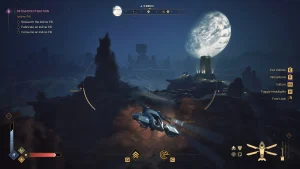
At its heart, Dune: Awakening is a survival game, and that means you’ll be spending a considerable amount of time gathering resources. You’ll mine, harvest, craft equipment, improve your abilities and build somewhere that can eventually start to resemble a proper home rather than the desperate little shelter you begin with.
The building system is one of those areas that can quietly consume hours. What starts as “I just need somewhere safe to store my stuff” can quickly become “perhaps I should build another room here, move that crafting station over there and completely redesign the entrance”. Before you know it, you’ve spent an evening decorating a base on a planet where you were originally trying not to die of dehydration.
The same can be said for crafting and progression. There is a huge amount to unlock, and your character gradually becomes more capable as you explore different specialisations and abilities. Weapons, equipment, vehicles and technology all feed into the progression system, giving you plenty of reasons to keep venturing further into Arrakis.
The danger is that there is almost too much to take in. Dune: Awakening throws a lot of systems at you, and while the game does a decent job of introducing them, there are moments where I found myself wondering exactly which upgrade, resource or piece of equipment I should be concentrating on next. For experienced survival players this will probably be part of the appeal, but newcomers may need to give themselves some time to settle into the rhythm.
The Joy Of Exploration
Arrakis is enormous, and thankfully it doesn’t feel like an empty world created simply to make the map look impressive.
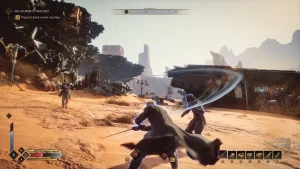
Exploration is one of the strongest reasons to keep playing because there always seems to be something else waiting beyond the horizon. You might set out looking for a particular resource and end up discovering an entirely new location. You might follow a mission marker only to get distracted by something in the distance. Or you might simply decide to see how far you can travel before common sense eventually tells you that returning home with enough water would probably be a sensible idea.
Vehicles make a huge difference here, transforming the way you approach the landscape once you’ve progressed far enough to make use of them. Moving around Arrakis becomes less about surviving every individual step and more about planning larger expeditions, although that doesn’t mean the danger disappears.
In fact, the sheer scale of the world makes the moments where everything goes wrong even more memorable. Getting stranded, running low on resources or suddenly finding yourself under attack can turn an otherwise routine trip into a genuine survival story.
That’s when Dune: Awakening is at its best. The game creates stories rather than simply presenting objectives.
Combat And Character Progression
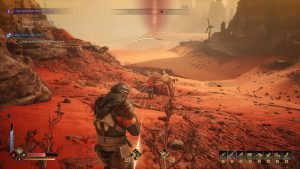
Combat is another important part of the experience, and while Dune: Awakening isn’t trying to be a traditional action RPG, there is enough variety to make fighting your way through Arrakis enjoyable.
Weapons have weight, enemies require different approaches and your abilities give you plenty of opportunity to develop a playstyle that suits you. The specialisation system adds another layer, allowing you to shape your character around the abilities and equipment you prefer rather than simply following a single predetermined progression path.
There is something particularly satisfying about returning to an area that previously gave you trouble and discovering that the equipment and abilities you’ve unlocked have completely changed the encounter. That feeling of becoming stronger without ever becoming completely invincible is important in a survival game, and Dune: Awakening generally finds a good balance.
The difficulty can occasionally swing a little too far in the opposite direction, though. There are moments where the game feels deliberately unforgiving rather than naturally challenging, and losing progress or resources because you made one poor decision can be frustrating.
Still, I would rather have a survival game that occasionally makes me swear at the television than one that removes all of the danger from its world.
Playing Alone Changes Everything
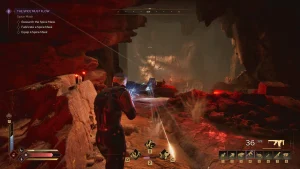
The biggest addition to the Xbox experience is undoubtedly the full single-player mode, and I honestly wasn’t sure how well a game with such a strong survival and online identity would translate into playing completely alone.
The answer is surprisingly well.
Playing alone changes the atmosphere of Arrakis. Without other players around, the planet feels even larger and more isolated. The silence becomes more noticeable, the dangers feel more personal and every decision about resources becomes your responsibility. Nobody else is going to bring you materials, help you fight your way through an encounter or build the equipment you forgot to make.
That makes the experience more deliberate, but also more rewarding.
Importantly, single-player doesn’t feel like a secondary mode that has been added simply so Funcom can put a tick in the box. The full game is there, and that makes a huge difference. You can experience the story at your own pace, explore without worrying about keeping up with other players and spend as much time building or crafting as you want.
For Xbox players who normally avoid survival games because of their multiplayer requirements, this could be the feature that changes their mind.

The Xbox Experience
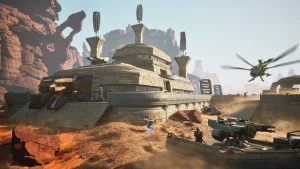
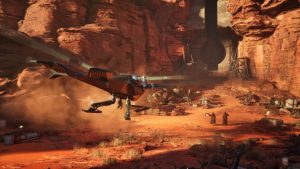
Dune: Awakening looks fantastic when you’re standing on top of a ridge overlooking an enormous stretch of Arrakis. The lighting, sandstorms and environmental effects create some genuinely spectacular moments, particularly when the world starts to shift from the harsh brightness of day into the darker atmosphere of night.
The Xbox version also gives players the choice between performance and quality options, with the former targeting 60fps. For a game where you’re regularly moving through large environments and engaging in combat, I found the smoother experience preferable.
However, the console conversion isn’t completely free of issues.
The menus can occasionally feel as though they were designed with a mouse and keyboard in mind rather than a controller. There are moments where navigating inventories, crafting screens and other interfaces isn’t quite as intuitive as it should be, and this can become particularly irritating when you’re trying to select something precisely.
There are also occasional texture-loading issues and visual hiccups that remind you that you’re playing a huge open-world game. None of these problems destroyed my experience, but they do stop Dune: Awakening from feeling as polished as it could be.
The good news is that these are frustrations rather than fundamental problems. Once you’ve become accustomed to the controller layout and the various menus, they largely become part of the learning process.
Final Thoughts
Dune: Awakening is an ambitious game, and ambition can sometimes be its greatest strength and its biggest weakness.
There is an enormous amount to see and do across Arrakis, and Funcom has successfully turned one of science fiction’s most recognisable worlds into a survival playground that feels dangerous, atmospheric and genuinely worth exploring. The survival mechanics work because the environment itself is such an important part of the experience, while crafting, building, combat and character progression give you plenty of reasons to keep pushing further into the desert.
The new single-player mode is perhaps the most important addition for Xbox players. It makes the entire experience considerably more accessible without stripping away what makes Dune: Awakening special. You can play alone, take your time and create your own adventure, or you can embrace the social side of the game and experience Arrakis alongside others.
There are still frustrations. The menus aren’t always as controller-friendly as I’d like, the game can occasionally suffer from technical hiccups and the sheer number of systems can feel overwhelming. Some of the survival mechanics can also be brutally unforgiving, particularly when you’re still learning how everything works.
But when Dune: Awakening gets it right, it gets it very right.
There is something wonderfully immersive about standing alone in the middle of the desert, looking towards a distant objective while checking your water supply and wondering whether you can make it there and back. Then you hear the ground rumble.
Suddenly, that objective doesn’t seem quite so important.
Dune: Awakening is a huge, ambitious and atmospheric survival RPG that makes Arrakis feel like a character in its own right. It isn’t perfect, but for anyone willing to embrace its systems and give themselves time to learn the ways of the desert, there is an enormous adventure waiting beneath the sand.
Verdict
Dune: Awakening isn’t simply a game for Dune fans. It is a surprisingly deep survival adventure that happens to be set on one of science fiction’s most iconic planets. The new single-player experience makes it much easier to recommend to Xbox players who would normally steer clear of multiplayer survival games, while the enormous world, strong progression and excellent atmosphere provide plenty of reasons to stay on Arrakis long after the opening hours.
It takes patience to understand, courage to explore and a healthy respect for sandworms, but once the systems begin to click, Dune: Awakening becomes an incredibly absorbing journey across one of gaming’s most hostile and beautiful worlds.
Just remember to bring water.
Overall
-
CX Score - 78%78%
Summary
Pros
- Fantastic recreation of the Dune universe
- Arrakis is enormous, atmospheric and genuinely dangerous
- Excellent survival mechanics
- Full single-player experience works brilliantly
- Deep crafting, building and progression
- Strong story and alternate-history setting
Cons
- Occasional texture and visual loading issues
- Huge number of systems can feel overwhelming
- Some survival mechanics are brutally unforgiving
- A few technical rough edges remain