

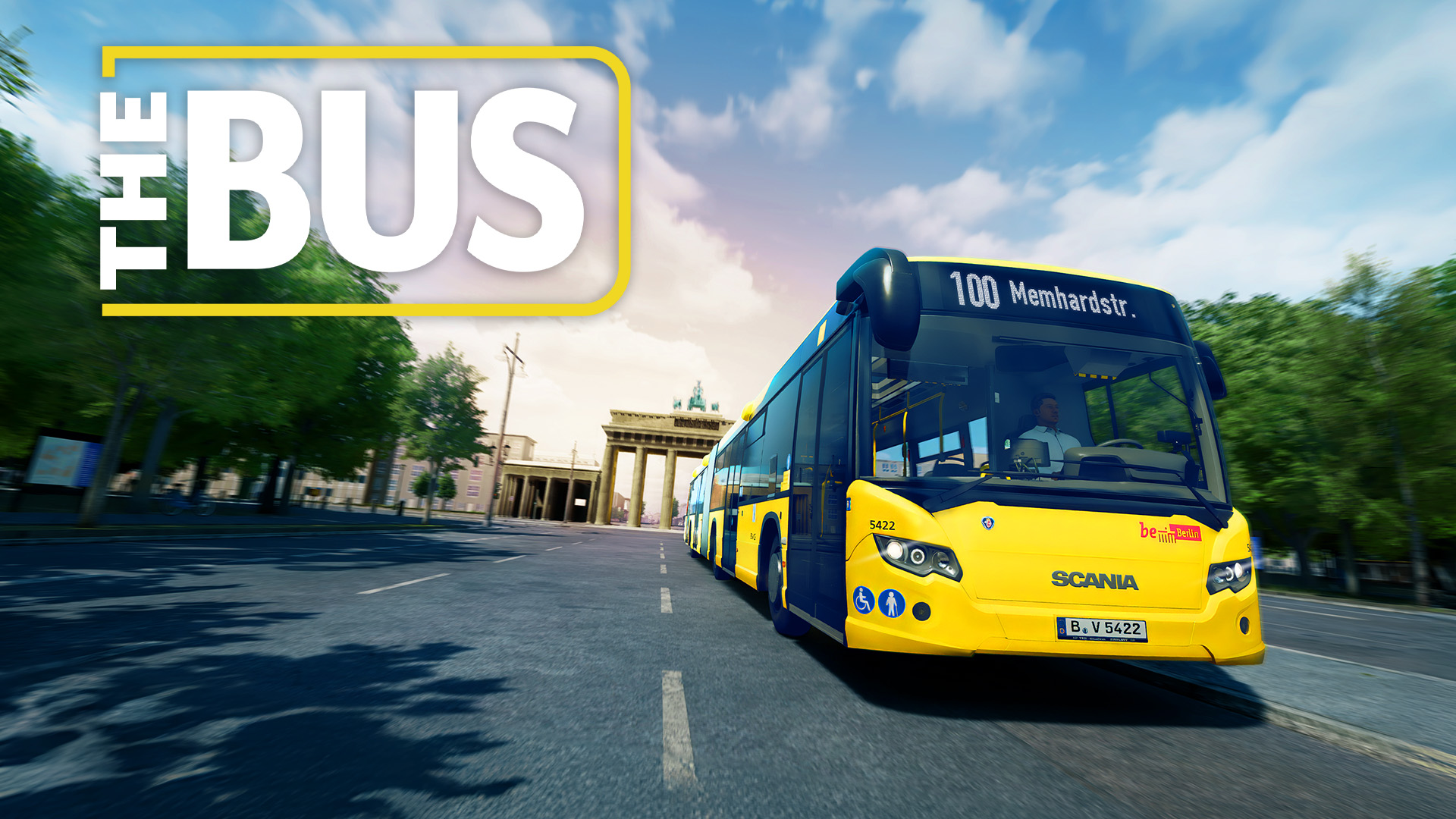
A Bigger, Better Bus Journey
When I reviewed The Bus on Xbox Series X earlier this year, I came away with a very clear impression of what TML-Studios had created. This wasn’t a bus game trying to disguise itself as something more exciting, nor was it interested in throwing constant action in your direction. Instead, The Bus understood exactly what it wanted to be. It was a slow, deliberate and surprisingly immersive simulation that asked you to take your time, learn the roads and simply enjoy the process of getting people from one destination to another.
I praising its impressive recreation of Berlin, the weight and handling of its buses and the satisfying rhythm that developed once you settled into its way of doing things. There were still some technical issues, particularly the occasional performance hiccup and some passenger animations that could pull you out of the experience, but the foundations were strong.
Now, The Bus has expanded considerably, and having spent time with the Hamburg City Expansion and the Ebus 2.2, I’ve found myself returning to that same thought: this is a game that is becoming more interesting the more it grows.
Hamburg doesn’t simply give you another collection of roads to drive around, while the Ebus 2.2 isn’t just another vehicle added to the garage. Together, they give The Bus a greater sense of variety and, perhaps more importantly, provide another reason to climb behind the wheel and settle into that wonderfully measured rhythm once again.
Leaving Berlin Behind
The biggest attraction here is undoubtedly Hamburg City. Berlin was always going to be difficult to follow. The original game’s 1:1 recreation gave The Bus a sense of scale and authenticity that immediately separated it from many other driving games, so simply dropping another city into the experience wouldn’t have been enough. Thankfully, Hamburg feels like it has been created with the same philosophy.
The moment you start driving around the city, there is a very different character to the environment. Hamburg has its own identity, and the expansion does a good job of reflecting that. Rather than feeling like Berlin with a different coat of paint, this feels like a genuine second location designed around the character of the city.
The route network takes you through a mixture of urban environments, with historic areas, residential neighbourhoods, busy roads and more open stretches all coming together to create journeys that feel varied without abandoning the realism that defines The Bus.
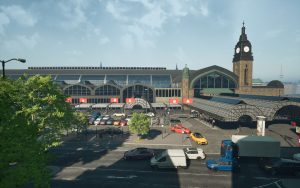
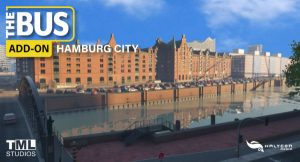
You’ll find yourself travelling through areas including St. Pauli, Winterhude, Barmbek, Steilshoop and Bramfeld, with some of Hamburg’s most recognisable locations appearing along the way. The Speicherstadt is an obvious highlight, but it is the broader sense of place that I found most impressive.
There are moments when you can simply look around and appreciate how much effort has gone into making the city feel like somewhere rather than merely another game map. That matters in a simulator like this.
When you’re spending extended periods behind the wheel, the environment becomes just as important as the vehicle itself. You begin to recognise roads, junctions and landmarks, and gradually the city starts to feel familiar. That’s exactly what happened to me with Berlin, and Hamburg is now beginning to offer that same feeling.
Five Routes, Plenty To Explore
Hamburg City currently gives you five main playable routes, covering lines 6, 7, 17, 218 and 277, while also introducing a night service with line 617. That variety is important because one of my biggest concerns with any additional map for a simulator is whether it genuinely provides enough reason to keep coming back.
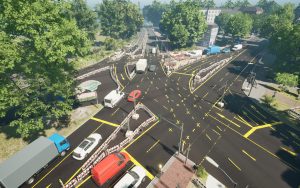
Here, there is a good amount to get your teeth into. The routes take you through different parts of Hamburg, and that means the experience changes naturally depending on where you are. Some stretches are relatively straightforward, allowing you to settle into your rhythm, while others throw tighter streets, larger intersections and busier environments at you. And this is where The Bus continues to do something I really enjoy.
It doesn’t need to manufacture difficulty. A narrow road, an awkward junction or a busy intersection can be enough to make you pay attention. You’re driving a large vehicle through a functioning city, and suddenly that seemingly simple journey requires considerably more concentration than you might expect.
The routes can also take a decent amount of time to complete, which makes each journey feel meaningful rather than disposable. This isn’t a case of jumping into a route for five minutes, completing it and immediately moving on. Hamburg encourages you to settle in.
And if you’re anything like me, that’s exactly where The Bus becomes most enjoyable.
Hamburg Feels Alive
One of the biggest improvements I noticed while exploring Hamburg is just how much is happening around you. The city isn’t simply made up of static buildings and roads. Traffic moves around you, pedestrians occupy the streets and rail transport contributes to the overall sense that you’re driving through a functioning urban environment.
There are underground and suburban trains, regional rail services and longer-distance trains, while ferries and harbour traffic add another layer to the city’s identity. It sounds like a collection of small details, but those details make a huge difference.
When you’re sitting at a red light waiting for traffic to clear and you see a train moving in the distance or a ferry making its way through the waterways, the city feels considerably more believable.
This was already something The Bus did well in Berlin, but Hamburg demonstrates just how effective that approach can be when the environment has been built around a distinctive identity.
The Detail Is Impressive
If there’s one thing I wasn’t expecting to appreciate quite as much as I did, it’s the sheer amount of visual detail. Hamburg City contains hundreds of customised objects and adapted buildings, with bus stops receiving particular attention. Shelters, passenger information displays and the smaller pieces of street furniture help give the city its own visual language.
Again, none of this sounds revolutionary when listed individually. But that isn’t really the point.
The Bus is a simulator built around immersion, and immersion comes from hundreds of small details working together. A bus stop that looks like it belongs in Hamburg, a building that has the right character or a familiar landmark appearing as you follow your route all contribute to the illusion that you’re actually operating public transport in a real city.
The more convincing those details become, the easier it is to forget you’re playing a game.
A New Bus For A New City
Of course, what would a new city be without a new bus? Enter the Ebus 2.2.
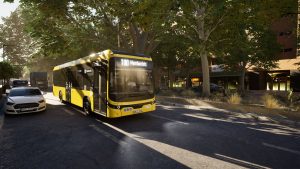
The Ebus 2.2 is an entirely different proposition from simply giving you another version of an existing vehicle. This is a modern, fully electric city bus that brings its own personality to The Bus.
There are four configurations included, with both a 12-metre solo bus and an 18-metre articulated version available. The solo bus comes in two- and three-door configurations, while the articulated model is available with three or four doors. That might sound like something only the most dedicated bus enthusiasts would get excited about, but for a simulator like The Bus, this level of choice makes sense.
Different routes have different requirements, and having the option to choose a bus based on passenger demand and the type of service you’re operating adds another layer of decision-making. It also makes the Ebus 2.2 feel like more than a cosmetic addition.
You’re not simply choosing a new bus because it looks different. You’re choosing a vehicle that changes how you approach certain journeys.
Electric Power Changes The Feel
Driving an electric bus is also an interesting experience within The Bus. There’s something noticeably different about the way the Ebus 2.2 feels compared with the more traditional vehicles. The smoothness of the electric drivetrain fits remarkably well with the game’s deliberate approach to driving.
Acceleration feels controlled and composed, and there’s something particularly satisfying about gliding away from a stop with a full load of passengers before settling into the flow of traffic. It suits The Bus incredibly well.
The game has never been about aggressively throwing a bus around the streets, and the Ebus 2.2 feels like a natural extension of that philosophy. It encourages smooth inputs and careful driving, which is exactly what I want from a vehicle in this sort of simulation.
There is also something quite satisfying about taking a modern electric bus through an old and historic city environment. That contrast between the technology you’re operating and the character of the streets around you works surprisingly well.
There’s A Lot To Configure
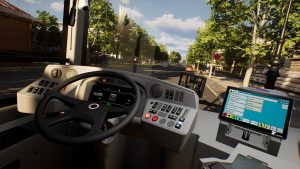
The Ebus 2.2 also benefits from a considerable amount of customisation. You can configure both the interior and exterior, while the bus includes a range of modern systems that help distinguish it from the other vehicles in the game.
One of the most interesting features is the option between conventional exterior mirrors and a digital camera system. Instead of simply relying on traditional mirrors, you can use camera feeds displayed on monitors inside the bus. There’s also additional camera coverage around the vehicle, which gives you greater awareness of what is happening around your bus.
For a game that already asks you to pay close attention to your surroundings, these systems make a lot of sense. The interior also benefits from modern touches including LED lighting, air conditioning, electric heating, a heat pump and USB ports for passengers.
Once again, these are small details, but they help make the Ebus 2.2 feel like a modern vehicle rather than a generic electric bus dropped into the game.
The Economy Gets More Interesting
Another aspect I particularly appreciate is that the Ebus 2.2 isn’t restricted to simply driving around for the sake of it. The vehicle can be used within the game’s economy mode, which means it becomes part of the wider management and operational experience.
This is where the DLC starts to feel like it has been properly integrated into The Bus rather than simply being sold as a separate piece of content. You’re not buying a bus and then discovering that it only works in one very specific situation. Instead, you can incorporate it into the wider experience and make your own decisions about when and where it is most useful.
For players who enjoy the management side of The Bus as much as the driving, that is a significant addition.
Hamburg And The Ebus Work Together
Perhaps the most important thing about these two pieces of DLC is that they complement each other extremely well. Hamburg gives you somewhere new to drive, while the Ebus 2.2 gives you a new way of experiencing it.
That might sound obvious, but it is surprisingly easy for DLC to feel disconnected from the game around it. That’s not really the case here. Taking the Ebus 2.2 through Hamburg’s busy streets feels like exactly the sort of scenario the vehicle was designed for. You can choose a smaller configuration for less demanding routes or opt for the articulated version when passenger numbers increase.
Suddenly, the expansion isn’t just about seeing a new city. It’s about operating within it. And that’s where The Bus is at its strongest.
Still Not Perfect
However, just as I said in my original review, The Bus isn’t completely free from technical issues. The additional content doesn’t suddenly transform the game into a flawless technical showcase, and there are still occasional moments where the simulation reminds you that it isn’t quite as polished as its ambitions suggest.
Performance can still dip when there is a lot happening around you, and some of the character animations remain less convincing than the wonderfully detailed environments surrounding them. These aren’t problems that ruin the experience, but they are noticeable. And because The Bus is so committed to realism, those little imperfections can stand out more than they might in another game.
When you’re driving through an otherwise incredibly convincing city, seeing an animation that doesn’t quite look right can briefly break that immersion. Thankfully, these moments are exceptions rather than the rule.
A Worthwhile Return To The Road
What I really like about these additions is that they haven’t fundamentally changed what makes The Bus enjoyable. My original review described it as a measured journey worth taking, and I think that remains just as true now. The difference is that the journey has become bigger.
There is now another city to learn, another collection of routes to master and another bus to become familiar with. For existing players, that gives The Bus a welcome shot of new life. For anyone who enjoyed the original experience but eventually found themselves wanting something different, Hamburg provides exactly that.
And for those who enjoy the vehicles themselves, the Ebus 2.2 is an excellent addition to the fleet. It doesn’t turn The Bus into a completely different game, and I’m glad it doesn’t. Instead, it expands the experience in the areas where expansion makes the most sense.
Final Verdict
Returning to The Bus for Hamburg City and the Ebus 2.2 has been a genuinely enjoyable experience.
My original score of 80, was based on a game that already had a strong identity. It knew exactly what it wanted to be, and while it had some technical shortcomings, there was something remarkably satisfying about simply settling into the driver’s seat and getting on with the job.
These additions build upon that foundation rather than trying to replace it.
Hamburg City is the star of the show. The new city feels distinctive, detailed and convincing, while the variety of routes gives you plenty of reason to keep exploring. The combination of busy urban streets, residential areas, historic districts, rail traffic, pedestrians and landmarks makes it feel like a genuine expansion rather than simply another map.
The Ebus 2.2 is equally welcome. With four configurations, modern electric technology, configurable interiors and exteriors, different mirror systems and the ability to use it within the wider economy experience, it feels like a properly considered addition to the fleet.
There are still technical imperfections, and The Bus remains a very specific experience. If you want fast-paced driving, this isn’t suddenly going to change your mind. But if you enjoyed the original game, these additions give you exactly what you could reasonably want from DLC: more places to drive, more reasons to return and another excellent vehicle to master.
The Bus was already a measured journey worth taking. With Hamburg City and the Ebus 2.2, that journey has become considerably more interesting.
Overall
-
CX Score - 85%85%
Summary
Pros
- Hamburg feels like a genuine new city rather than a reskin
- Excellent variety across the new routes
- Impressive environmental detail
- Recognisable Hamburg landmarks and districts
- Excellent addition to the existing fleet
- Four Ebus 2.2 configurations
- Modern electric drivetrain feels great to drive
- Digital mirror and camera systems add immersion
- Works well with the wider economy experience
Cons
- Some technical issues remain
- Passenger animations can still occasionally break immersion
- The deliberate pace won’t appeal to everyone