

Platforms Played: Xbox Series X
Also Available On: PC, Meta Quest, PSVR2
Developer: Resolution Games Publisher: Resolution Games
When Resolution Games released Demeo in 2021, it captured lighting in a bottle. It wasn’t just a turn-based tactical game; it was a love letter to basement tabletop sessions. Gathering with friends around a virtual grid, picking up miniatures, tossing physical dice, and watching chaos unfold felt like the closest digital approximation to authentic D&D night.
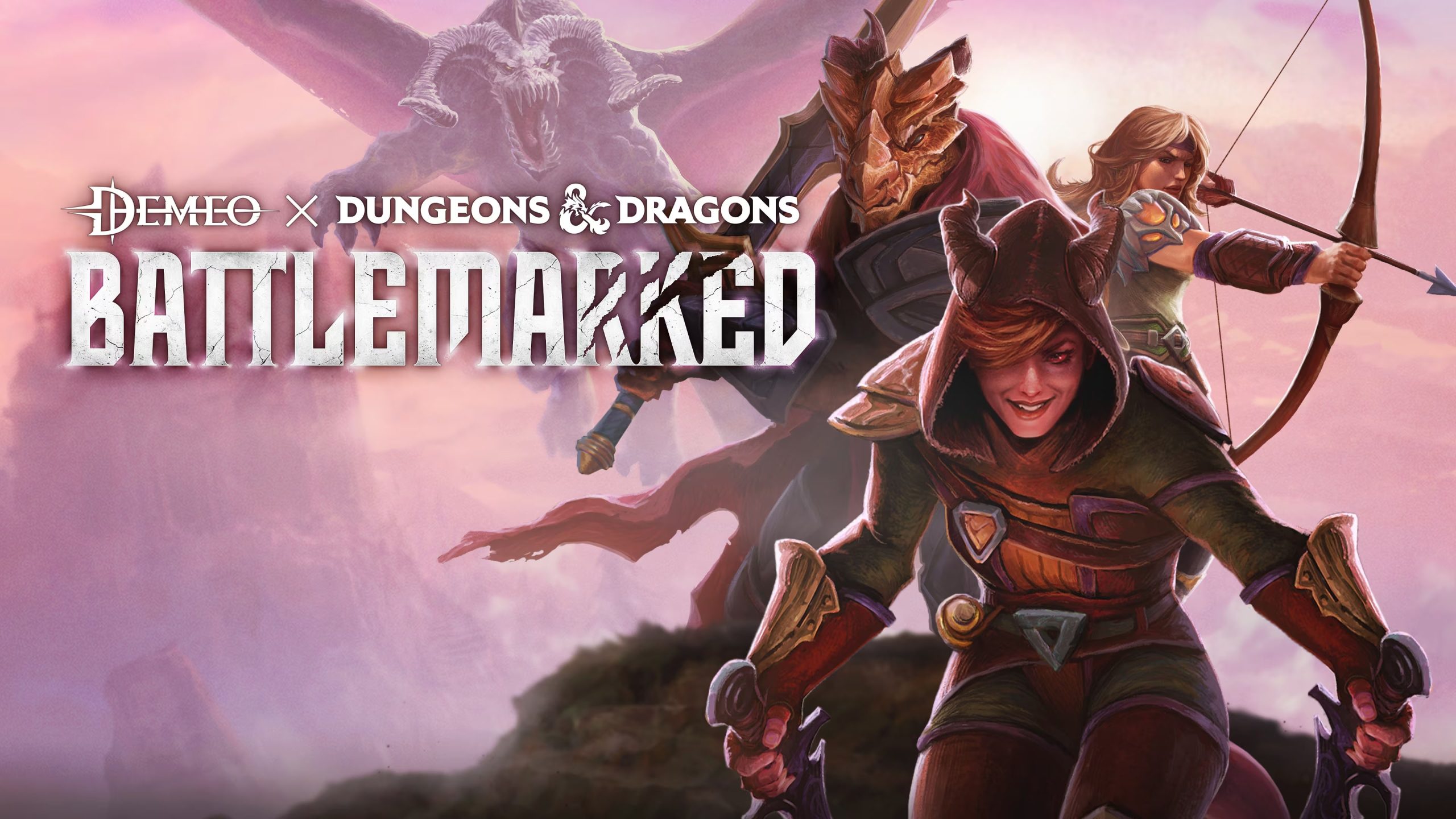
Now, with Demeo x Dungeons & Dragons: Battlemarked, the developer has officially tied the knot with the granddaddy of tabletop RPGs. By bringing official Forgotten Realms lore, structured multi-act campaigns (including treks through Icewind Dale and Neverwinter Wood), voice-acted narration, and deeper mechanical build customization into the fold, Battlemarked elevates the stakes.
Yet, while the core loop remains as addictive as ever, bringing an experience originally designed around 1:1 VR hand-tracking or precise PC mouse inputs onto a standard console controller creates a surprisingly bumpy ride.
From Demeo to Battlemarked: What’s Changed?
For veterans of the original Demeo, Battlemarked will feel instantly familiar, yet significantly evolved. The fundamental baseline—two Action Points (AP) per hero, card-based ability hands, dynamic environmental hazards, and a d20-driven resolution die—remains intact. However, the scope has drastically widened.
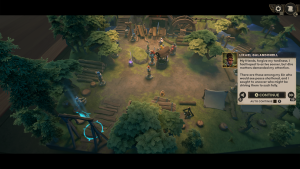
Deeper D&D Mechanics: Unlike original Demeo’s rogue-lite, dungeon-crawling runs, Battlemarked introduces explicit narrative campaigns featuring D20 skill checks. Choices made during story encounters alter campaign paths, trigger traps, or grant narrative perks.
Class Progression & Skill Trees: Heroes are no longer strictly static figurines. You can now level up characters, slot secondary ability traits (like buffing Constitution or adding utility cards to your deck), and customize equipment loadouts to fine-tune party synergies.
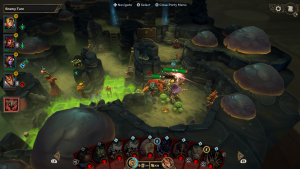
Tactical Depth: Environmental combos have been expanded. Dousing a troll in oil before a Wizard casts Fire Bolt, or creating puddles to chain Lightning spells, turns every encounter into an exercise in tactical creativity—or catastrophic friendly-fire accidents.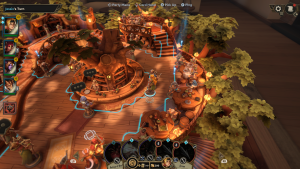
Cross-Play: The Universal Table
Where Battlemarked undeniably shines is in its cross-play framework. Resolution Games has built a seamless ecosystem across Console, PC, and VR platforms.
Up to four players can feature a PC player meticulously planning moves with a mouse, a VR player physically leaning over the table to inspect details, and two console players on their couches. Turn-based combat means input variance doesn’t create unfair competitive advantages, and room code joining remains hassle-free.
Cross-play ensures the player base remains healthy, which is vital for a game where co-op communication forms the beating heart of the experience.
Unfortunately, The Console Elephant in the Room cannot be ignored: Its controls & camera
During the translation of an interface designed for VR hand-grabbing or mouse-clicking to a standard controller thumbstick, this is where Battlemarked falters on console.
In a game where line-of-sight and tile positioning determine whether a spell lands or a fireball accidentally decimates your team, camera control is everything. On console, manipulating the view requires a constant dance of analog stick panning, rotation, and elevation toggles. Finding clean, unobstructed angles in tight dungeon corridors, multi-tiered terrain, or densely packed rooms is often infuriatingly difficult. You’ll spend far too much time fighting occlusion and wrestling with camera height instead of plotting tactics.
Targeting and Engagement Frustrations… The most egregious issue on console is target snapping and melee engagement. Because the game relies on dragging pieces or selecting precise grid tiles, the controller cursor struggles with context sensitivity.
It is entirely common to have your Fighter standing directly adjacent to an enemy, highlight an attack or movement action, and watch in disbelief as the selector fails to lock onto the adjacent target. Instead, it snaps to an empty tile behind them or attempts to trigger a move-and-attack pathing route that line-of-sight geometry rejects. Wasting an Action Point because the UI registered a blank tile click rather than a melee engage is a controller translation flaw that urgently requires refinement.
Conclusion
Demeo x Dungeons & Dragons: Battlemarked is a brilliant evolution of the tabletop digital formula.
It honours the spirit of D&D with impressive fidelity, offering rich campaign progression, fantastic co-op synergy and cross-play implementation that sets an industry standard.
However, the transition to console controllers leaves a lot to be desired. Fumbling with camera angles and watching your hero refuse to engage an enemy standing directly in front of them due to target-snapping quirks pulls you right out of the immersion. It’s disappointing that such a good premise and execution is marred by such terrible controls.
If Resolution Games can tune the controller cursor sensitivity, implement target-lock shortcuts, and smooth out the camera controls, this game easily pushes toward perfection. As it stands, it remains a fantastic tabletop RPG—just one that requires a little extra patience when played with a gamepad on the couch.
Overall
-
CX Score - 80%80%
Summary
Pros
- Authentic D&D Atmosphere & Rich Lore: The inclusion of official D&D races, locations, deep voice acting, and narrative D20 skill checks makes this feel like a true digital tabletop campaign rather than just a quick dungeon crawl.
- Phenomenal Co-Op & Seamless Cross-Play: Playing with friends across PC, Console, and VR is flawless. Combining character abilities—like a Rogue setting stealth traps into a Paladin’s Smite—creates incredible emergent moments.
- Deep Hero Customization & Tactical Variety: The addition of skill traits, secondary stats, and environmental elemental interactions gives battles far more strategic weight and replayability than the original game.
Cons
- Clunky Console Controls & Target Snapping: Trying to select specific enemies, interact with adjacent targets, or execute precise tile placement with a controller thumbstick is clunky and prone to mis-clicks.
- Frustrating Camera Angles in Tight Spaces: Navigating complex dungeon geometry, multi-level maps, and narrow corridors on a standard controller often obscures critical lines of sight and forces awkward camera adjustments.
- Punishing Mis-click Consequences with No Quick-Saves: Because a single target-snapping error can cause a hero to walk into fire or miss a vital attack, the lack of an immediate “undo move” option or mid-battle quick-save can feel brutally unforgiving.